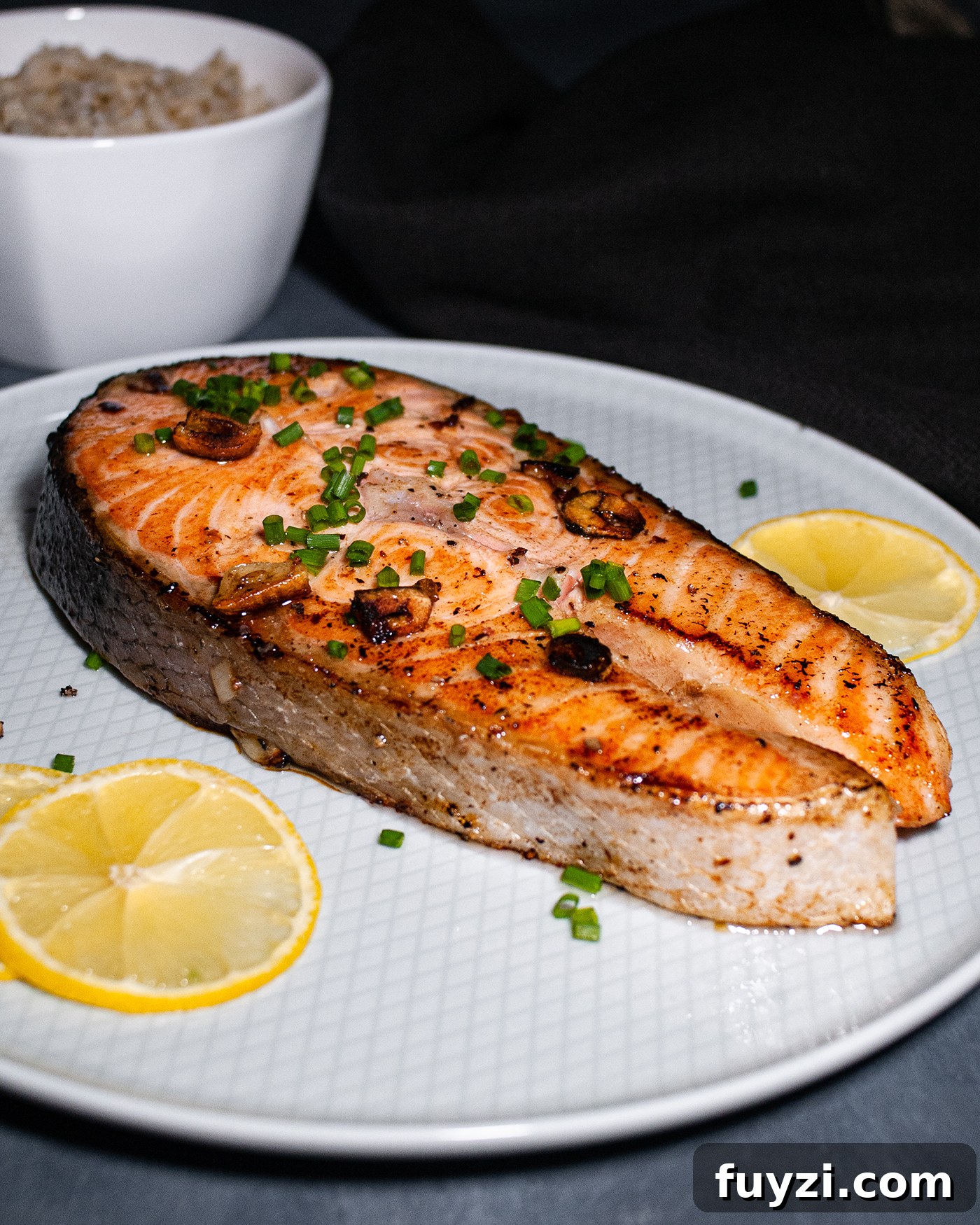
Today we’re sharing a vibrant, easy-to-make dish that’s rich in garlic, butter, and bright lemon. Lemon Garlic Butter Salmon Steak delivers a crisp, pan-seared exterior and a tender, juicy interior for a restaurant-quality meal you can finish in minutes.
Lemon Garlic Butter Salmon Steak is a simple, fast recipe that relies on fresh ingredients — butter, garlic, lemon, and herbs — to create bold, balanced flavors. It’s perfect for busy weeknights, meal prep, or whenever you want a satisfying, healthy dinner without a lot of fuss.
Pan-seared to golden perfection, this salmon steak cooks in under 10 minutes and works well with a variety of sides. Read on for details, tips, and the full recipe so you can make it tonight.
Table of Contents
- Why You Should Make Lemon Garlic Butter Salmon Steak
- What’s the Difference Between Salmon Steak and Salmon Fillet?
- What to Serve with Lemon Garlic Butter Salmon Steak
- Ingredients
- Recipe
- How to Store Leftover Lemon Garlic Butter Salmon Steak
- Final Thoughts
- More Recipes You’ll Love
- References & Further Reading
Why You Should Make Lemon Garlic Butter Salmon Steak
Flavor-packed: If you enjoy savory, garlicky butter with a bright splash of lemon, this salmon will hit the spot. The combination of butter, garlic, and citrus enhances the natural richness of salmon without overpowering it.
Quick and convenient: With minimal prep and a brief pan-sear, this recipe takes roughly 10 minutes from pan to plate, making it ideal for busy evenings.
Budget-friendly and approachable: The ingredients are common and easy to source. No specialty tools or rare items are required.
Meal prep friendly: Make several steaks at once in a large pan, then portion into containers for lunches or dinners throughout the week. The flavors hold up well when reheated gently.
What’s the Difference Between Salmon Steak and Salmon Fillet?
Understanding the cut helps you choose the right cooking method. Salmon steaks are cut perpendicular to the fish’s spine and usually include the central bone. Fillets are sliced along the side of the fish and are typically boneless.
Because steaks are bone-in, they often have a slightly deeper flavor and are sold as larger portions. Fillets are prized for flakiness and convenience. Both cook beautifully; choose based on texture preference and how you want to serve the fish.
Quick comparison:
- Salmon steak: crosswise cut, bone-in, larger piece, robust flavor.
- Salmon fillet: lengthwise cut, often boneless, flakier texture, easier to portion.
What to Serve with Lemon Garlic Butter Salmon Steak
This salmon pairs well with simple, fresh sides that soak up the buttery garlic sauce. A few ideas:
- A crisp cucumber or herb salad for brightness.
- Steamed brown rice and broccoli for a balanced plate.
- Steamed white rice and a light soup for a comforting pairing.
- A bed of shredded cabbage to catch the pan juices.
- Creamy mashed potatoes and garlic green beans for a classic combination.
- Grilled zucchini and stir-fried noodles for a heartier option.
Experiment with sides you enjoy; the lemon-garlic butter is versatile and enhances many accompaniments.
Ingredients
- ½ cup unsalted butter (½ stick), divided
- 3 cloves garlic, thinly sliced or minced
- 1 salmon steak
- 1 lemon, halved
- Salt and pepper, to taste
- 2 stalks chives, finely chopped
Recipe
- Pat the salmon steak dry and season both sides with salt and pepper.
- Heat a cast iron or nonstick pan over medium-high heat until hot.
- Add 2 tablespoons of butter and the garlic to the pan. Sauté for about 1 minute, until fragrant and lightly golden.
- Place the salmon steak in the pan, skin side (or one side) down. Cook without moving for about 5 minutes, until the bottom is golden and releases easily from the pan, then flip.
- Cook the other side for 3–4 minutes. Add the remaining 2 tablespoons of butter, tilt the pan, and spoon the melted butter and garlic over the salmon as it finishes cooking.
- When the salmon is opaque and slightly firm to the touch — typically around 120–125°F (48–51°C) for medium — remove from heat. Squeeze half a lemon over the fish and spoon the sauce across the top.
- Let the steak rest for about 5 minutes; the internal temperature will continue to rise as it rests. Slice the remaining half of the lemon for serving and garnish with chopped chives.
Note: Food safety authorities recommend cooking salmon to a final internal temperature of 145°F (63°C). Removing salmon from heat at around 120–125°F (48–51°C) and allowing it to rest will bring it closer to that endpoint while preserving moistness. Use a thermometer if you prefer precise control.
How to Store Leftover Lemon Garlic Butter Salmon Steak
Store cooked salmon in an airtight container in the refrigerator for 3–4 days. Because seafood is perishable, check for any off odors before reheating and consuming. Reheat gently to avoid drying the fish — a short blast in a hot skillet or a low oven works well.
Final Thoughts
Lemon Garlic Butter Salmon Steak is an ideal go-to when you want something fast, flavorful, and satisfying. The recipe is forgiving and scales easily, so you can cook multiple steaks at once for family dinners or meal prep. The bright lemon and garlicky butter complement the rich salmon for a simple dish that feels elevated.
If you try this recipe, consider pairing it with a light salad or garlic rice to round out the meal. Small finishing touches like fresh chives and an extra lemon wedge make a noticeable difference.
More Recipes You’ll Love
- Sinangag (Filipino Garlic Rice) — a fragrant, garlicky fried rice that pairs well with fish.
- Garlic Butter Grilled Lobster with Cacio e Pepe Pasta — for a special-occasion seafood and pasta combination.
- Yubuchobap (Korean Style Inari) — savory tofu pouches filled with seasoned rice for a lighter snack or side.
References & Further Reading
For information about differences between salmon cuts, proper cooking temperatures, and food safety guidance, consult reputable food safety and culinary resources or government food safety sites for the most current recommendations.