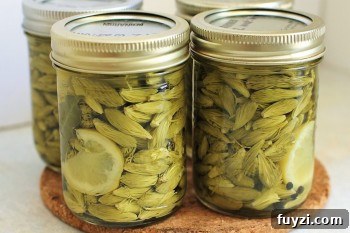
Delicate pickled spruce tips are a seasonal delight. Harvest them when spruce trees begin to bud in spring and preserve a jarful of caper-like pickles that add bright, resinous, citrusy flavor to cheese boards, sandwiches, salads, soups, cocktails, and appetizers. (Skip to recipe.)
I often miss the earliest window for spruce tips where I live; in our yard the buds are just opening, while a half-hour drive east they’re already long and feathery. If you’re in a cooler microclimate or a more northern area, you may still find tight, flavorful buds. Look on the north side of trees where buds often remain snug longer. If your local season has passed, bookmark this post so you’re ready next spring—spruce tips have a short, special season.
Pick new buds from spruce, fir, or many pine species—each has that resinous base with fresh citrus highlights, though flavor varies slightly by tree. Avoid yew, which is poisonous. Common spruce growing in yards and forests are easiest to locate. You can harvest tips while they’re still wrapped in their papery casings or after they’ve opened into lime-green new growth; older needles can be used but need chopping or steeping because they are tougher.
Spruce tips are more than tasty: they are high in vitamin C and have long been used traditionally to soothe sore throats and support respiratory health. They also contain carotenoids, magnesium, and potassium. Infusing water with fresh or dried spruce tips yields a natural, lightly flavored electrolyte drink; steeped as a tea, they make a pleasant herbal infusion after the fresh season has ended.
Harvesting spruce tips won’t harm a healthy tree—in fact, light picking is like pruning and can encourage bushier growth next year. Avoid stripping all tips from one area, and don’t remove the top leader from a young tree, as that can affect future shape.
Look for tips ready to harvest when their brown papery husks begin to split. You can also use the softer, feathery tips in salads or cooked dishes, but for pickling choose the tighter buds so they retain texture and visual appeal.
Small jars of pickled spruce tips are quick to make and improve after a week of aging in their brine. They pair beautifully with cheese boards—try them with a range of cheeses, dried fruit, and nuts. Their tang with piney and citrus notes cuts through rich flavors and brings brightness to many dishes.
If you enjoy olives, capers, or pickles, pickled spruce tips will appeal to you. Use them anywhere you would use capers: on grilled fish (salmon is excellent), in tuna, egg, or potato salads, atop deviled eggs, in green or bean salads, or minced into dressings. Try a few tips as a garnish for creamy soups, add a splash of the brine to a Caesar cocktail, or use them on sandwiches. Their applications are versatile and creative.
* * * * *
Other savory and sweet ways to use spruce tips include sautés, compotes, potato dishes, vinaigrettes, roasted vegetables, and baked goods. Here are some recipe ideas:
- Buttery Sauteed Mushrooms with Spruce Tips and Chives
- Spruce Tip Rhubarb Compote over Silky Swedish Cream
- Potatoes with Cream and Spruce Tips
- Roasted Asparagus with Garlic and Spruce Tips
- Pork Tenderloin with Spruce Tips and Orange Glaze
- Green Salad with Spruce Tips
- Rhubarb and Spruce Tip Galette
- Citrus Spruce Tip Salad
* * * * *
Notes: White wine vinegar, apple cider vinegar, or plain white vinegar all work for the brine. If you picked the tips with clean hands away from roads, rinsing is usually unnecessary; otherwise rinse lightly and drain well.
The recipe below makes enough brine for one half‑pint jar; multiply the brine quantities when making several jars. Use filtered or distilled water for pickling when possible, as some tap water minerals or chlorine can affect color and texture. If you plan to store jars long-term, process them in a boiling water bath to ensure shelf stability; otherwise, for a single jar you intend to use within six months, you may simply refrigerate it sealed and skip canning.
Allow pickled spruce tips to age at least a week before using so the flavor develops fully.
Pickled Spruce Tips
Per half-pint (250 ml) jar:
- 6 whole black peppercorns
- 1 bay leaf
- 1 slice fresh lemon
- 1 teaspoon sea salt
- 1 heaping cup (about 250 ml) spruce tips
Brine (enough for 1 jar):
- 1/4 cup (60 ml) white wine vinegar
- 1/4 cup (60 ml) filtered or distilled water
Place peppercorns, bay leaf, lemon slice, and salt in a very clean, well-rinsed half-pint jar. Clean the spruce tips of their papery husks and pack them into the jar, leaving about 1/2 inch (1 cm) headspace. Heat the vinegar and water just to a boil, then pour the hot brine over the tips until the liquid comes to about 1/2 inch (1 cm) from the rim. The tips will change from bright green to olive green when the hot brine is added.
Soften new snap lids in simmering water for 5 minutes, wipe jar rims clean, and seal with lids and screw bands until finger-tight. Place a clean dishcloth in the bottom of a saucepan taller than the jars, set the jars on the cloth, and add hot tap water to about the bottom of the screw bands. Cover and bring to a full boil, then adjust heat to maintain a steady boil and process for 10 minutes.
Carefully remove jars and place them on a clean towel. Let cool undisturbed; lids should seal with a slight suction. If a lid has not sealed, store that jar refrigerated and use within six months (allow one month of aging before use). Once cooled, the spruce tips will rise to the top; give the jar a shake to distribute them again.
Sealed jars will keep several years in a cool, dark place. Wait at least a week before opening to let the brine fully develop the flavor.
Guten Appetit!
Sign up for the recipe newsletter on the original site to receive new recipes and kitchen tips.
If you enjoy these recipes, follow the author on social media for more ideas and seasonal inspiration.
Don’t forget to PIN IT to save the recipe:
You might also like: Magic Method for Never-Fail Dill Pickles, Pickled Beets, Watermelon Pickles, or The Pickleback – a New Drink Craze.