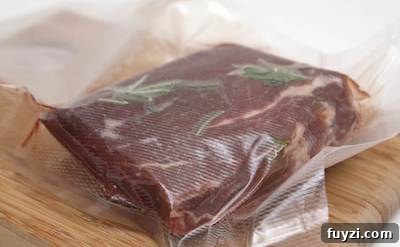
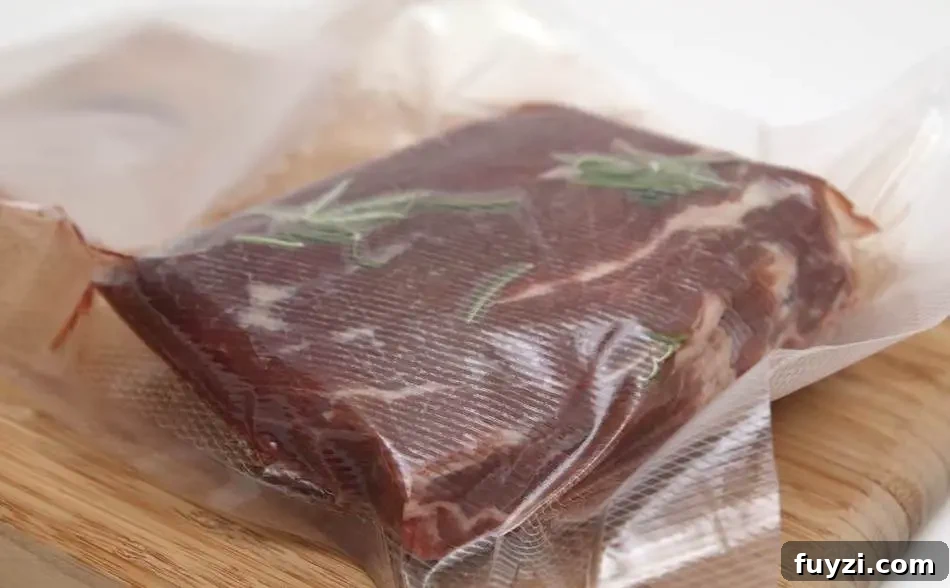
Sous-vide is a cooking technique that has become popular beyond restaurant kitchens because it reliably reheats and gently cooks meat. For leftover brisket, sous-vide restores moisture and texture by heating the meat at a precise temperature inside a sealed bag, producing results closer to the original serving condition than many other reheating methods. This article explains how sous-vide works, the main methods to use it at home, safety and temperature guidance, and tips to get the best outcome from your leftover brisket.
Sous-vide reheating keeps brisket tender and juicy because it uses an exact water-bath temperature and a sealed environment, preventing the exterior from overcooking while the interior warms through evenly. Whether you use a dedicated immersion circulator and vacuum sealer or a simple pot and zip-lock bag, the principle remains the same: low, steady heat and a sealed bag deliver consistent, repeatable results.
You can purchase appliances that automate the sous-vide process—an immersion circulator to regulate the water temperature and a vacuum sealer to remove air from bags—but it is also practical to reheat sous-vide style using heavy-duty zip-lock bags and careful temperature control on the stove. Below are practical instructions for both approaches, plus tips for storing, timing, and serving reheated brisket.
Key Points
- Sous-vide reheating restores brisket texture and moisture more effectively than quick, high-heat methods.
- The technique uses a sealed bag and a water bath held at an exact temperature for an extended period.
- Sous-vide is forgiving: precise temperatures make it hard to overcook the meat.
- Specialized equipment improves convenience, but a pot, thermometer, and zip-lock bag can work well.
- Recommended target serving temperature for reheated brisket is about 150°F; adjust water-bath temperature accordingly.
- Keep the brisket whole while reheating and slice after warming to retain juices and flavor.
Brisket Leftovers
Leftover brisket can be reheated several ways, but many home cooks prefer sous-vide because it returns the meat to a near-original texture without drying it out. Oven reheating can work if the meat is wrapped and moistened, but it requires careful monitoring to avoid drying. Microwaving is fastest but often produces uneven results and a loss of texture. If your goal is to preserve tenderness and flavor, sous-vide is the most reliable choice.
What Is Sous-Vide?
Sous-vide, French for “under vacuum,” refers to cooking food sealed in a bag at a controlled temperature in a water bath. It is a low-and-slow technique that relies on precision: the water bath is set to the exact final temperature you want the food to reach, and the food is held there until it comes to temperature evenly. Cooking times vary widely depending on the cut and thickness; reheating already-cooked brisket typically takes a few hours, not days.
The Benefits of Cooking Sous-Vide Brisket
Sous-vide ensures consistent internal temperature throughout the meat, so the outside won’t overcook while you wait for the center to warm. That predictability makes sous-vide especially useful for reheating brisket, since the meat has already been cooked and only needs to be brought back up to serving temperature. The method reduces the risk of drying and helps preserve the original smoky or seasoned crust when finished correctly.
| Method | Benefits | Drawbacks |
|---|---|---|
| Sous-vide | Consistent, gentle reheating; preserves moisture and texture | Requires time and some equipment or careful monitoring |
| Oven | Accessible and hands-off | Can dry meat if not properly wrapped or monitored |
| Stove | Quick and available in most kitchens | Uneven heating and risk of overcooking |
| Microwave | Fastest method | Often uneven and can degrade texture and flavor |
The Two Methods of Cooking Sous-Vide Brisket
You can reheat brisket sous-vide in two main ways: with dedicated equipment (immersion circulator and vacuum sealer) or using a pot on the stove with sturdy zip-lock bags and a thermometer. Both approaches can produce excellent results when you control water temperature and allow enough time for the meat to warm through.
When using a machine, set the water to roughly the target serving temperature (about 150°F) to bring the brisket slowly back up. If you use a stove-top pot, aim for a higher initial temperature to offset heat loss when adding cold meat, then stabilize the bath at a target reheating temperature (around 165°F for the bath, which will result in a brisket internal temperature near 150°F after sufficient time).
Method 1: Cooking Sous-Vide With No Machines
- Use heavy-duty zip-lock bags and a large pot of water.
- Preheat the water and monitor temperature with an accurate thermometer.
- Seal the brisket in the bag using the water-displacement method to remove air.
- Submerge the bag, weigh it down if necessary, and maintain a steady water temperature until the brisket reaches serving temperature.
- Let the brisket rest briefly in the bag, then open, slice, and serve.
Step 1: Vacuum Seal Meat Without a Machine
To remove air without a vacuum sealer, place the brisket in a zip-lock bag, close most of the seal, and slowly lower the bag into water so that the pressure of the water pushes air out through the small opening. Seal the bag completely once most of the air is gone. This creates a near-vacuum environment that is effective for sous-vide reheating.
| Step | Instruction |
|---|---|
| 1 | Fill a pot or container with water and bring it to a simmer. |
| 2 | Place meat in a zip-lock bag and seal most of the way. |
| 3 | Lower the bag into the water to displace air, then finish sealing. |
| 4 | Weigh the bag down so it stays submerged. |
| 5 | Monitor time and temperature until the brisket is warmed through. |
Step 2: Heat “Sous-Vide” on the Stove
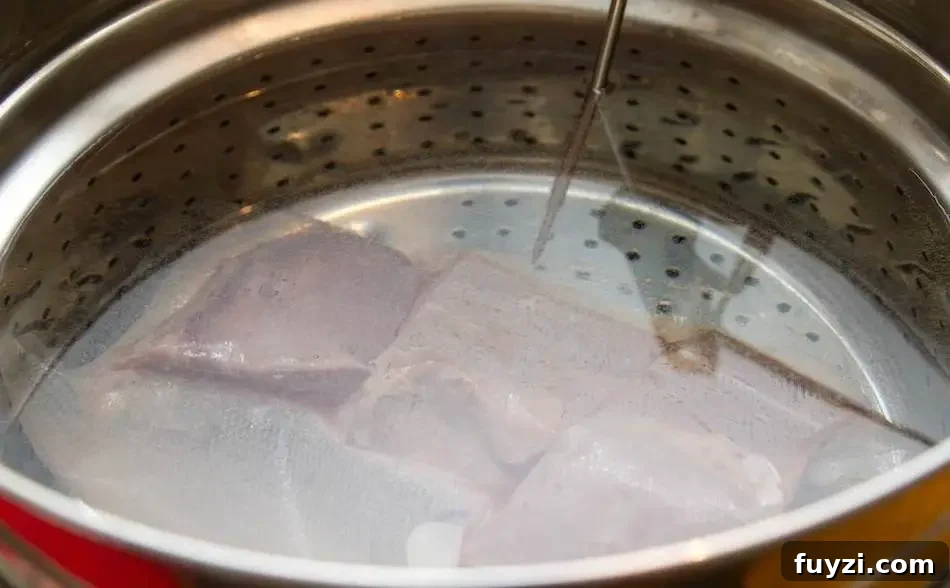
Using the stove method, attach an instant-read thermometer to monitor the bath. A common approach is to bring the water up to about 185°F before adding cold brisket, then reduce and maintain the bath around 165°F while the meat warms. Expect reheating to take one to a few hours depending on thickness; check the internal meat temperature and aim for roughly 140–150°F for serving.
| Step | Instruction |
|---|---|
| 1 | Fill pot 3/4 full and clip a thermometer to the side. |
| 2 | Bring water to 185°F, then add the bagged brisket. |
| 3 | Reduce heat and hold the bath near 165°F. |
| 4 | Cook until internal temperature reaches about 150°F. |
| 5 | Remove, rest briefly, then slice and serve. |
Sous-Vide Without Machines: Step-by-Step
| Step | Instruction |
|---|---|
| 1 | Fill a pot 3/4 full with water. |
| 2 | Attach a thermometer and bring water to 185°F. |
| 3 | Seal brisket in a zip-lock bag using the water displacement method. |
| 4 | Submerge the bag and reduce the bath to about 165°F. |
| 5 | Cook until the internal temperature of the brisket is near 150°F. |
| 6 | Remove, rest, slice, and serve. |
Method 2: Cooking Sous-Vide With Machines
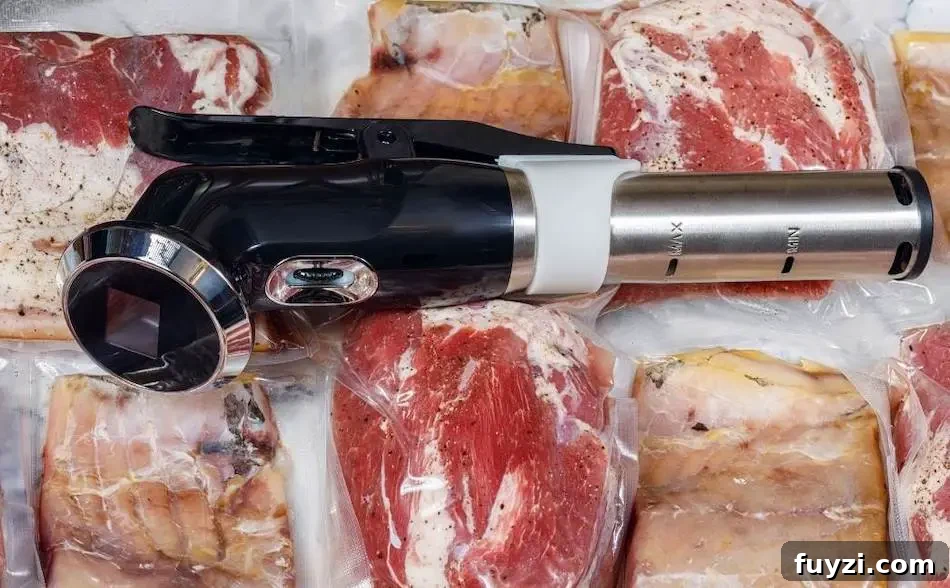
Using a vacuum sealer and immersion circulator simplifies sous-vide reheating. The vacuum sealer removes air and seals the bag tightly, while the immersion circulator both heats and circulates the water to a precise temperature. This setup reduces hands-on monitoring and improves consistency, making it ideal for frequent sous-vide users.
| Equipment | Use |
|---|---|
| Vacuum sealer | Removes air to protect texture and flavor during the bath. |
| Immersion circulator | Maintains exact water temperature and circulation for even heating. |
With machines, set the circulator to your target reheating temperature, seal the brisket in a vacuum bag, and submerge. Reheating time depends on size and thickness; monitor internal temperature and remove when it reaches the desired serving temperature. Let the meat rest briefly before slicing to retain juices.
What Is a Vacuum Sealer?
A vacuum sealer removes air from storage bags and seals them airtight. Vacuum sealing leftover brisket preserves flavor and slows oxidation, making refrigerated storage last longer and freezer storage more effective. When you are ready to eat, reheating the sealed brisket sous-vide will gently bring it back to serving condition while minimizing moisture loss.
Sous-Vide Machines
There are two common types of sous-vide equipment: immersion circulators, which clip to a pot and circulate water, and water-bath units with integrated containers and controls. Immersion circulators are compact and versatile, while water-bath units are an all-in-one solution. Both types accurately control temperature, which is the central benefit of sous-vide cooking.
Reheating Leftover Brisket
If you don’t have sous-vide tools, other reheating options still work. In the oven, wrap brisket in foil with a splash of broth and heat slowly at low temperature until it reaches serving temperature. On a grill, use indirect heat with foil and liquid for a smoky finish. Microwaving is fastest but usually sacrifices texture. For the best balance of convenience and quality, sous-vide offers predictable, juicy results every time.
Whichever method you choose, keep the brisket whole while reheating, aim for a final internal temperature around 150°F, and slice only after a brief rest to lock in juices. Serve with your favorite sides and sauces to enjoy brisket that tastes close to freshly made.