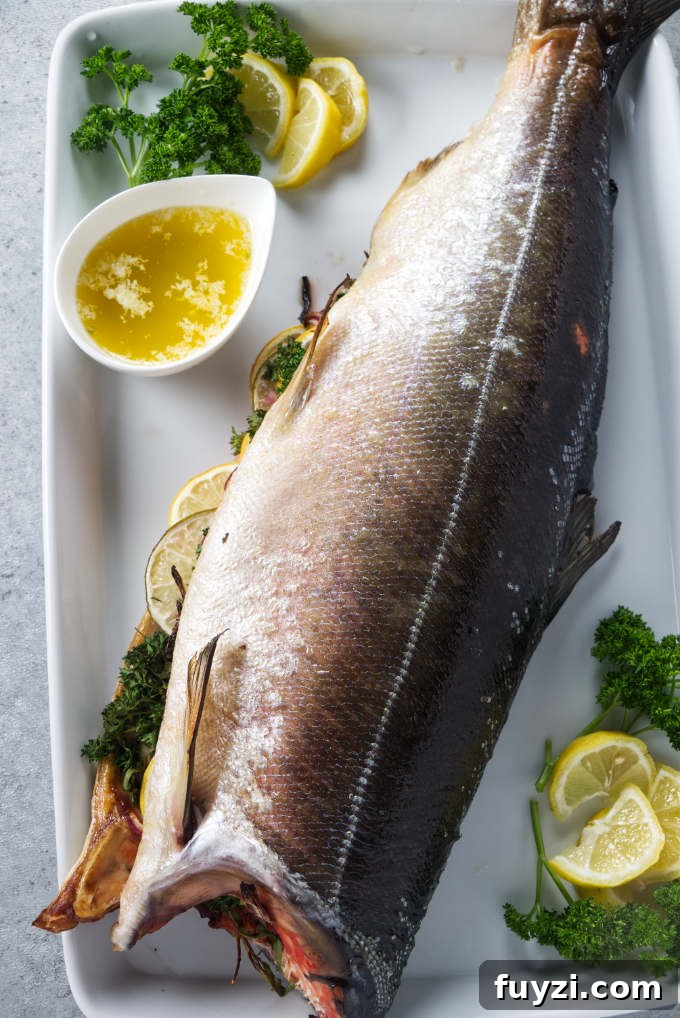
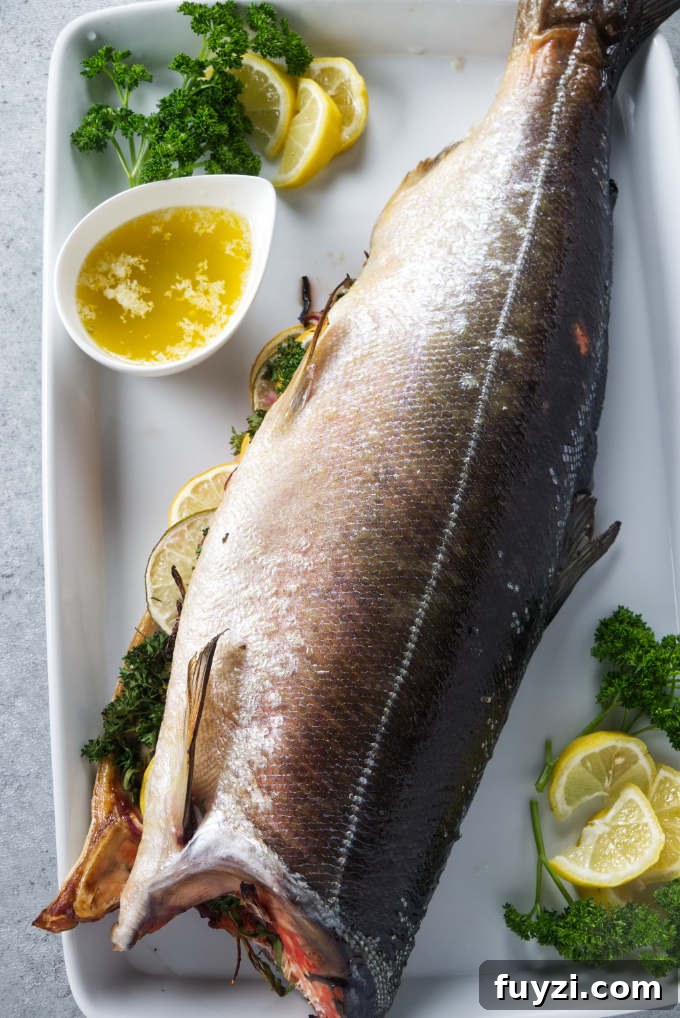
Grill a whole salmon to juicy, flaky perfection with this straightforward summer recipe. Whether you’re cooking for a backyard crowd or preparing leftovers for salads, sandwiches, or salmon cakes, a whole grilled salmon makes an impressive centerpiece and is an economical way to enjoy great fish. This method works well on gas, charcoal, or pellet grills. Brining is optional but recommended for extra moisture and even seasoning.
Why this recipe is so great
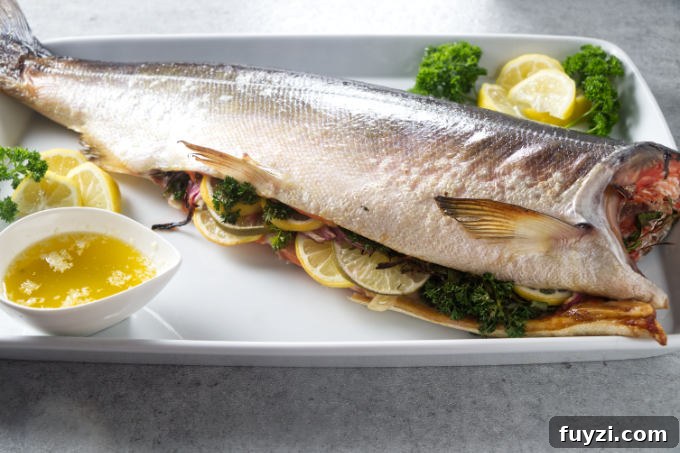
Grilling a whole salmon is easier than it looks and yields tender, flavorful results. The fish is stuffed with herbs and citrus, so it keeps moist and picks up fragrant, savory notes as it cooks. It also makes a dramatic presentation at any cookout.
- Easy prep—no filleting required.
- Stuffing the cavity with herbs and citrus infuses the fish with flavor.
- Lemon-chive butter finishes the salmon with bright, rich flavor.
- Feeds a group and makes excellent leftovers for other meals.
- Bones lift out cleanly after grilling, making serving simple.
- Works on gas, charcoal, or pellet grills.
- Highly adaptable—use whatever fresh herbs you have available.
Ingredients
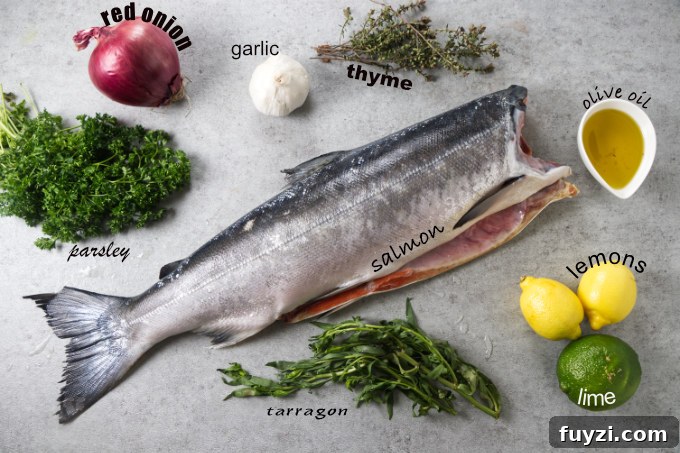
Below are the ingredients for a whole grilled salmon with an optional brine and a lemon-chive butter sauce. Substitute herbs as needed—dill, basil, or rosemary also work well.
For the optional brine
- Kosher salt
- Brown sugar
- Water
For the salmon
- 1 whole, cleaned salmon (about 3–5 pounds)
- Olive oil
- 2 lemons, thinly sliced
- 1 lime, thinly sliced
- 1 large red onion, thinly sliced
- 8–10 garlic cloves, sliced
- Fresh thyme, parsley, tarragon or other herbs
- Salt and black pepper
For the lemon-chive butter sauce
- 6 ounces butter
- 2 garlic cloves, minced
- 3–4 tablespoons chopped chives
- Zest and juice of one small lemon
- Salt and pepper to taste
How to grill a whole salmon
Step 1: Brine the salmon (optional)
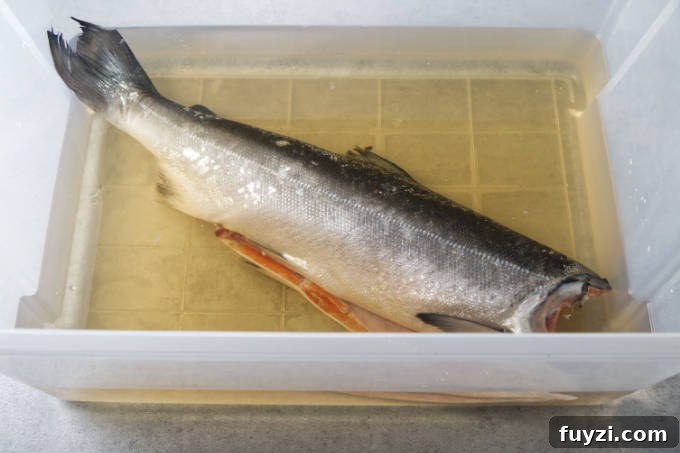
Combine brown sugar, kosher salt, and water in a saucepan and simmer until the salt and sugar dissolve. Remove from heat and cool with ice. Transfer the cooled brine to a container large enough to hold the whole salmon; add more brine if needed so the fish is submerged. Cover and refrigerate for at least one hour or overnight for best results. Brining adds moisture, seasons the fish through, and reduces the appearance of white albumin during cooking.
Step 2: Prepare the salmon
Preheat your grill to about 400°F. If using a pellet grill, choose a mild fruit or nut wood (apple, cherry, pecan, or maple) for a gentle smoke flavor. Pat the salmon dry inside and out. Rub the cavity and the exterior with olive oil and season with salt and pepper.
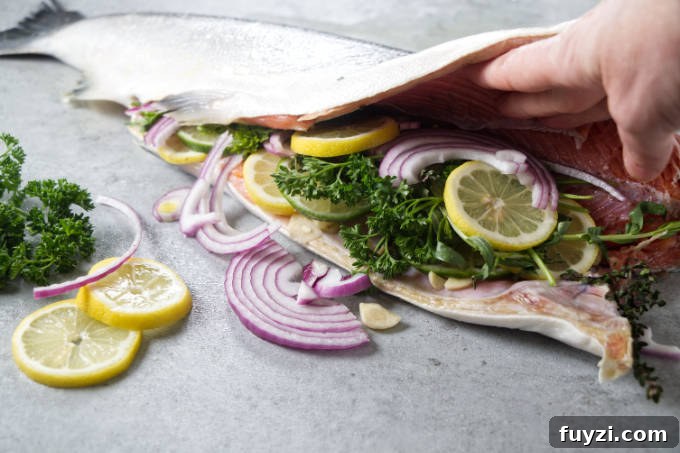
Stuff the cavity generously with lemon and lime slices, red onion, garlic, and sprigs of thyme, tarragon, and parsley. Don’t be afraid to over-stuff—the aromatics will steam inside the fish and impart great flavor.
-

Optional brining step. -
Stuff the cavity with aromatics.
Step 3: Grill the whole salmon
Place the salmon directly on the hot grill grates, skin side down, and close the lid. Grill for 20–30 minutes or until the internal temperature reaches around 130°F for a moist, flaky result. If you prefer rarer salmon, you can remove it at 122°F, but the FDA recommends cooking fish to 145°F—many cooks find that temperature dries salmon. Use a reliable instant-read or probe thermometer to check doneness without overcooking.
Step 4: Make the lemon-chive butter sauce
While the salmon cooks, melt butter in a small saucepan over medium heat. Add minced garlic, chopped chives, lemon zest and lemon juice, then season with salt and pepper. Simmer gently for a few minutes to let the flavors meld, then remove from heat and keep warm.
Step 5: Serve the salmon
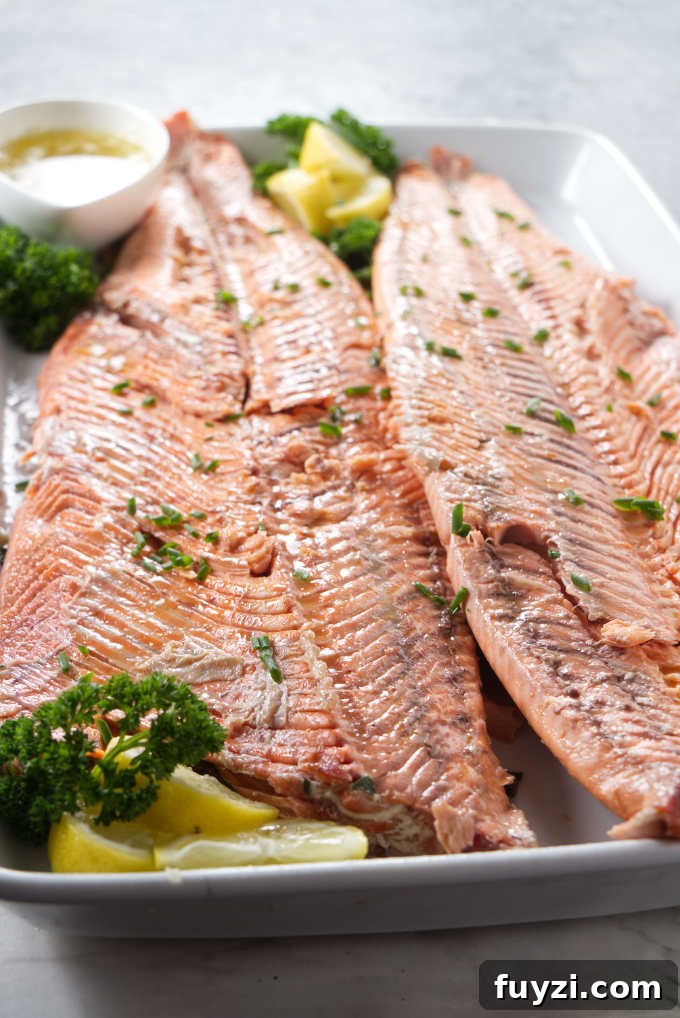
Transfer the cooked salmon to a large cutting board or platter. If you prefer, peel the skin away first—it should lift off in large sections. To remove the spine and upper fillet, start at the head and slide a wide, sturdy spatula under the spine. Lift while supporting the flesh so the top fillet and spine come away together. Flip the top fillet aside and peel the spine free from the bottom fillet. Season the fillets with salt and pepper and spoon the lemon-chive butter over the fish just before serving.
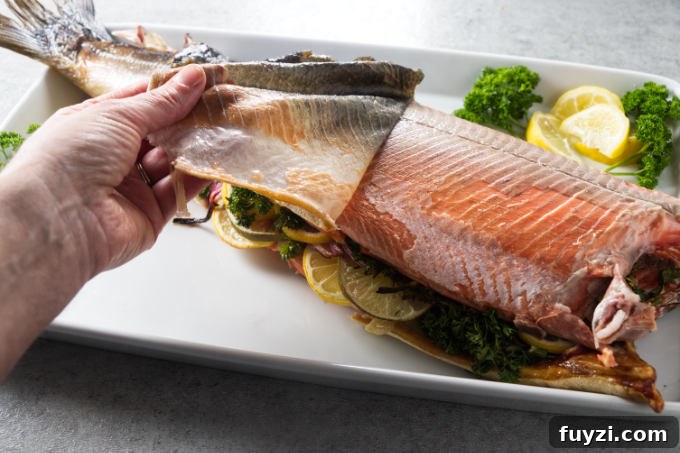
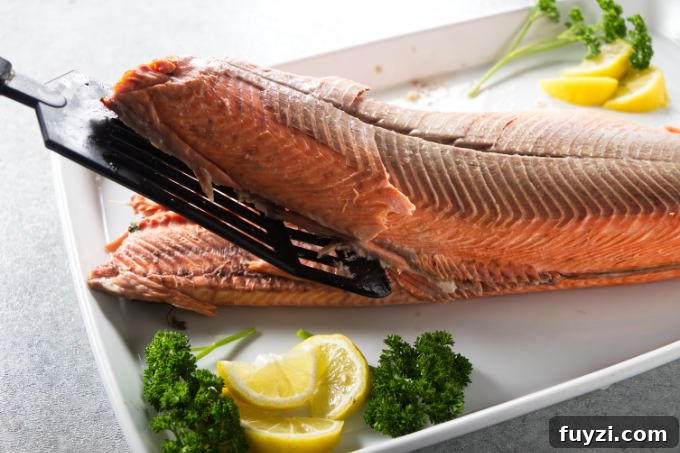
Tip: Use a heavy-duty fish spatula to support the fillet while removing the spine. A flimsy spatula can tear the flesh and make carving messy.
Ways to use leftover salmon
Leftover grilled salmon is versatile and delicious. Chop or flake the meat for salmon cakes, toss it into a green salad, fold it into a cream-based pasta, add it to tacos or wraps, or use it in a quiche or chowder. Leftovers keep well and add quick, flavorful protein to many recipes.
Frequently asked questions
Do you have to brine the salmon?
No, brining is optional. A short brine of one hour helps keep the fish moist and seasons it through; overnight brining gives the best results. If you skip the brine, pat the fish very dry, oil, and season before grilling.
Should you rinse the salmon after brining?
Rinsing is not necessary. Simply remove the salmon from the brine, pat it dry with paper towels, and proceed with oiling and seasoning. Avoid brining for more than a day, as the fish can become overly salty.
How do you keep salmon from sticking to the grill?
Keep the skin on and coat it with oil before placing the fish on the grates. Make sure your grill grates are clean and well-oiled. A steady medium-high heat helps the skin release more easily when it’s ready to flip or remove.
Connect and share
If you try this grilled whole salmon, leave a comment or share a photo of your result on your favorite social platform—tag your post so others can learn from your experience. Enjoy grilling!