
This epic vegan tofu adobo features thick, textured chunks of tofu in a glossy, sticky adobo sauce — ideal over steamed white rice.

This is a fusion take on Filipino adobo rather than an authentic regional recipe. It was developed out of a desire to make tofu more flavorful, inspired by my non-vegetarian partner’s praise for adobo chicken. I adapted the technique and seasoning to suit tofu’s texture and to keep the dish entirely plant-based.
I’ve made a few intentional changes from traditional adobo—using cracked black pepper instead of whole peppercorns and braising the tofu before finishing it in the oven or air fryer rather than deep-frying. These tweaks produce a savory, tangy, and slightly peppery sauce with tofu that has pleasing chew and golden edges.
⭐ Why you’ll love it
- A bold tangy-salty-peppery flavor that keeps you coming back for more.
- Tofu is prepared to develop a substantial, almost meaty texture without pressing for hours.
- No lengthy marinating is required—braising infuses the flavor quickly.
- Completely vegan and suitable for vegetarian diets.
🛒 Ingredients and substitutions
Below are the main ingredients and some simple swaps if you need them. These choices preserve the characteristic adobo balance of salty, tangy, sweet, and peppery.
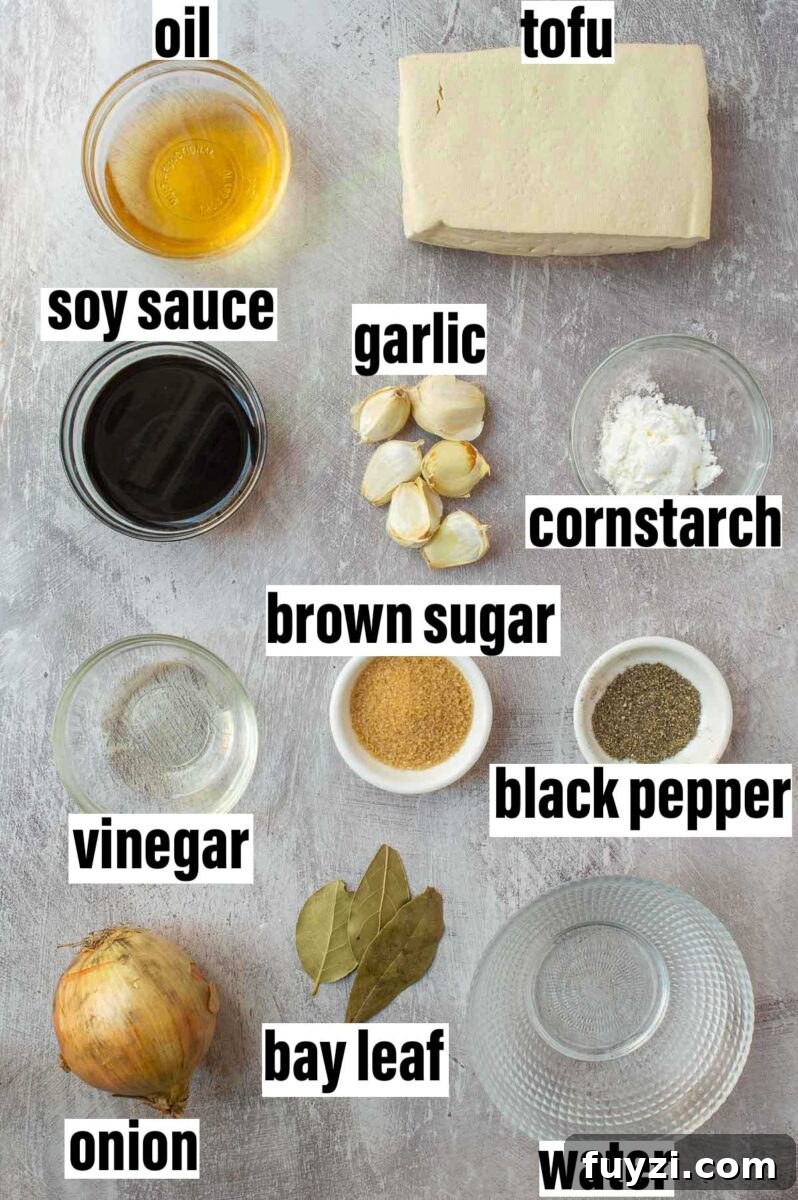
Oil: Use a neutral-tasting oil such as canola, vegetable, corn, or sunflower oil.
Tofu: Extra-firm tofu is ideal. If unavailable, use firm tofu. Avoid silken or soft tofu, which will break down during the braising step.
Soy sauce: Use regular soy sauce for depth of flavor. If you must use low-sodium soy sauce, taste and adjust seasoning as needed.
Garlic: Fresh, large garlic cloves give the best flavor. Avoid garlic paste or dried garlic if possible; they offer a weaker garlic profile.
Cornstarch: Also called cornflour in some places, this fine starch helps create a light textured exterior on the tofu and thickens the sauce. If you don’t have cornstarch, use half the amount of plain flour or arrowroot as a substitute.
Brown sugar: Adds caramel depth from the molasses. Maple syrup or white sugar can substitute in a pinch, though the flavor will be slightly different.

Vinegar: White vinegar works well for that bright tang. Apple cider vinegar is an acceptable substitute.
Black pepper: Use freshly cracked or coarsely ground black pepper for texture and aroma. If you only have whole peppercorns, increase the quantity and crack them before using.
Onion: Yellow onion is recommended, but white, red, or sweet onions will work.
Bay leaf: Use fresh-sealed bay leaves when possible to get the best herbal aroma.
Water: Plain water is used to adjust the braising liquid volume; don’t substitute stock as it will change the flavor profile.
👩🍳 How to make it
The method involves braising tofu briefly in a savory-tangy liquid, then coating and finishing it to develop texture. While the tofu simmers, prepare the sauce and aromatics so everything comes together quickly at the end.
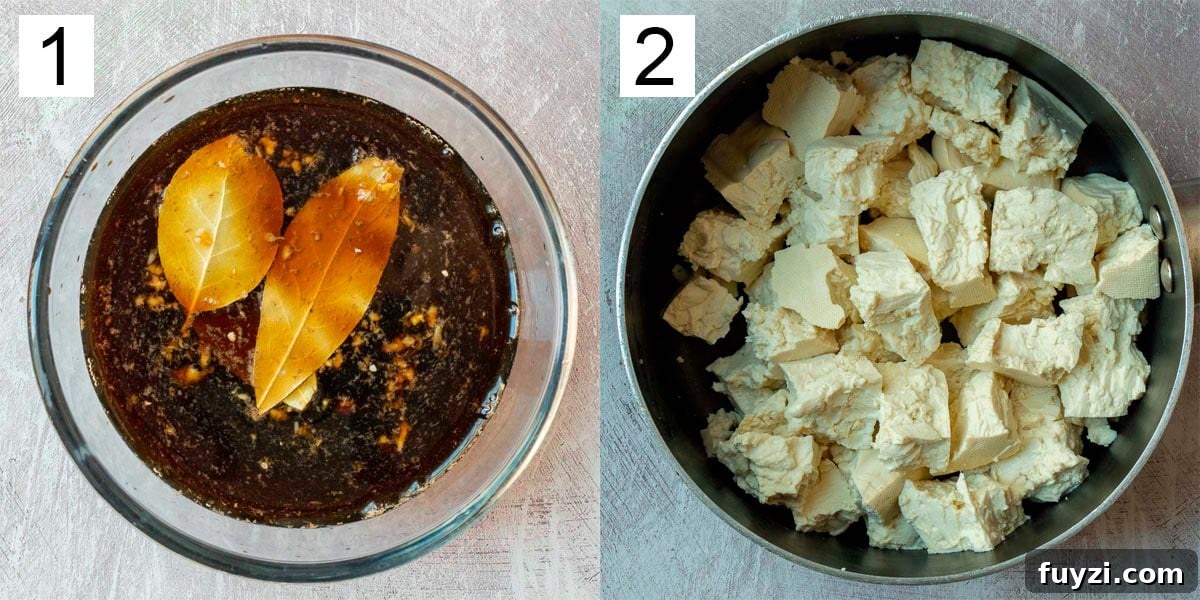
- Combine crushed garlic, soy sauce, vinegar, and bay leaves in a medium saucepan.
- Tear the tofu into roughly 1-inch chunks and add to the saucepan. Bring to a boil over high heat, then reduce to a lively simmer for 10 minutes. This braising step infuses flavor and softens the interior.
- Preheat the oven to 400ºF (200ºC) if baking, or preheat an air fryer for five minutes if using. If you plan to bake, set the oven while the tofu braises.
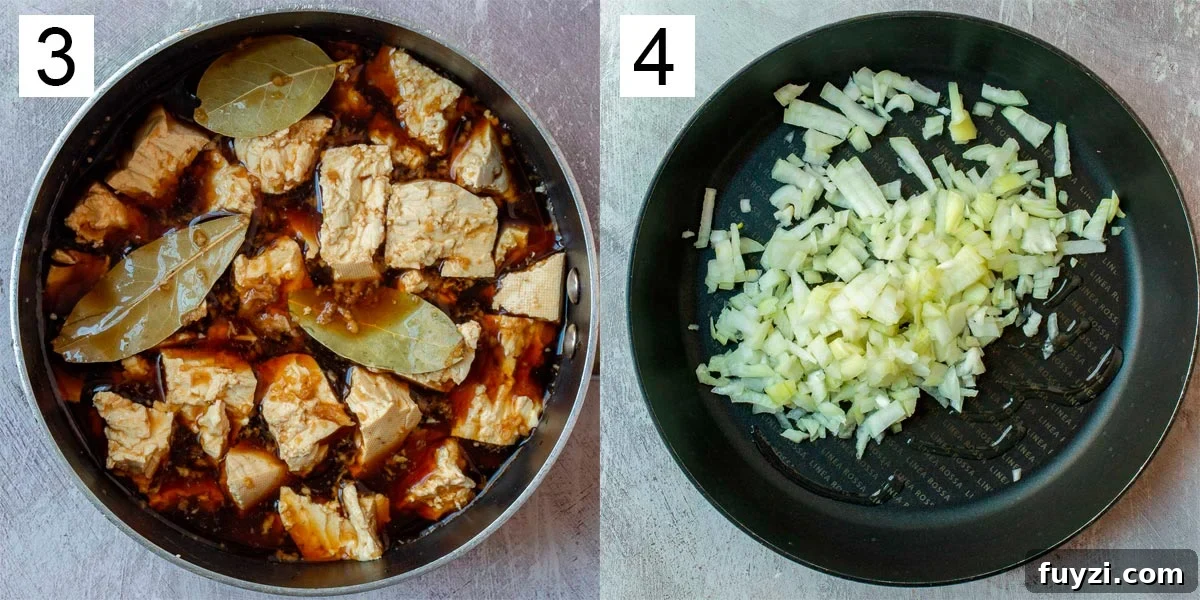
- While the tofu braises, heat 1 tablespoon oil in a large skillet over medium-high. Add chopped onion and cook about five minutes until lightly browned.
- When braising is complete, drain the tofu, reserving the braising liquid.
- Toss the hot drained tofu gently with ½ tablespoon oil, then add cornstarch and toss until pieces are evenly coated. Use spoons to avoid burning your hands; braised tofu is softer and needs careful handling.
- Arrange the tofu in a single layer on a baking sheet lined with parchment and bake for 25 minutes, or air-fry for 13 minutes. If air-frying, pause halfway to toss the pieces so they crisp evenly.
- After the onions have browned, add four chopped garlic cloves and cook one minute, then add cracked black pepper and toast for another minute, stirring to prevent burning.
- Measure the reserved braising liquid. If you have less than one cup (240 ml), add water to reach one cup. Pour this into the skillet with the sugar and bring to the boil briefly; remove from heat if the tofu is not finished yet.
- When the tofu is golden with some crisp edges, add it to the skillet and toss to coat in the sauce. Bring to a simmer on high, then reduce to medium and simmer for 10 minutes.
- Cover the pan with a lid or foil and simmer a further 10 minutes to allow the sauce to thicken and the flavors to meld. If you prefer a thicker glaze, remove the lid and simmer uncovered until reduced to your liking.
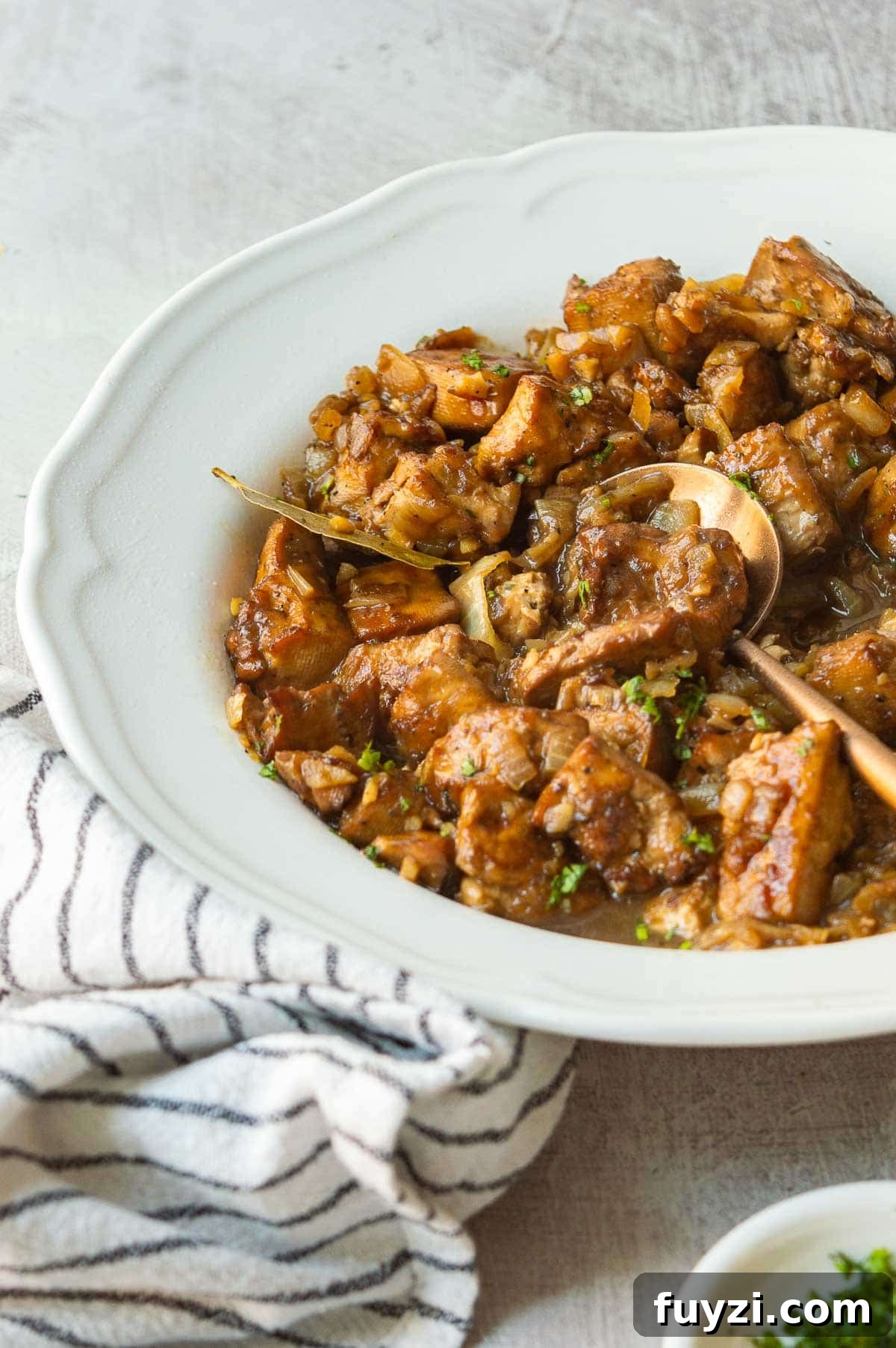
The finished dish should be glossy, richly flavored, and balanced with tang, salt, and a hint of sweetness. Serve hot over steamed white rice or another starchy side to soak up the sauce.
📝 Equipment notes
What you’ll need:
- A garlic crusher or knife for crushing garlic.
- Measuring cups and spoons (or a measuring jug and kitchen spoons).
- A sharp knife and chopping board.
- A medium saucepan for braising.
- A large skillet or frying pan with a lid (or aluminum foil for covering).
- A baking sheet and parchment, or an air fryer basket if finishing that way.
💡 Expert tips
- To crack peppercorns, press them beneath the base of a mug or bowl on a chopping board—no need to smash them apart violently.
- Do not skip the braising step; it imparts flavor and keeps the tofu tender inside.
- If you don’t want to use the oven or air fryer, shallow-frying works as an alternative, but the tofu will be drier and chewier compared with baking.
- When crushing garlic, you can briefly crush cloves with the skin on, then remove any stubborn peel. Crushing unpeeled cloves helps loosen skins and speeds up prep.
🍽️ Serving suggestions
Tofu adobo pairs best with a starchy base that soaks up the sauce. Steamed long-grain white rice is classic and excellent, but try it over mashed potatoes, plain quinoa, or your favorite grain.
To stretch the meal or add freshness, serve with a simple green salad or a side of steamed greens such as chard or spinach.
❄️ Storage
Store leftovers in a sealed container in the refrigerator for up to five days, or freeze for up to three months. Freezing can make the tofu slightly spongier, which some people prefer because it yields a chewier, “meatier” bite after thawing.
❓ Frequently Asked Questions (FAQs)
If tofu isn’t for you, try torn strips of seitan (pan-fry rather than bake) or torn oyster mushrooms. Both absorb the adobo flavor well and provide a satisfying texture.
Yes. The flavors deepen after resting, so this dish often tastes better the next day. You can prepare the tofu and sauce separately and combine them before reheating to finish the glaze.
Braising the tofu in a flavorful liquid quickly infuses taste and yields a better texture without the need for pressing or lengthy marinating, saving time while delivering great flavor.
Did you make this dish? Tell me how much you loved it with a star rating and a comment below.