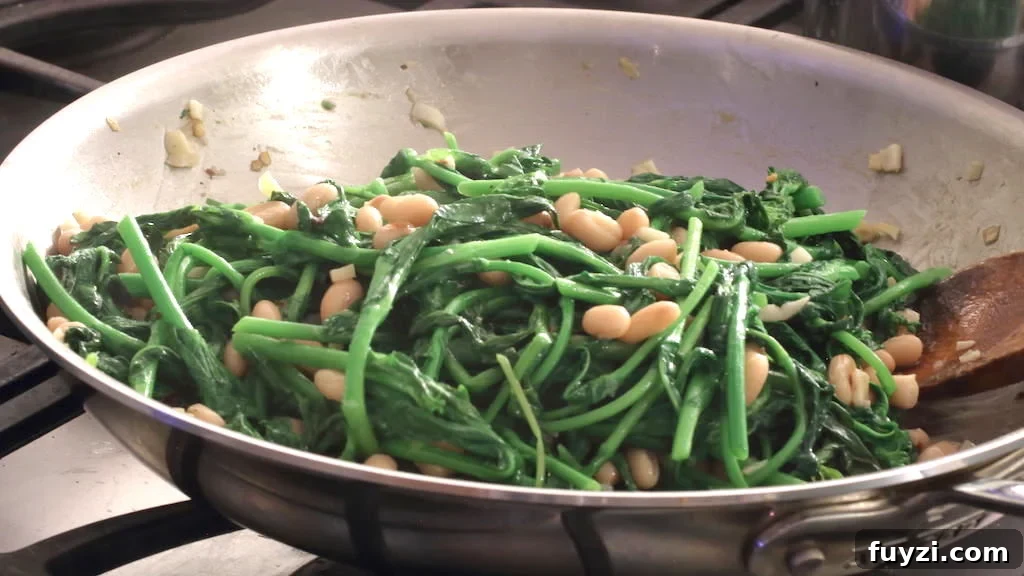
Broccoli rabe with white beans makes two generous main-course servings or four servings as a side. Our family adores broccoli rabe — we’d eat it daily if we could. Fortunately, my husband grows plenty each season.
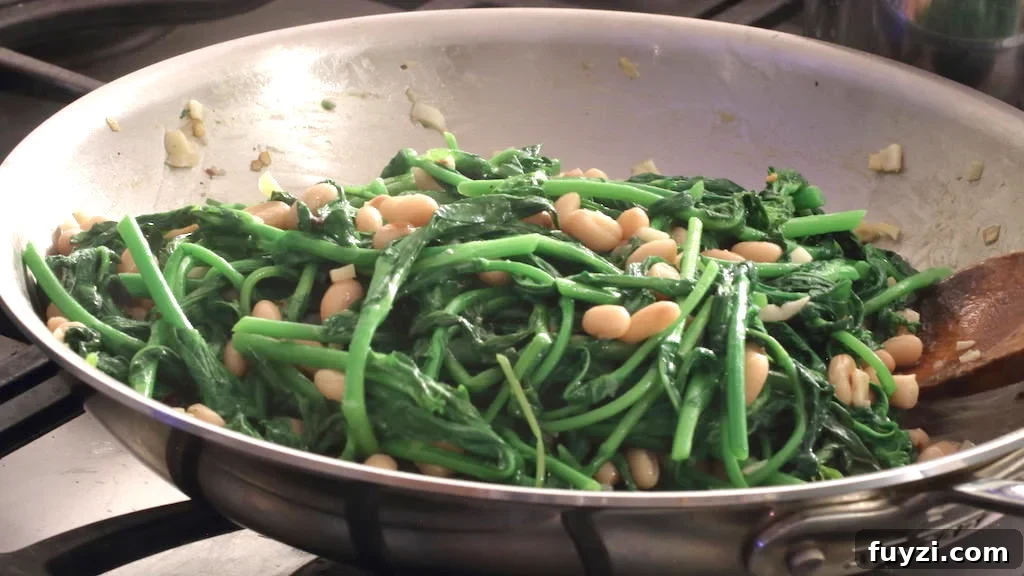
What is broccoli rabe?
Broccoli rabe (also called raab, rapini, or broccoletti) belongs to the brassica or mustard family. Unlike broccolini, broccoli rabe is a leafy green whose stems, leaves, and flower buds are all edible. It has a lively, slightly bitter flavor that pairs beautifully with garlic, olive oil, and beans.
Is broccoli rabe nutritious?
Yes. Broccoli rabe is rich in vitamins A, C, and K, plus folate, potassium, and calcium. Like other cruciferous vegetables, it contains glucosinolates, compounds linked to cancer-preventive effects. To preserve its nutrients and bright color, avoid overcooking: steam or sauté only until the stems are just tender. See the recipe notes for tips if your rabe has tough, older stems.
Why this is the easiest broccoli rabe with white beans recipe
Many recipes call for blanching broccoli rabe to reduce bitterness, but when you start with young, tender rabe that step isn’t necessary. If the greens are harvested early they cook quickly and become tender in one pan with a little liquid. This simplifies the process to a fast, flavorful skillet dish with minimal prep and cleanup. When truly young, broccoli rabe can even be enjoyed raw in salads.
Sourcing fresh-picked young and tender broccoli rabe
If your market doesn’t carry young rabe, consider growing it yourself — it’s an easy cool-weather crop. In our Connecticut garden (zone 5a) we plant mid-summer for a fall harvest, and sometimes let plants reseed to give us an early spring crop. In warmer climates it may winter over. Broccoli rabe volunteers readily and can even be grown in containers.
There are heading and non-heading varieties; we generally grow non-heading types. Starting from seed gives you a wider selection of varieties than you’ll find in stores, including heirloom and organic options.
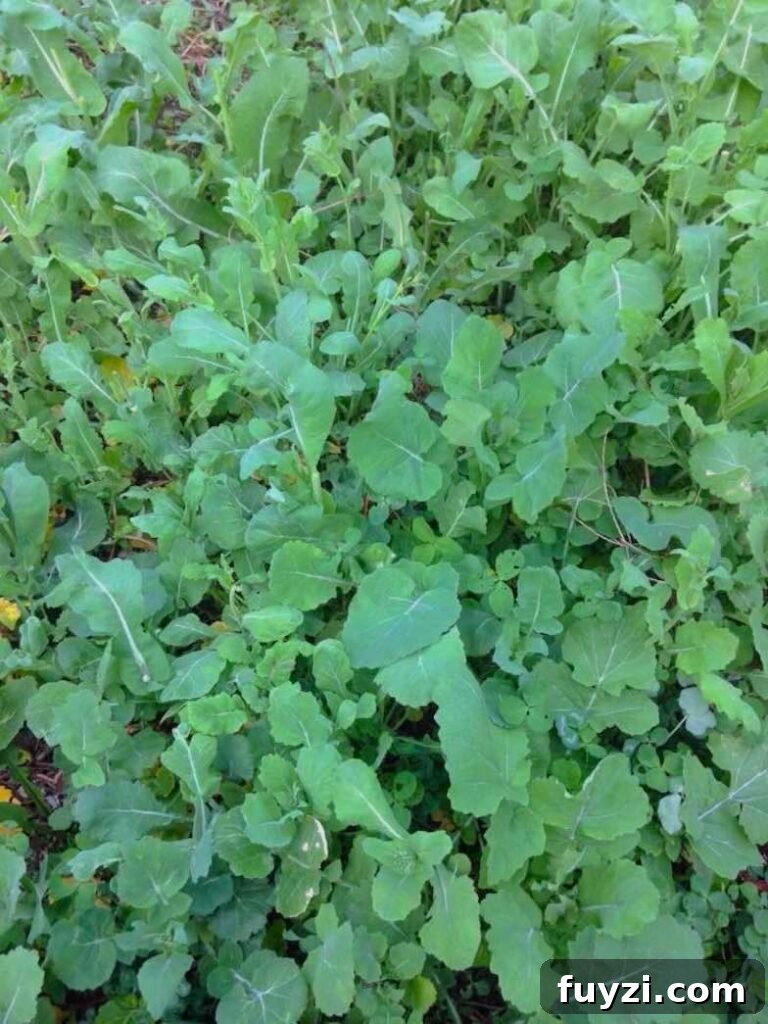
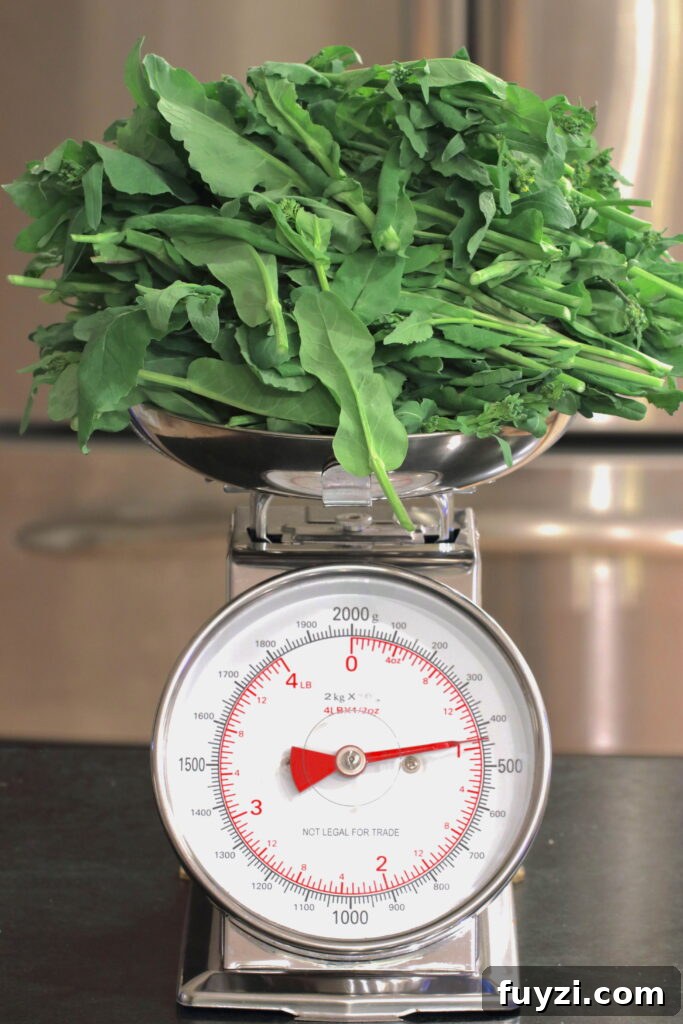
Broccoli rabe is growing wild in our greenhouse
It’s early spring here in Connecticut and we’re fortunate to have a large, self-seeded patch of broccoli rabe growing in our greenhouse. We’ve harvested about five pounds so far, with plenty left to pick as long as the weather remains cool. In addition, Jamie planted a long row that will be ready when the volunteer patch finishes, so it looks like we’ll be enjoying broccoli rabe with white beans for weeks.
Each year several vegetables reseed themselves, giving us reliable, low-effort crops. Jamie has a talent for spotting these volunteer plants and letting them grow, which rewards us with hardy, flavorful harvests.
Method Overview
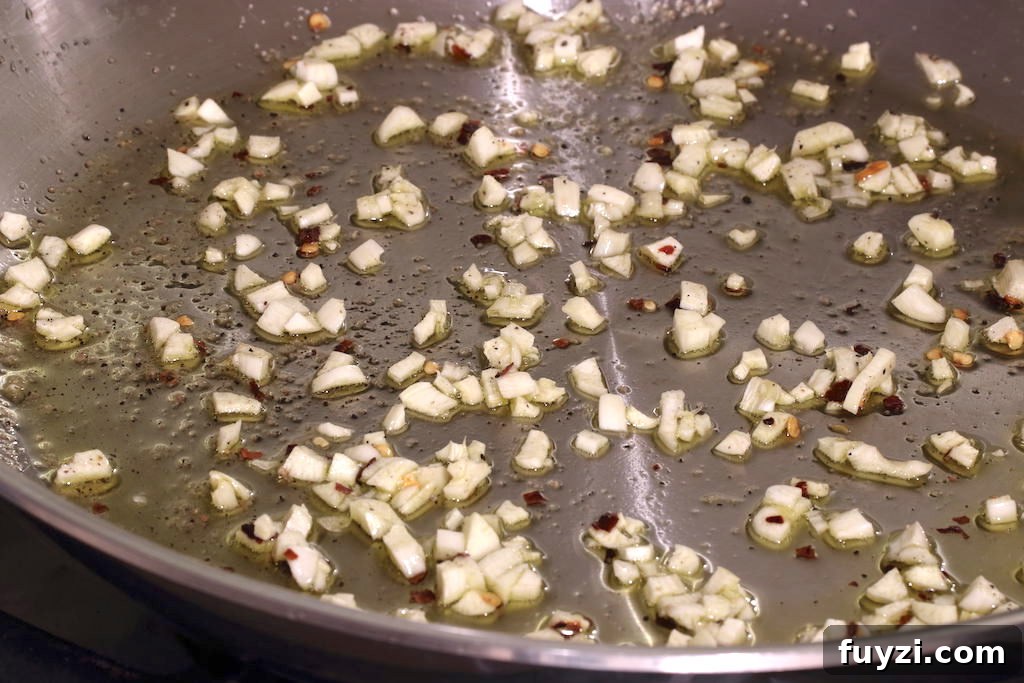
- Sauté garlic in olive oil with seasonings.
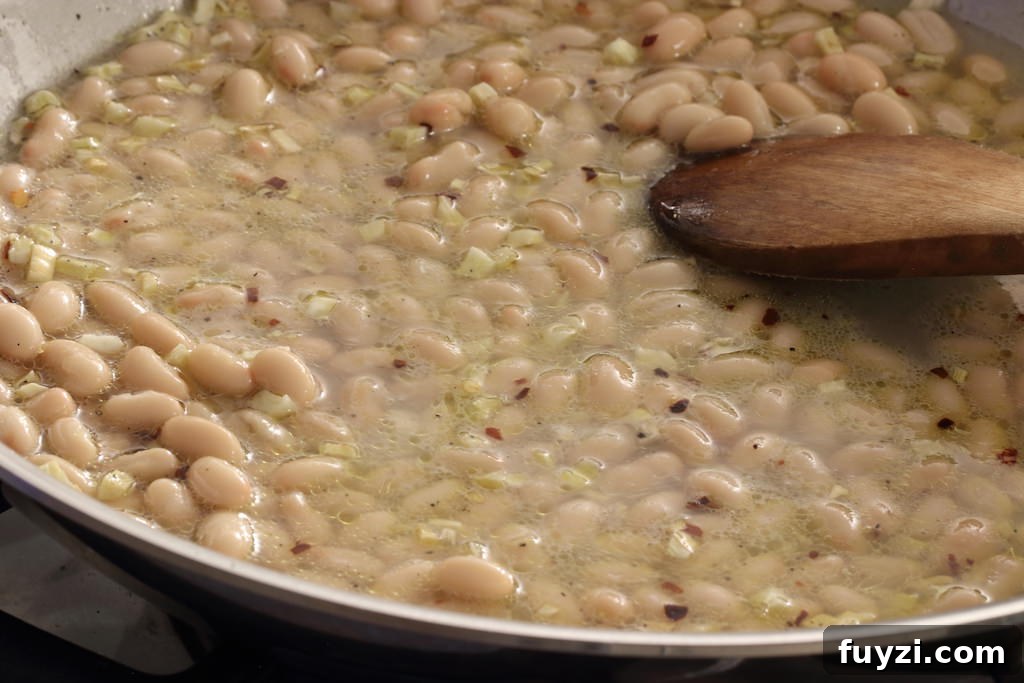
- Stir in white beans with their cooking liquid and bring to a simmer.
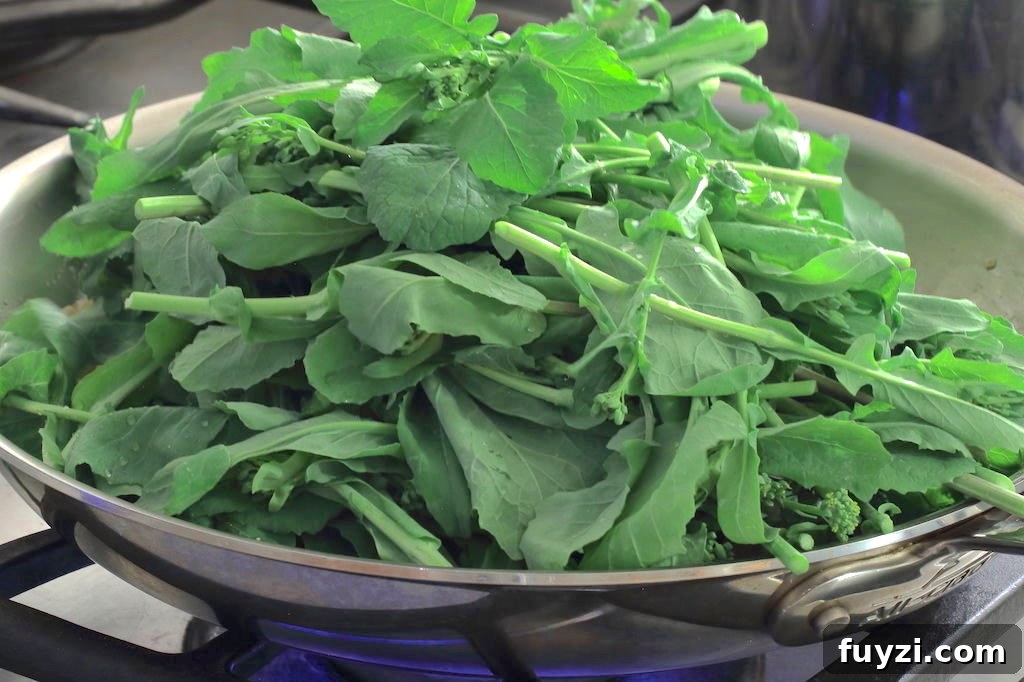
- Add broccoli rabe, cover the pan, and cook briefly until tender.
Broccoli Rabe with White Beans
Course: main course | Cuisine: Italian | Servings: 2 | Calories: 308 kcal
Equipment
- Large skillet with a lid
Ingredients
- 1 pound broccoli rabe, picked when young and tender
- 2 Tablespoons olive oil
- 4 garlic cloves, diced or sliced
- 1/8 teaspoon freshly ground black pepper
- 1/4 teaspoon crushed red pepper
- 1/4 teaspoon Himalayan sea salt
- 15-ounce can cannellini beans, do not drain the juice
Instructions
- Place the broccoli rabe in a large bowl or pot of cold water and swish it around. Let it soak for 5–10 minutes so any soil can settle to the bottom. Use a colander as a weight if needed to keep the rabe submerged. Lift the greens from the water, rinse once more, and drain.
- Trim the ends of the stems and remove any discolored leaves, if necessary.
- Heat the olive oil in a large skillet over medium-high heat and add a bit of the garlic to flavor the oil.
- When the garlic begins to sizzle gently, add the remaining garlic, crushed red pepper, black pepper, and salt. Cook, stirring often, for a few minutes until the garlic softens but does not brown.
- Stir in the cannellini beans with their juice and bring just to a simmer.
- Add the broccoli rabe to the skillet and cover the pan. Cook for two minutes, then toss the greens with tongs or wooden spoons. Recover and cook another one to two minutes more, until the stems are tender. Taste and adjust seasonings as desired.
Notes
If you are concerned about flatulence
- Drain the juice from the cannellini beans.
- When you add the beans to the skillet, also add 1/4 cup of vegetable broth.
If you are NOT using fresh-picked young and tender broccoli rabe
To ensure tender, non-bitter results with older or larger stalks, consider these steps:
- Peel the tougher outer layer from the stems.
- Chop the stems into halves or thirds, leaving leaves and buds intact.
- Blanch the prepared rabe for two minutes, then plunge into ice water.
- Drain and proceed with the main recipe.
Nutrition
Calories: 308 kcal | Carbohydrates: 27 g | Protein: 18 g | Fat: 15 g | Saturated Fat: 2 g | Sodium: 382 mg | Potassium: 1465 mg | Fiber: 13 g | Sugar: 2 g | Vitamin A: 6021 IU | Vitamin C: 48 mg | Calcium: 416 mg | Iron: 12 mg
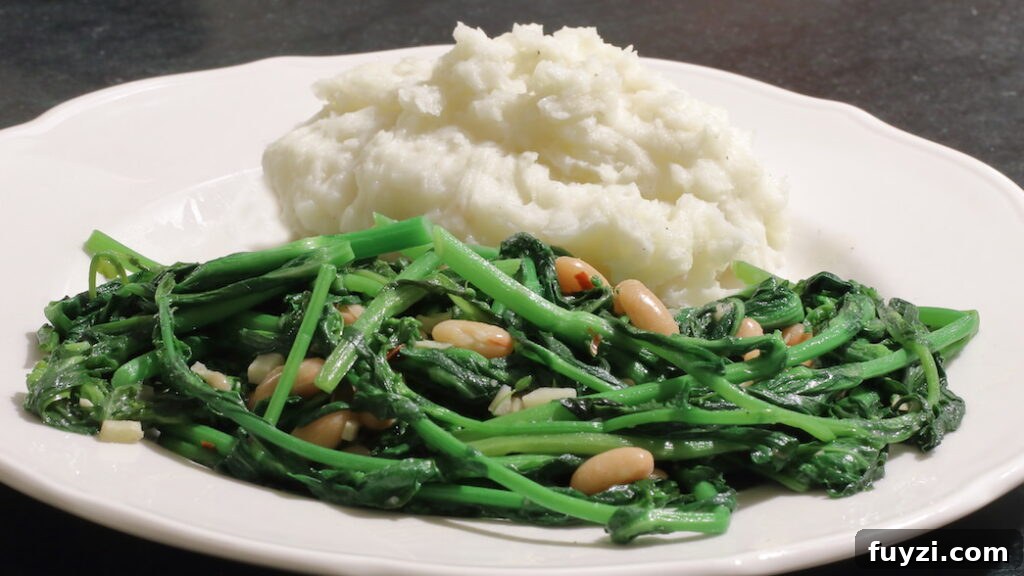
Optional omnivore variation
For a non-vegan version, sprinkle the finished dish with grated pecorino Romano or Parmesan cheese.
If you enjoy this recipe, you may also enjoy the White Bean and Rutabaga Burgers recipe on this site.