

Last weekend I attended the Fitness and Health Bloggers Conference at the University of Colorado’s Anschutz Health and Wellness Center. The facility is only a couple of months old, and at first glance it resembles a stunning, modern gym. But the center is designed to be far more than just a workout space: it functions as a community wellness hub, bringing together doctors, researchers, clinicians, and local businesses to advance health and preventive care.
The lobby features a demonstration kitchen and a bistro serving fresh, healthy dishes prepared with vegetables grown on the building’s green roof. I tried the “Better Bean” burger with fennel slaw and it was excellent. The center also includes a metabolic kitchen for producing precise meals for clinical studies, and a demonstration grocery store set up with realistic pricing and nutritional scores. Locker rooms are spacious and well appointed, making the facility comfortable for both visitors and athletes.

Executive Director Dr. James O. Hill, PhD, leads the center. Dr. Hill brings a lengthy research record and extensive experience in obesity and nutrition science; he co-founded the National Weight Control Registry and has authored hundreds of scientific articles. At the conference, Dr. Hill and many of his colleagues spent the weekend teaching sessions, leading classes, and engaging with attendees—demonstrating a level of hospitality and openness that set a positive tone for the entire event.
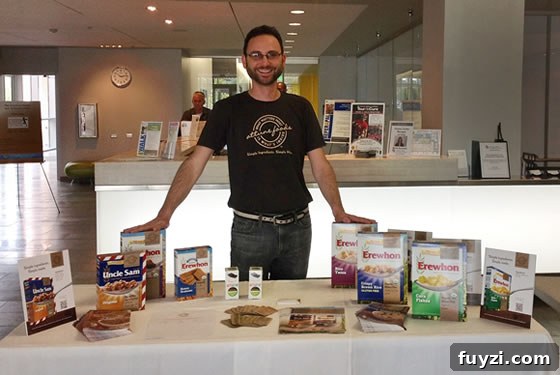
I attended the conference as a brand ambassador for one of the sponsors, Attune Foods. They provided a whole-grain, gluten-free breakfast on the first morning, and I helped staff the trade-show table for a few hours before attending the rest of the sessions. That morning produced a memorable moment when an attendee realized the corn flakes were certified gluten-free; she was moved to tears after not having eaten them for years, which highlighted the emotional side of dietary restrictions and access.
“Eat less, move more” is bad advice.
In his keynote, “The Importance of an Evidence-Based Approach to Health and Wellness,” Dr. Hill challenged the familiar mantra “eat less, move more.” The problem with telling people simply to eat less is that calorie restriction often creates intense hunger. Willpower is finite, and biological drives will eventually overpower short-term restraint.
Dr. Hill recommends reframing the guidance as “move more, eat smarter.” “Move more” goes beyond scheduled gym sessions: it’s about increasing daily activity in practical ways—taking stairs, parking farther away, standing and walking more during the day. The goal is to build an environment and a culture that naturally encourages movement.
“Eat smarter” focuses on nutrient density rather than just reducing portions. Choosing foods that are filling and nutrient-rich—vegetables, whole grains, lean protein—helps control calories while supporting overall health. This approach aligns with many successful weight-loss strategies: you can eat satisfying amounts of food if you prioritize high-quality, lower-calorie choices.

Diet is the driving force in weight loss…
When it comes to losing weight, the consensus presented at the conference is clear: reducing calorie intake is the most effective method for initial weight loss. It is generally easier to cut 500 calories from what you eat than to burn the same amount through exercise. For example, a single high-calorie muffin can equal many minutes of intense running. That reality makes dietary choices a central tool in any weight-loss plan.
That said, exercise is still important. Regular physical activity supports overall health, improves fitness, and contributes to calorie balance. But for the initial drop in weight, modifying what and how much you eat tends to produce faster, more predictable results.
…But physical activity is the driving force in weight-loss maintenance.
Long-term maintenance is where activity becomes paramount. Keeping weight off over months and years is notoriously difficult, and the evidence shows that sustained physical activity is critical to preventing regain. Continued movement—not just occasional workouts—helps preserve muscle mass, supports metabolic health, and stabilizes energy balance over time.
As Dr. Hill put it: you can lose weight without exercise in the short term, but if you want to keep it off, you must stay active. The combination of “eating smarter” and adopting a consistently active lifestyle is what leads to lasting success.
More to come
In a follow-up piece I plan to explore the work of Dr. Iñigo San Millán, head of the center’s Performance Laboratory, whose research adds important nuance to the diet-versus-exercise conversation. For now, the main takeaway from the conference is straightforward: prioritize nutrient-dense foods, increase daily movement, and build sustainable habits that fit your life. Those are the evidence-based strategies most likely to deliver long-term health and weight-management results.
Note: For clarity I use the terms “exercise” and “activity” interchangeably in this recap. The most important point is to find forms of movement and eating patterns that you can maintain over the long term.