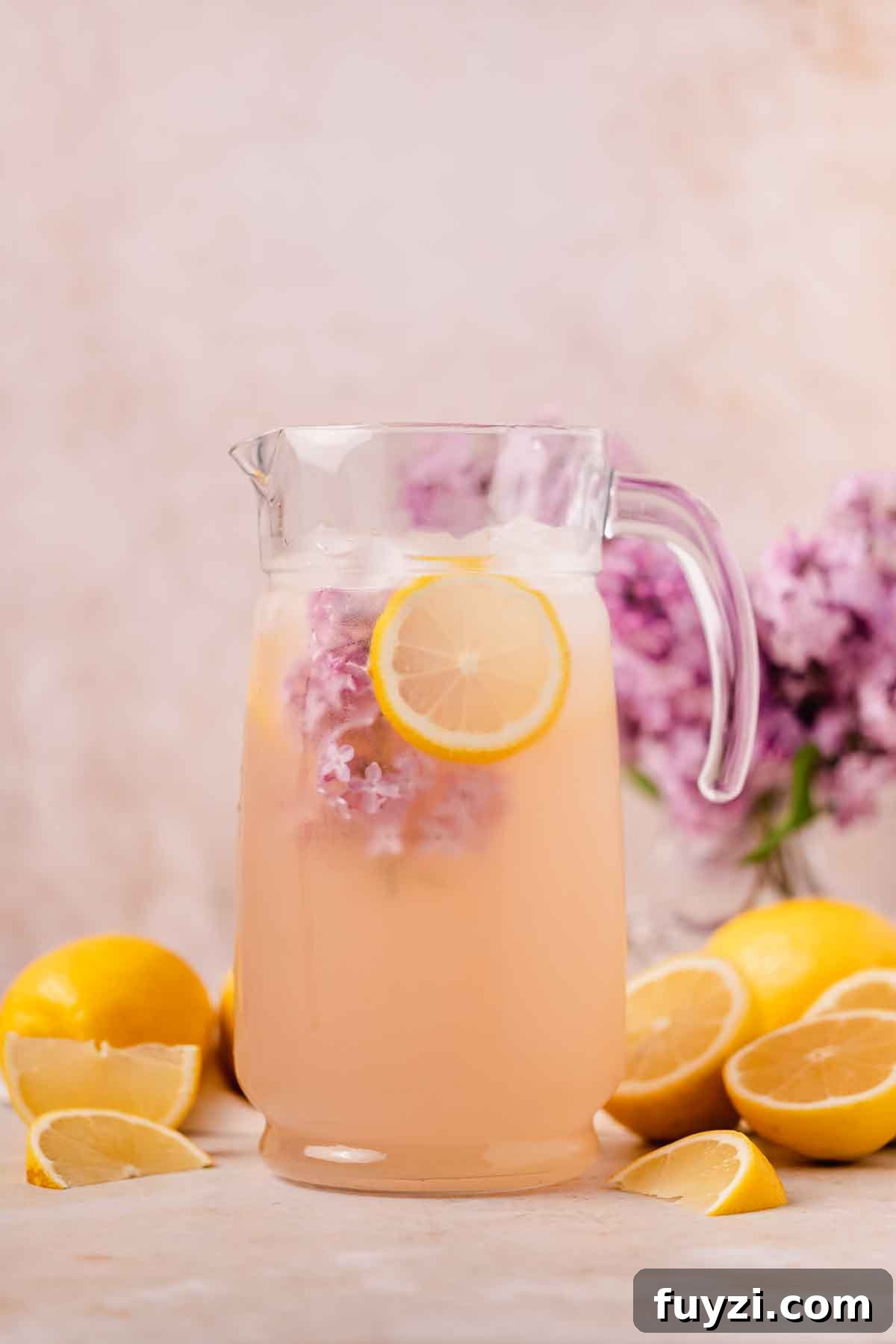
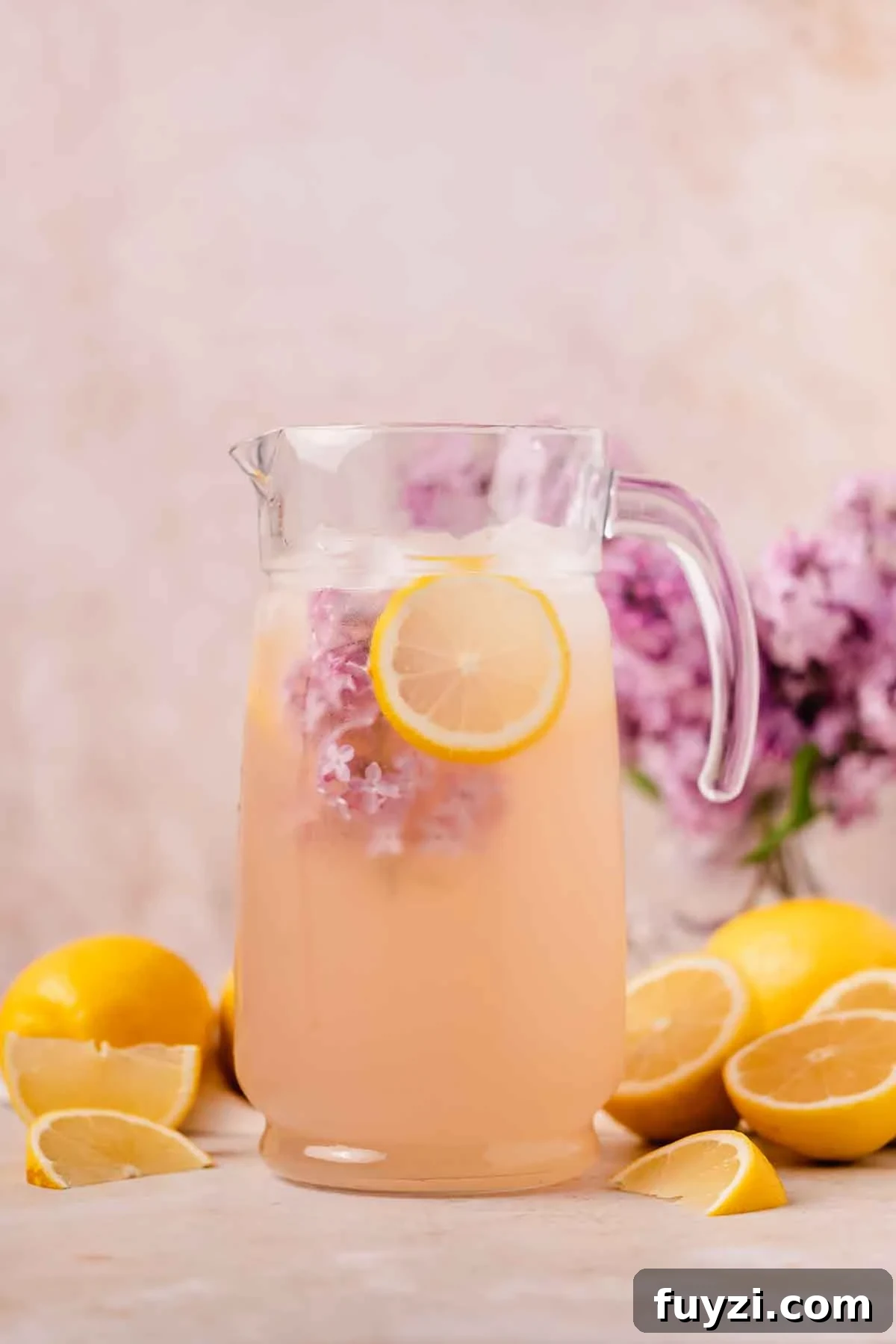
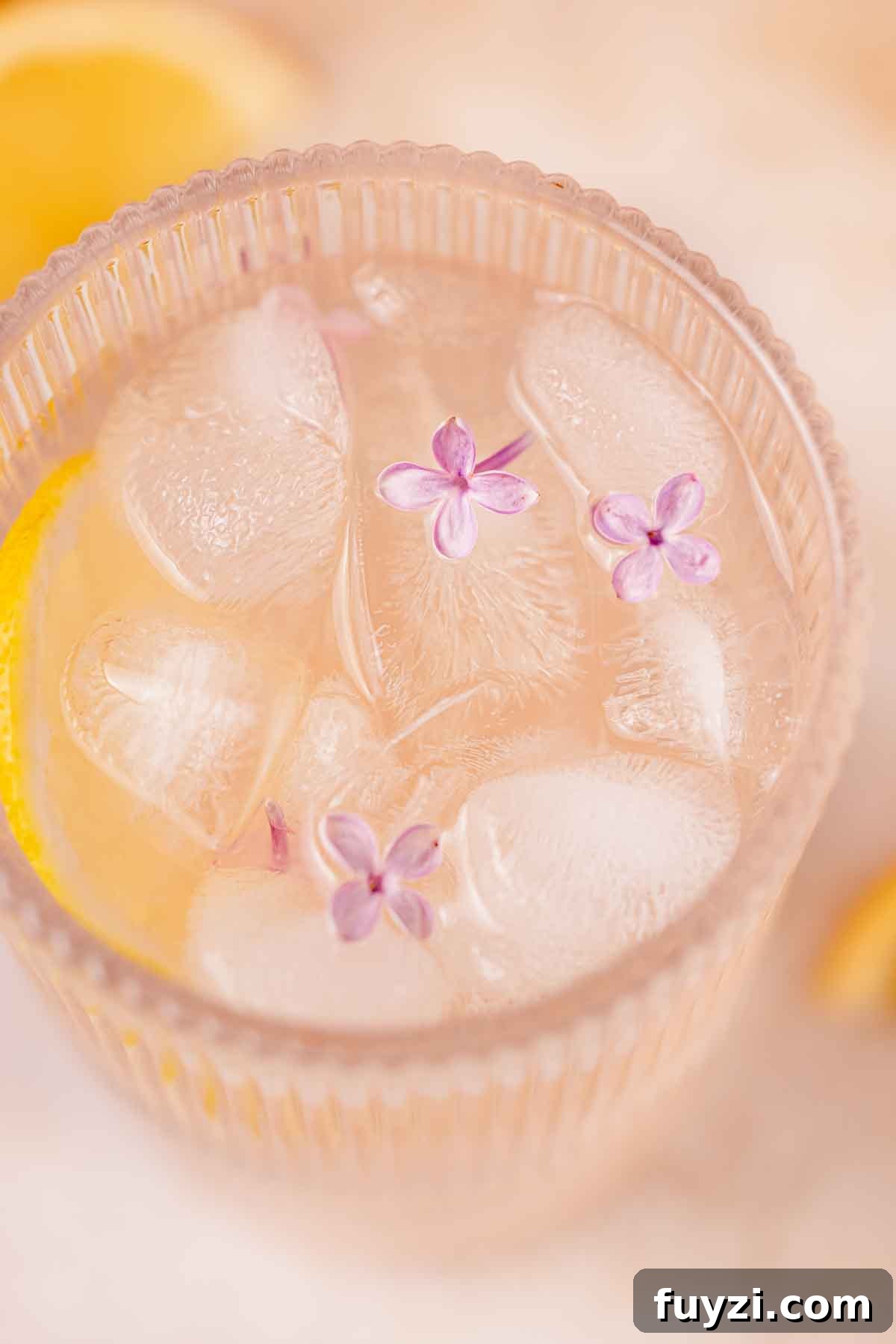
This color-changing lilac lemonade is a light, refreshing drink that blends bright lemon with the soft floral aroma of lilac blossoms. Made with a simple homemade lilac-infused syrup, the lemonade develops a lovely, whimsical hue when the syrup is added. The floral note from the lilacs is delicate and fragrant rather than overpowering, making this a perfect spring or early summer beverage for garden parties, family gatherings, or a relaxed afternoon on the patio.
🌼 Why you’ll LOVE this recipe
- Fragrant lilac flavor: A homemade lilac syrup highlights the blossoms’ gentle floral aroma without overpowering the drink.
- Bright lemonade: Freshly squeezed lemon juice gives a clean tartness that balances the sweet syrup.
- Easy and fun: The syrup is simple to make and the color change when combined with lemon juice makes serving playful—kids love it.
If you enjoy floral desserts and treats alongside this lemonade, try pairing it with a light lemon cake or lemon scones for a cohesive spring menu.

📝 Key ingredients
Read through the tips below for the best results. Full ingredient amounts and method are in the recipe card at the end.
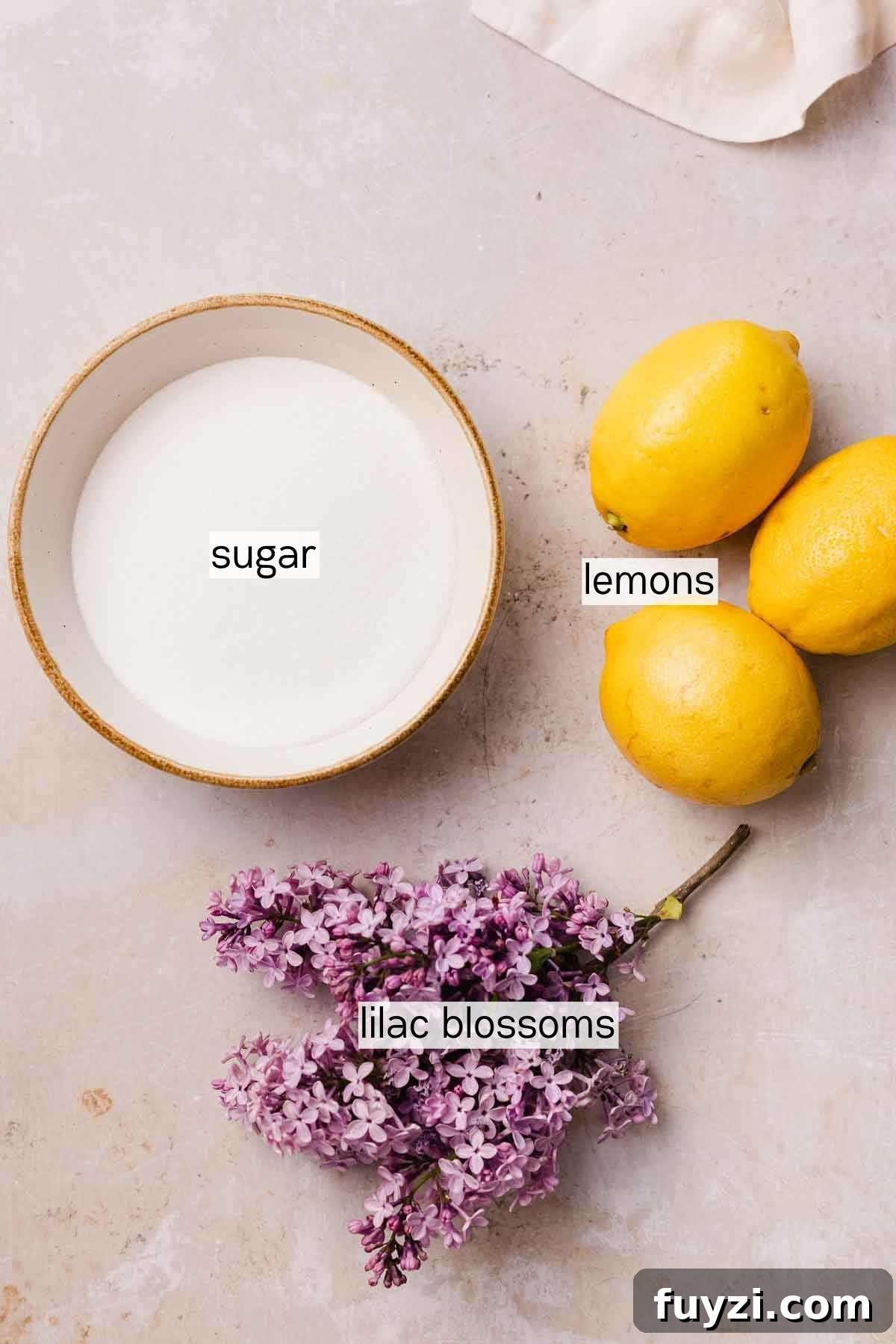
- Lilac blossoms: About 2 cups of picked lilac petals, packed. Use blossoms that are fully open but still fresh on the stem for best aroma and flavor.
- Lemons: Approximately 3 large lemons, yielding about 3/4 cup (¾ cup) of freshly squeezed juice. Fresh lemon juice makes a noticeable difference in brightness and flavor.
You will also need granulated sugar, water, ice, and a non-metal pitcher for mixing and serving.
✔️ Ingredient substitutions
If purple lilacs aren’t available, elderflower syrup is a good substitute because it shares a similar delicate floral profile. White lilacs lack the purple pigments that cause the color change, but they can still provide floral flavor if you only care about taste.
👩🍳 How to make lilac lemonade
Lilac syrup step by step
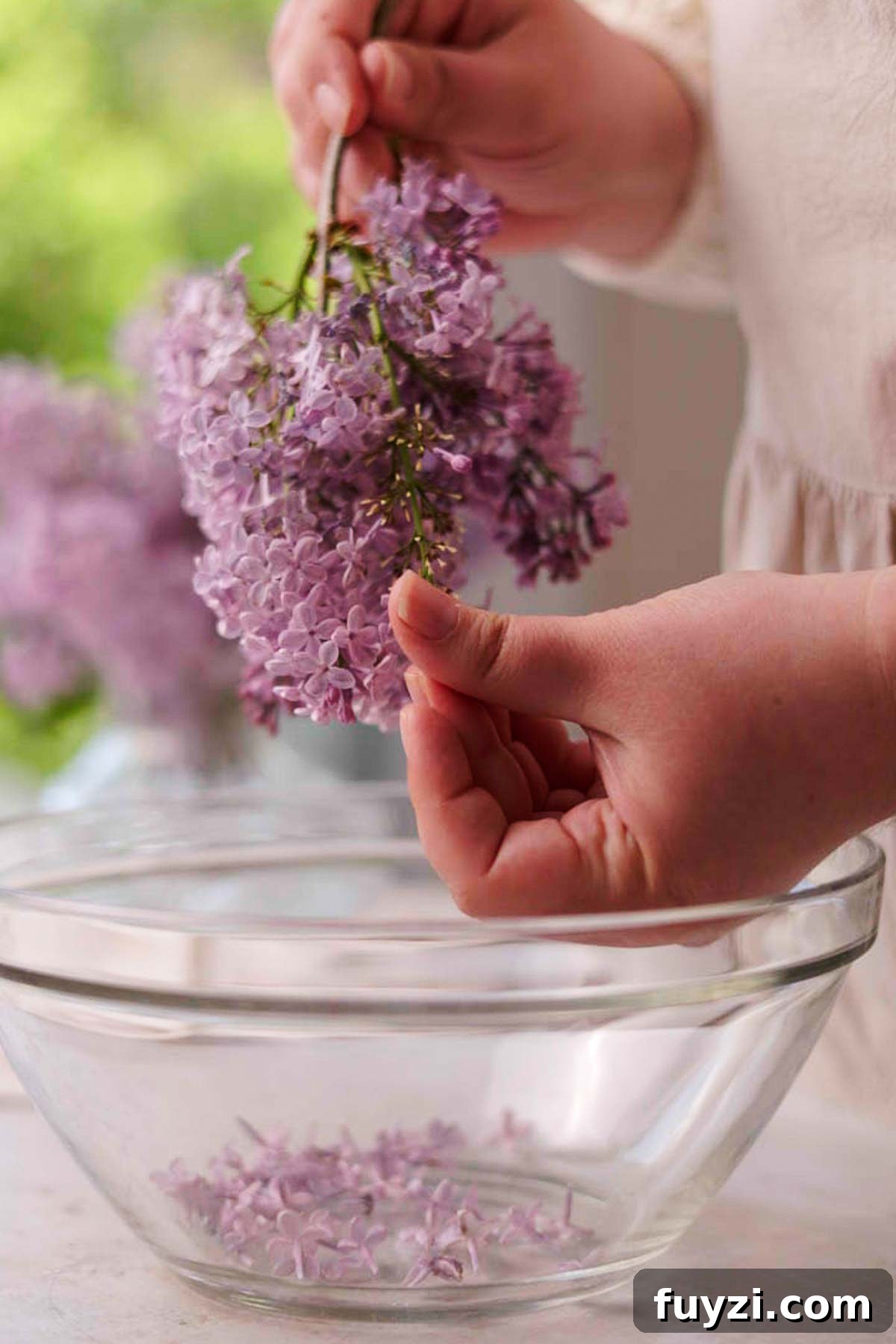
Step 1: Remove the lilac flowers from their stems and place them in a bowl. Cover with water and let them sit for 10 minutes, then rinse thoroughly to remove any dirt or small insects. Drain well. Measure about 2 packed cups of petals; small variations are fine.
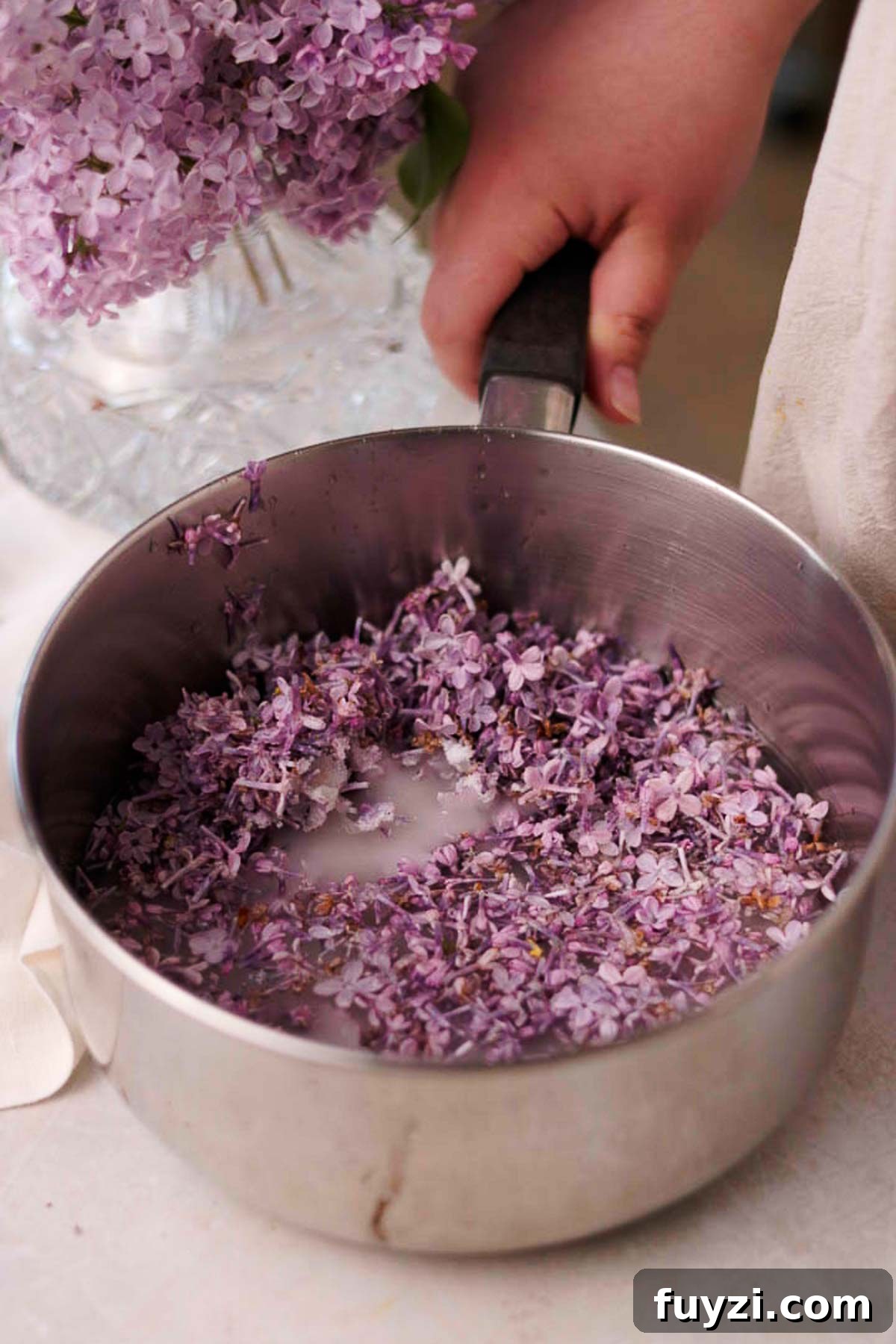
Step 2: Place the cleaned petals in a medium saucepan with 1 cup granulated sugar and 1 cup water.
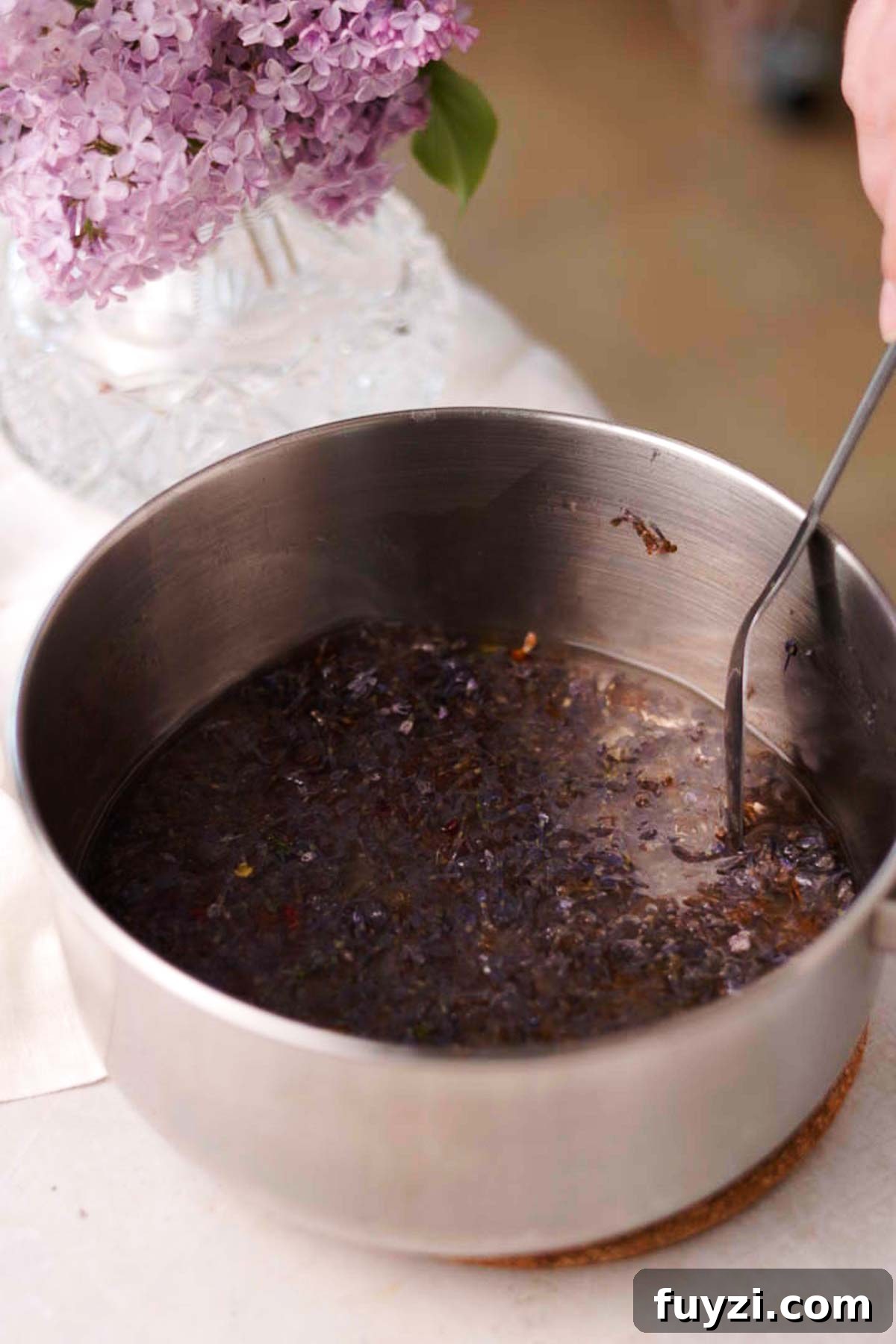
Step 3: Bring the mixture to a boil, then simmer for about one minute. Turn off the heat and let the syrup cool to room temperature so the floral aroma infuses fully.
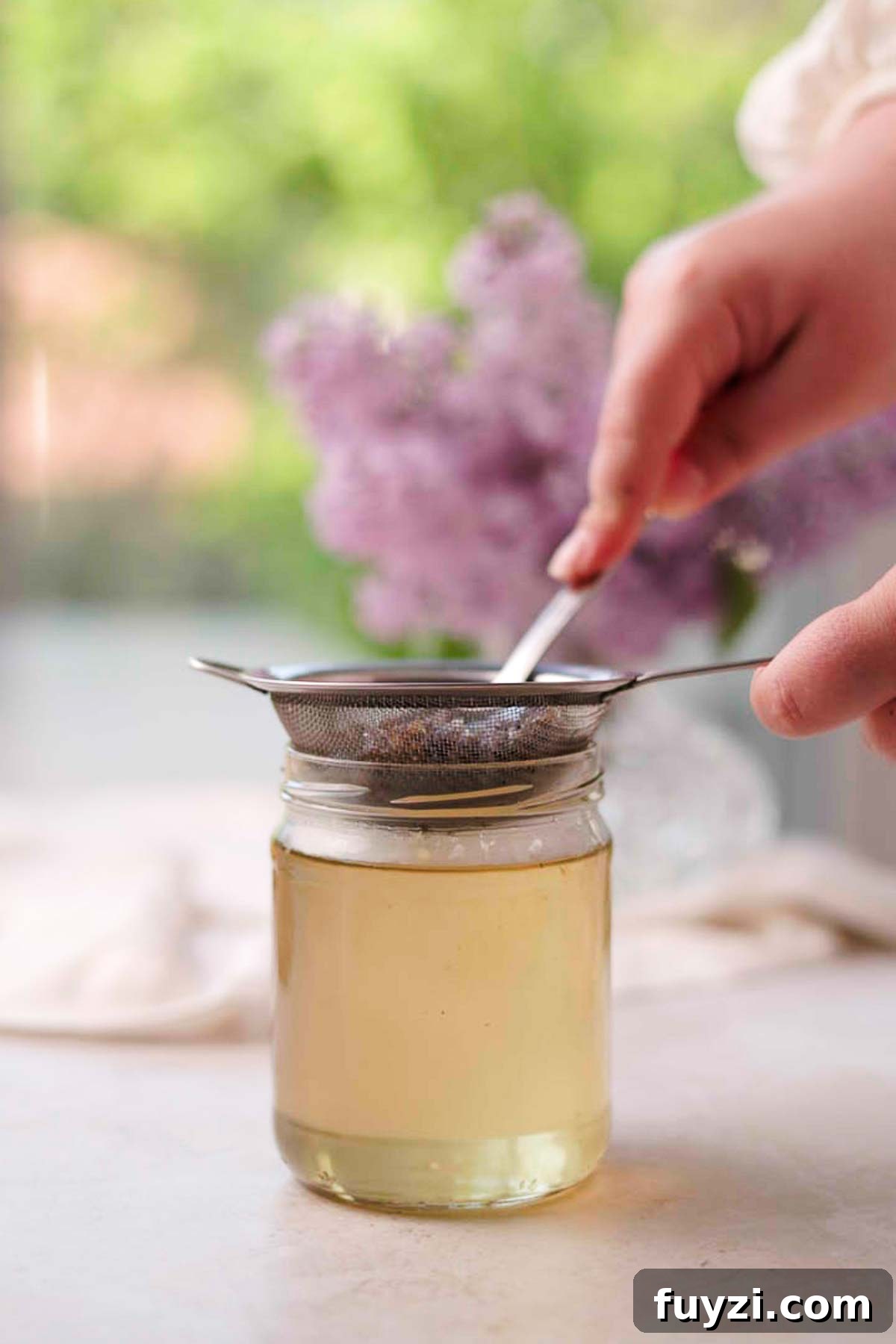
Step 4: Strain the cooled syrup into a jar through a fine mesh sieve, pressing on the petals to extract as much liquid as possible. Discard the spent flowers and refrigerate the syrup until ready to use.
Lemonade step by step
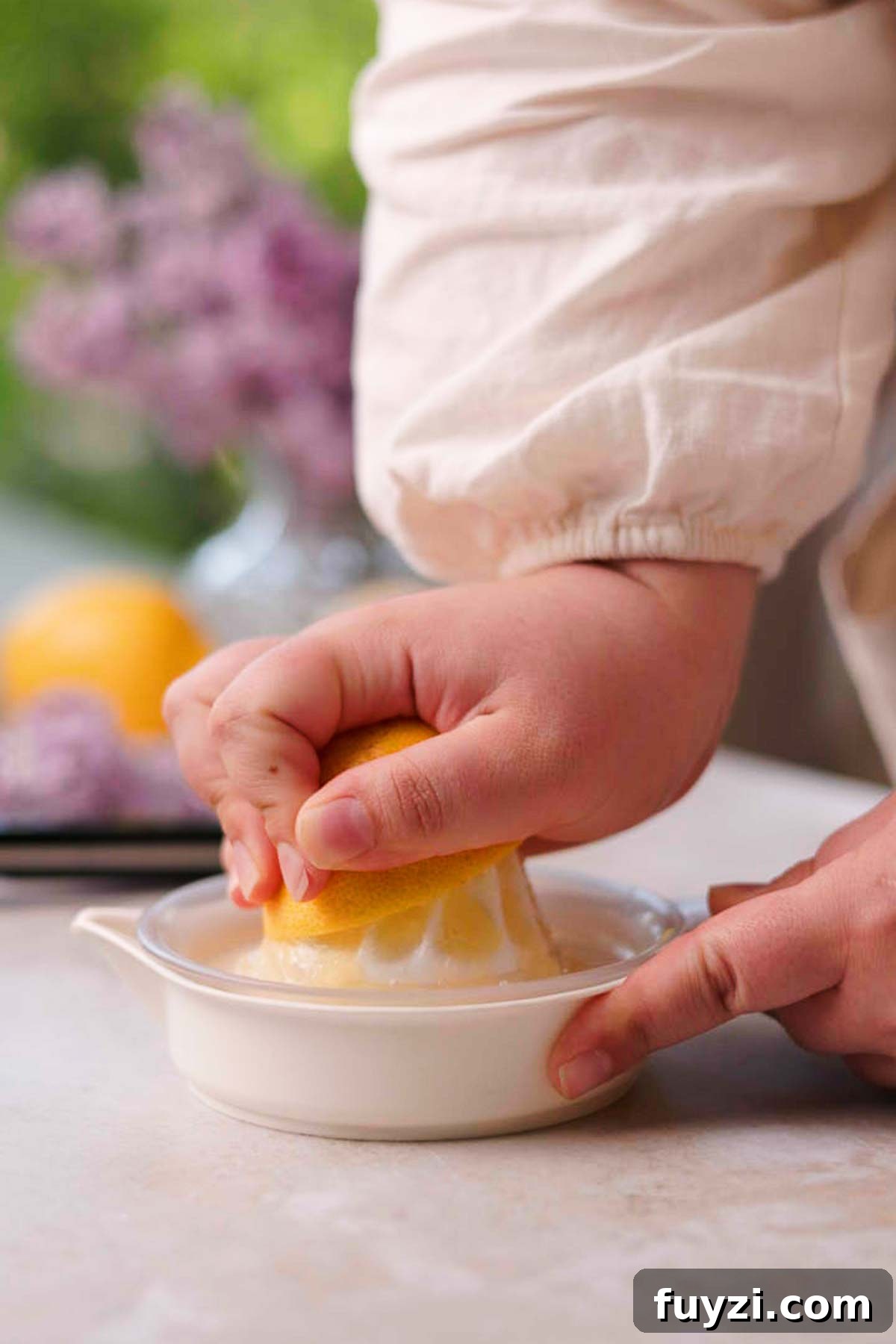
Step 1: Squeeze the lemons and pour the fresh juice into a large non-metal (glass, ceramic, or coated) pitcher.
Avoid metal pitchers to prevent any metallic taste from developing when the lemonade sits with the acid from the lemons.
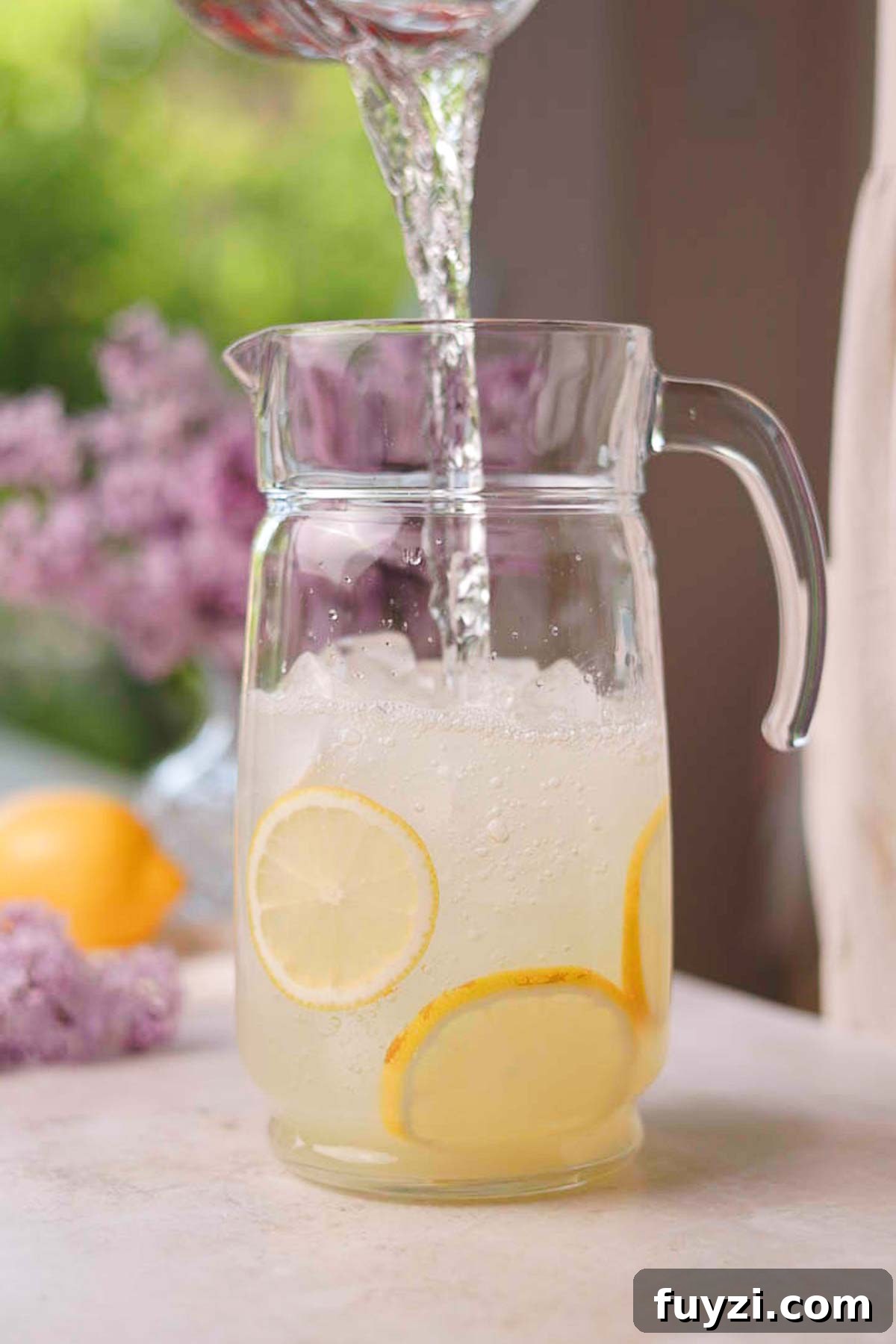
Step 2: Add about 3 cups of ice and 3 cups of cold water to the pitcher, then stir to combine.
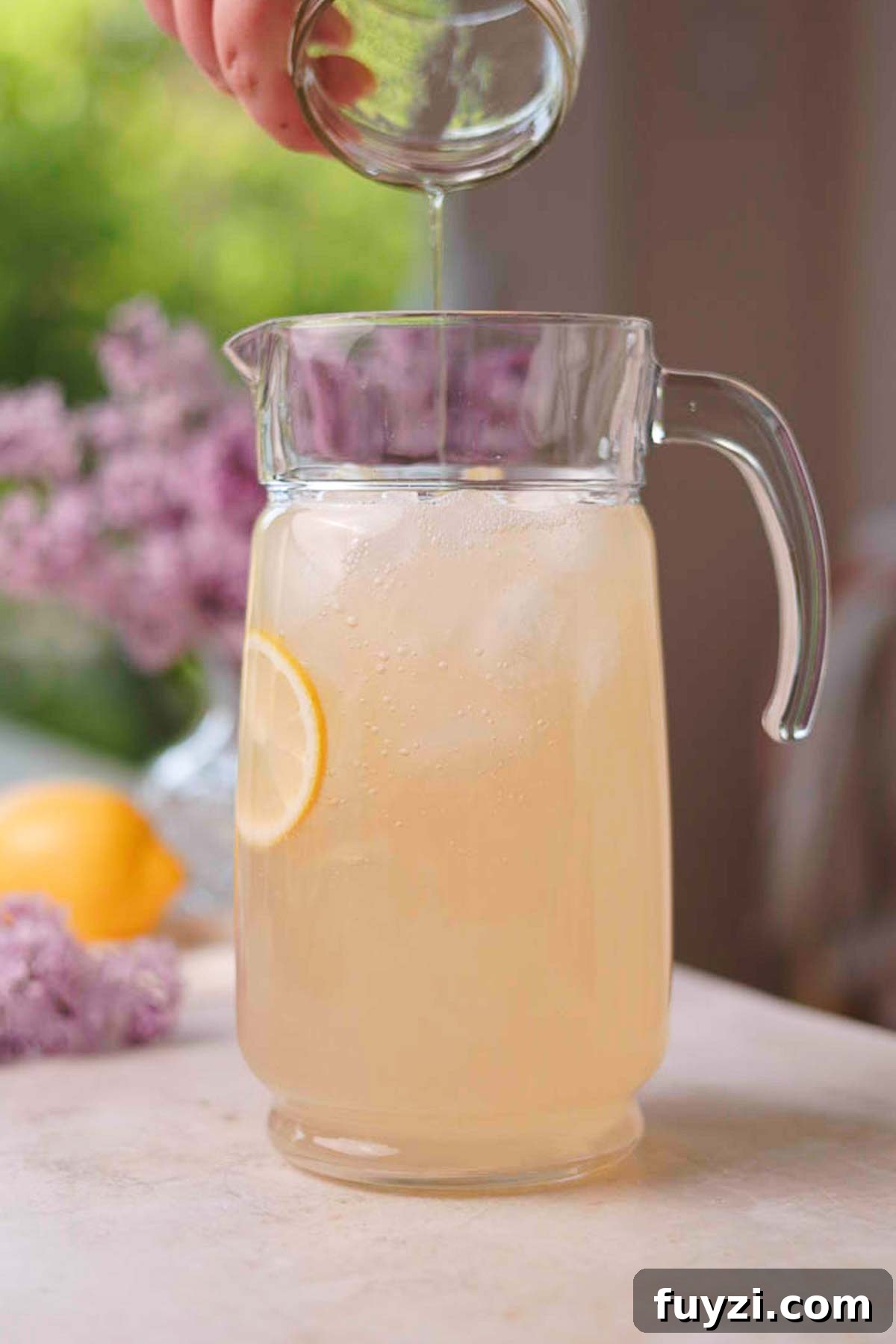
Step 3: Pour in the lilac syrup a little at a time and stir. As the floral syrup mingles with the acidic lemon juice, the color will shift to a warm peach or soft orange—this is a natural pH-driven reaction from the flower pigments.
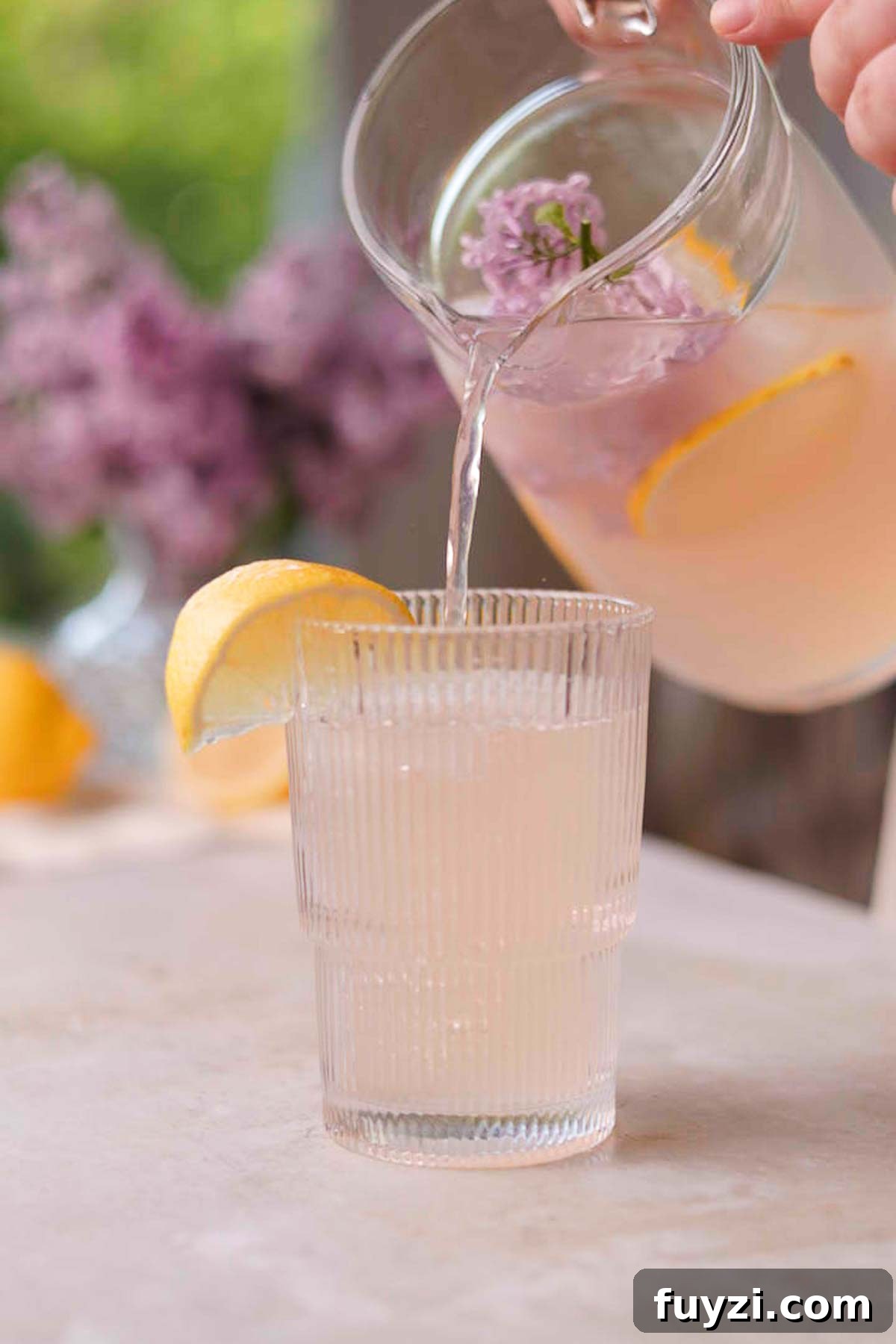
Step 4: Garnish with lemon slices and a washed sprig of lilac if desired, then serve chilled.
🥤 Expert lemonade tips
- Use a glass, ceramic, or enamel-coated pitcher to avoid any metallic aftertaste.
- Taste and adjust: lemons vary in size and acidity, so adjust sweetness or lemon to suit your palate.
- To sweeten further, dissolve equal parts sugar and hot water to make a simple syrup, then add gradually to taste so the drink stays clear and evenly sweetened.
🥄 Make ahead and storage
The lilac syrup can be prepared up to one week in advance and stored in an airtight container in the refrigerator for 1–2 weeks. The mixed lemonade will keep in the fridge for 1–2 days, but it tastes best on the day it is made when the ice is fresh and the flavors are brightest.
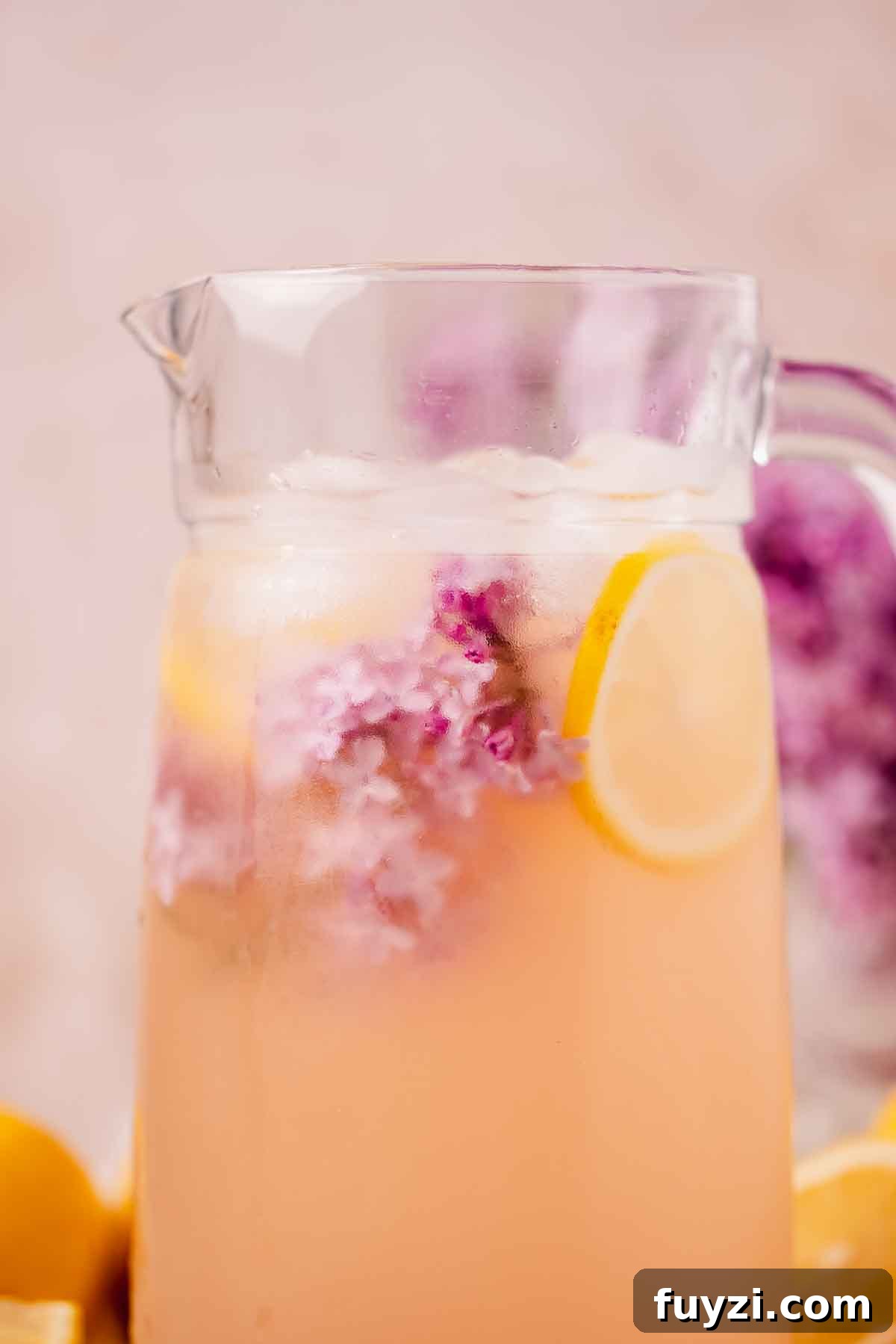
❔ What do lilacs taste like?
Edible lilac blossoms taste much like they smell: a gentle, sweet floral note that is more delicate than stronger floral herbs like lavender. Different lilac varieties can offer subtle differences in aroma and flavor, so pick a variety whose fragrance you enjoy.
If you prefer milder floral flavors, purple lilacs are usually a good choice because they offer a sweet, fragrant presence without a soapy or overpowering finish.
✔️ Where to source lilacs
Try asking neighbors or local friends for a few sprigs from their garden, or use blossoms from your own yard. If you purchase cut flowers, confirm with the florist that they haven’t been treated with pesticides or other chemicals that could make them unsuitable to eat. Avoid gathering blossoms that grow immediately beside busy roads due to potential pollutants and dust.
❔ Are lilacs pH sensitive?
Yes. The purple color in many lilac varieties comes from anthocyanin pigments that change with pH. When those pigments meet acidic lemon juice, they shift toward warm peach or orange tones—this is the same natural chemistry that makes the lemonade change color. White lilacs do not contain those pigments and therefore will not produce the color change, though they can still be used for flavor.
📖 Recipe FAQs
Elderflower syrup is a close substitute and will lend a similar delicate floral flavor to lemonade and other drinks.
Plan on about 4–6 large clusters or roughly 2 packed cups of petals. Small adjustments will still yield a nicely flavored syrup.
Yes, most common lilac blossoms are edible and work well infused into syrups and desserts. Always verify that they have not been treated with pesticides.
Purple lilac petals contain anthocyanin pigments that react to pH. In an acidic environment like lemon juice, these pigments shift to warm peach or orange tones, producing the color change.
🍋 More related recipes
-
Lilac Cake with Lemon
-
Lemon Tiramisu with Lemon Curd
-
Blueberry Lemon Cake
-
Lemon Curd Cookies




If you try this recipe, please leave a comment describing your experience and any tweaks you made. Tag photos of your creation when sharing to inspire others.
📖 Recipe

Lilac Lemonade
This color-changing lilac lemonade combines tangy lemon with delicate lilac floral notes. It’s simple to prepare and makes a charming, fragrant beverage for spring and early summer gatherings.
Author: Mary
Prep time: 15 mins Cook time: 5 mins Servings: 8 cups
Calories: 108 kcal per cup (approx.)
Ingredients
Lilac Syrup
- 2 cups lilac blossoms, packed (picked and rinsed)
- 1 cup granulated sugar
- 1 cup water
Lemonade
- 3 large lemons (about ¾ cup freshly squeezed juice)
- 3 cups ice
- 3 cups cold water
- Lemon slices and a washed lilac sprig for garnish (optional)
Instructions
Lilac Syrup
- Pluck lilac flowers from stems, cover with water, let sit 10 minutes, then rinse and drain. Measure 2 packed cups of petals.
- Combine petals with sugar and 1 cup water in a medium saucepan. Bring to a boil, then simmer for 1 minute.
- Remove from heat and let cool to room temperature in the pan to allow flavors to infuse.
- Strain into a jar through a fine sieve, pressing the petals to extract liquid. Discard petals and refrigerate the syrup.
Lemonade
- Squeeze lemons and pour the juice into a large non-metal pitcher.
- Add ice and cold water, then stir to combine.
- Pour in lilac syrup to taste and stir. Observe the natural color change as the floral syrup meets the acidic lemon juice.
- Garnish with lemon slices and a sprig of lilac if desired. Serve immediately.
Notes
- Make ahead: Lilac syrup can be stored in an airtight jar in the fridge for 1–2 weeks.
- Storage: Lemonade is best the day it’s made but will keep refrigerated for up to 2 days.
- Taste adjustments: If you need more sweetness, add simple syrup (1:1 sugar to hot water) a little at a time until the balance suits you.
Nutrition (approx. per cup)
Calories: 108 kcal • Carbohydrates: 29 g • Sugar: 26 g • Vitamin C: 21 mg • Sodium: 11 mg