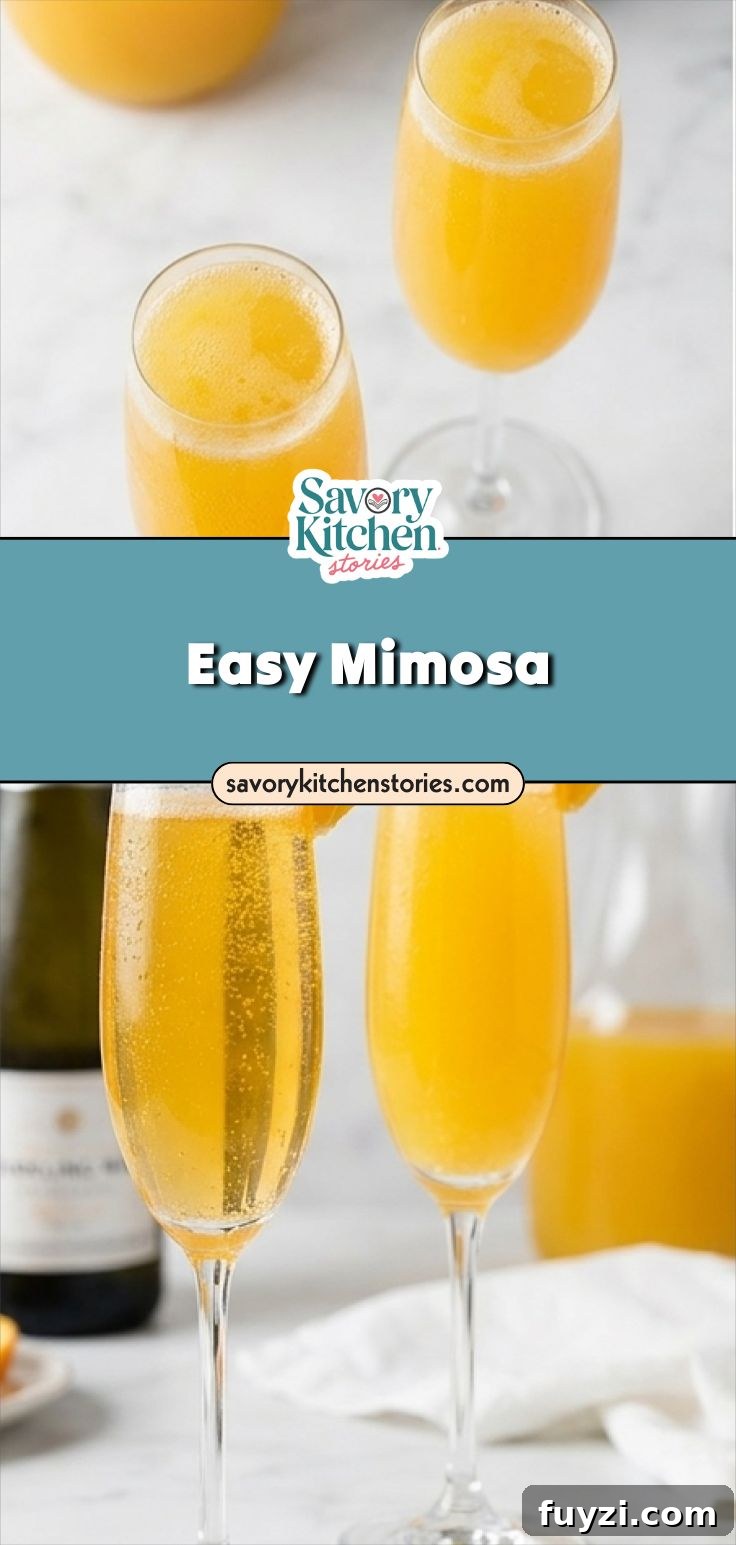
I still remember the first time I mixed this Easy Mimosa Recipe for a relaxed Sunday brunch — it felt like a small celebration in a glass. With just two main ingredients and a little patience, you get a bright, bubbly drink that looks and tastes elegant. The fizz lifts the citrus, the flute chills and fogs slightly, and suddenly a morning feels special. If you want a simple crowd-pleaser that requires almost no effort but delivers on presentation, this mimosa is a perfect choice.
How This Drink Became My Weekend Ritual
This mimosa became a weekend ritual one sunny morning when the kitchen light hit the counter and I wanted something cheerful and easy. I squeezed a few oranges, enjoyed the sweet-tart scent that filled the room, and paired the juice with a cold bottle of sparkling wine. Watching the two come together felt indulgent without fuss — an invitation to slow down and treat an ordinary morning as special. I’ve used this recipe to welcome guests, toasts to small wins, and to add a bright note to quiet weekends. The little details — a thin garnish, a chilled flute, the sound of bubbles — are what make the ritual feel intentional rather than complicated.
Discuss the primary ingredients
- Orange Juice: The heart of the mimosa, bringing bright acidity and natural sweetness. Fresh-squeezed orange juice gives the best aroma and texture, but a high-quality store-bought pure orange juice works if needed. Choose oranges that feel heavy for their size to get the most juice and flavor.
- Champagne (or Sparkling Wine): Adds effervescence, body, and subtle flavor notes. Champagne offers a refined finish, while Prosecco or Cava are lively, budget-friendly alternatives. Make sure the bottle is well chilled so bubbles stay fine and long-lasting.

Essential Kitchen Tools and Why They Matter
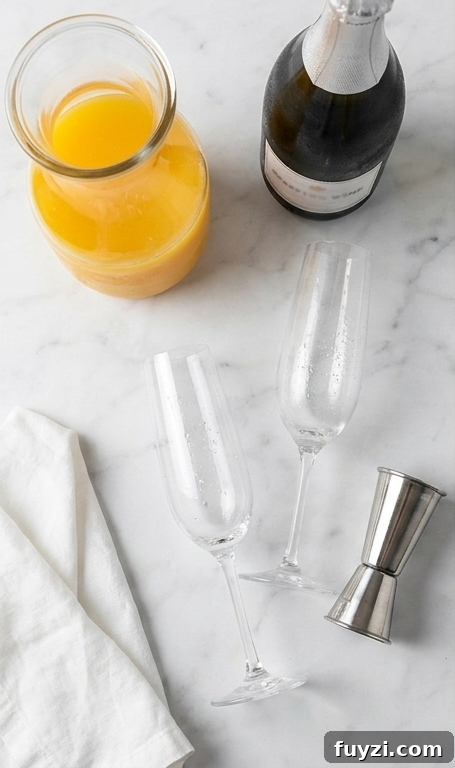
Even a two-ingredient drink benefits from a few simple tools. They speed the process and help the finished glass look polished.
- Champagne flutes: Their narrow shape preserves bubbles and concentrates aroma. If you don’t have flutes, a white wine glass is a fine substitute.
- Citrus juicer: A handheld reamer or electric juicer makes fresh-squeezing quicker and cleaner; bottled juice is convenient but less vibrant.
- Wine chiller or ice bucket: Keeping the bottle cold preserves carbonation. In a pinch, wrap the bottle in a damp towel and chill briefly in the freezer.
- Small measuring jigger: Useful for consistent ratios when making multiple glasses; you can also eyeball if you prefer a looser measure.
Step-by-Step Preparation Guide
Step 1: Chill a flute and add the orange juice
Chill a slender champagne flute and pour about 2 ounces of fresh orange juice into the base. The vivid citrus color sets the stage, and the juice creates a glossy pool at the bottom of the glass. A cold glass helps maintain bubbles and adds a pleasing condensation that signals refreshment.
Step 2: Top with sparkling wine and watch the effervescence
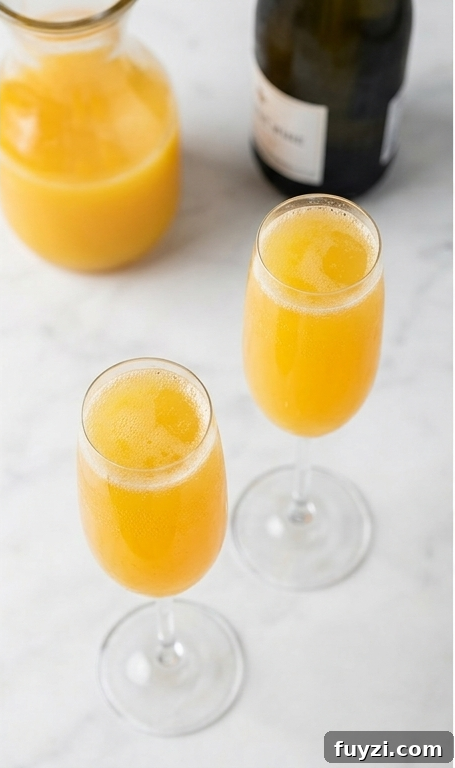
Slowly add 2 ounces of chilled champagne or sparkling wine, pouring gently so tiny bubbles rise through the orange layer and form a fine crown of foam. The juice and bubbles should combine into a luminous golden-orange drink with a delicate stream of effervescence. Pouring slowly preserves carbonation and creates a clean, celebratory appearance.
Step 3: Garnish and present the bright mimosa
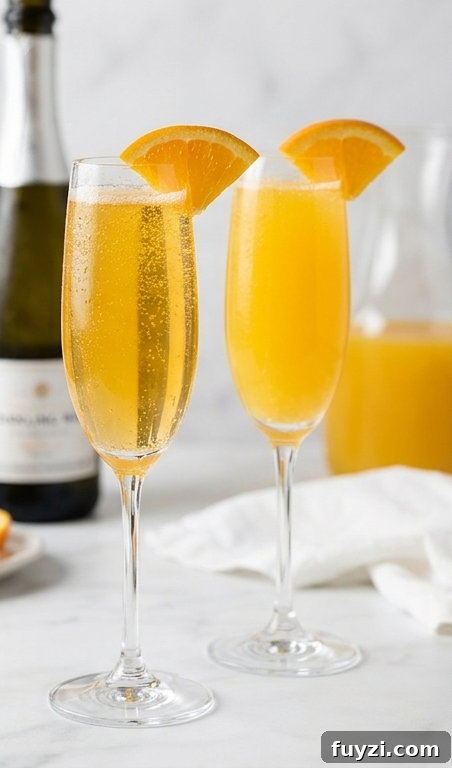
Finish with a thin orange wheel on the rim for aroma and color. Serve the glass on a simple surface with a folded linen nearby for an effortless, festive presentation: chilled crystal, a smooth golden surface threaded with tiny bubbles, and a fresh citrus accent ready to enjoy.
Making It Your Own
There are many easy ways to personalize this recipe. Swap half the juice for blood orange when in season for deeper color and floral notes, or try tangerine juice for a sweeter, more fragrant variant. Use a dry Prosecco and slightly more juice if you want a lighter, fruit-forward drink. For a nonalcoholic mimosa, replace the champagne with high-quality sparkling water or nonalcoholic sparkling wine. A gentle herb note — a slapped mint leaf or basil sprig tucked into the glass — adds aroma without overpowering the citrus. In summer, a splash of peach puree can create a delightful seasonal twist.
How to Serve
For gatherings, set up a mimosa station: chilled bottles, a pitcher of fresh orange juice, garnishes like orange wheels and berries, and labels for different sparkling options. For larger groups, premeasure juice into a carafe and keep bottles on ice; pour the juice first and top with bubbles just before serving to preserve the fizz. The classic ratio is roughly 1:1 juice to sparkling, but many prefer 1 part juice to 2 parts sparkling for a lighter, bubblier drink. Present glasses on a tray with linen napkins for an elevated touch.
Storage and Reheating Tips
Mimosas are best enjoyed immediately; storage mainly applies to the components. Keep unopened sparkling wine chilled and store fresh-squeezed orange juice in an airtight container in the refrigerator for up to 48 hours, with the freshest flavor on day one. Avoid storing a filled mimosa — it will quickly lose carbonation and taste flat. If you want to prep ahead, chill the juice and bottles separately and assemble at the last minute.
Common Mistakes and How to Avoid Them
The most common mistakes are using warm sparkling wine and overmixing after pouring. Always chill both bottle and glass so bubbles remain lively. Pour slowly and avoid stirring, which dissipates carbonation. If needed, pour the sparkling wine gently down the side of the flute to preserve fizz.
Let’s Make One Together
Try this Easy Mimosa Recipe this weekend and see how a simple ritual can brighten an ordinary morning. With two basic ingredients, a chilled flute, and a little patience, you’ll have a cheerful, celebratory drink to share. Adjust it to your taste, experiment with small variations, and enjoy the moments it creates.
Frequently Asked Questions.
- Can I use store-bought orange juice instead of fresh? Yes. Store-bought pure orange juice works, but fresh-squeezed juice delivers brighter flavor and aroma.
- What sparkling wine is best for a mimosa? Champagne is the classic choice, but Prosecco or Cava are excellent, more affordable alternatives that still provide lively bubbles.
- How long will a prepared mimosa stay fizzy? A prepared mimosa is best enjoyed immediately; it typically starts to lose noticeable carbonation within 10 to 20 minutes.
- Can I make a nonalcoholic version? Absolutely. Substitute high-quality sparkling water or nonalcoholic sparkling wine for the champagne to create a lively mocktail.
- What ratio of juice to sparkling wine should I use? Start with 1:1 for balance, then adjust to 1 part juice to 2 parts sparkling if you prefer a lighter, bubblier drink.