
There is truly nothing more satisfying than making homemade croissants from scratch. That moment when you pull a tray from the oven and the croissants are golden and flaky is unforgettable. They’re crisp at the edges, light and airy inside, and when you slice one open you can admire all the delicate layers. Serve them plain or fill them—either way, they shine.
Croissants can seem intimidating, but the process is very achievable with patience and a clear step‑by‑step approach. The key is understanding the dough, the butter block, and the lamination (the folding that creates the flaky layers). Follow the method below and you’ll be rewarded with bakery‑quality croissants at home.

Ingredients & Substitutions
Full recipe quantities are included in the recipe card below. Here are notes on ingredient choices and simple substitutions.
- Flour: Bread flour is preferred for structure and a slightly chewier texture. All‑purpose can work in a pinch, but results may be a bit softer.
- Sugar: Granulated sugar in the dough adds a touch of sweetness, aids tenderness, and helps with browning. You can reduce it slightly if you prefer a less sweet pastry.
- Yeast: Instant or active dry yeast both work; swap them 1:1.
- Salt: Fine sea salt is recommended for even distribution.
- Water: Cool water keeps the dough less sticky and makes the process easier.
- Butter: Use a high‑fat, high‑quality butter (European‑style when possible). Salted butter adds flavor; if you use unsalted, adjust the salt in the dough. Dairy‑free butters with at least 80% fat may work but haven’t been fully tested here.
Tip: A digital kitchen scale will improve accuracy—measuring dry ingredients by weight avoids over‑measuring and gives more reliable results.
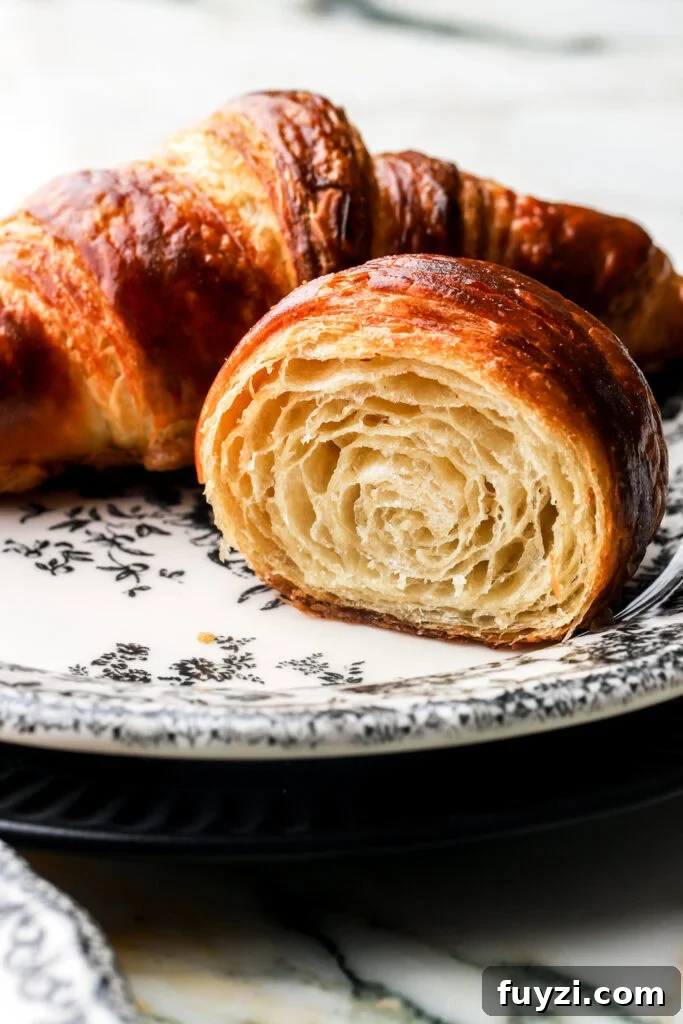
How To Make Croissants
Making croissants involves three main components:
- The dough: A relatively lean bread dough that is easy to make and slightly tacky but workable.
- The butter: Shaped into a flat rectangle and incorporated into the dough rather than melted into it.
- Lamination: Repeated rolling and folding that creates alternating layers of dough and butter, which produce the flaky interior.
With straightforward technique and patience, you’ll get beautiful results. Below are clear instructions for each stage.
Croissant dough
- Combine flour, yeast, salt, and a little sugar in a mixing bowl.
- Add cool water and mix on low speed (or by hand) until the dough comes together.
- Knead for 5–7 minutes until the dough cleans the sides of the bowl. The dough should feel slightly tacky but not sticky.
- Shape into a rough rectangle, wrap tightly in plastic, and refrigerate for at least 4 hours or overnight to relax the gluten and keep the butter from melting during lamination.
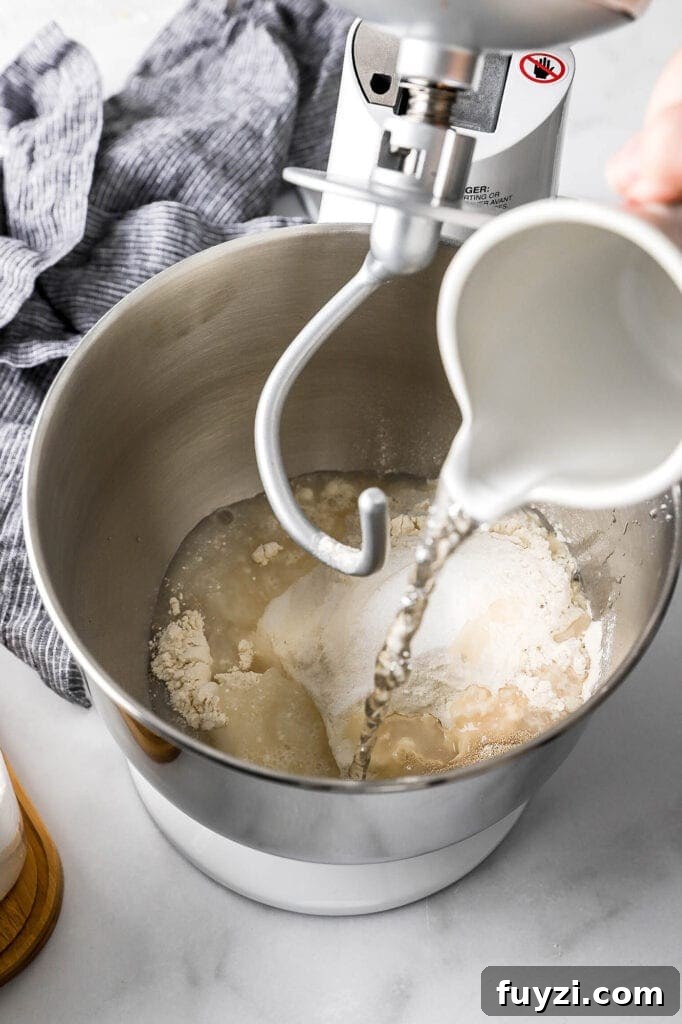
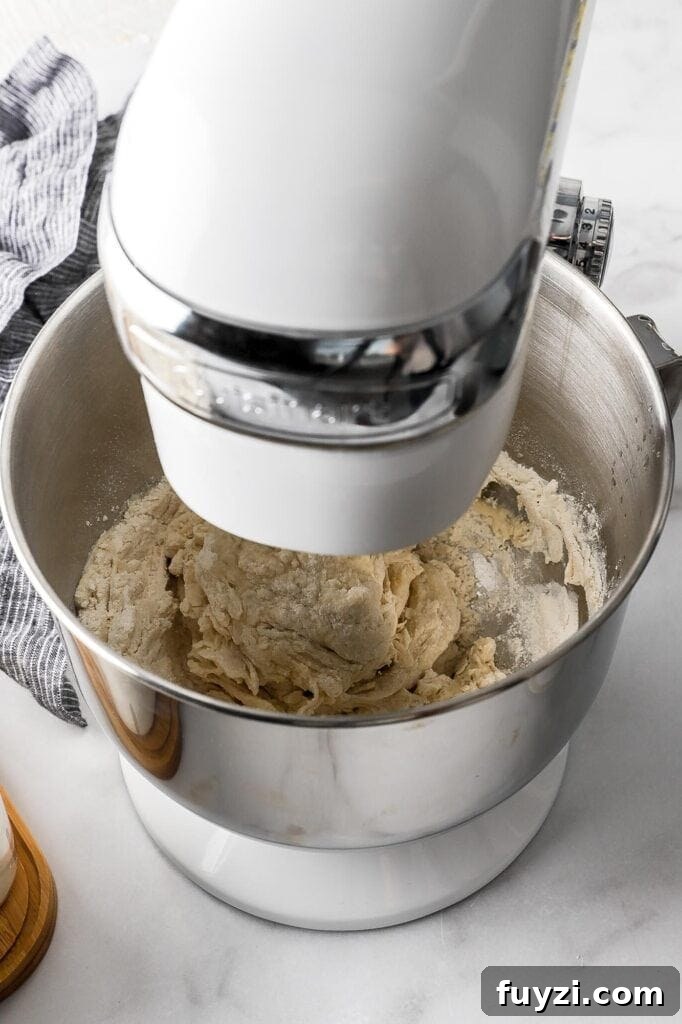
Shape the butter for laminating
The goal is a neat butter block roughly the same thickness and shape as the dough rectangle so the layers laminate evenly. Any method that yields an 8×10″ (or similar) rectangle works.
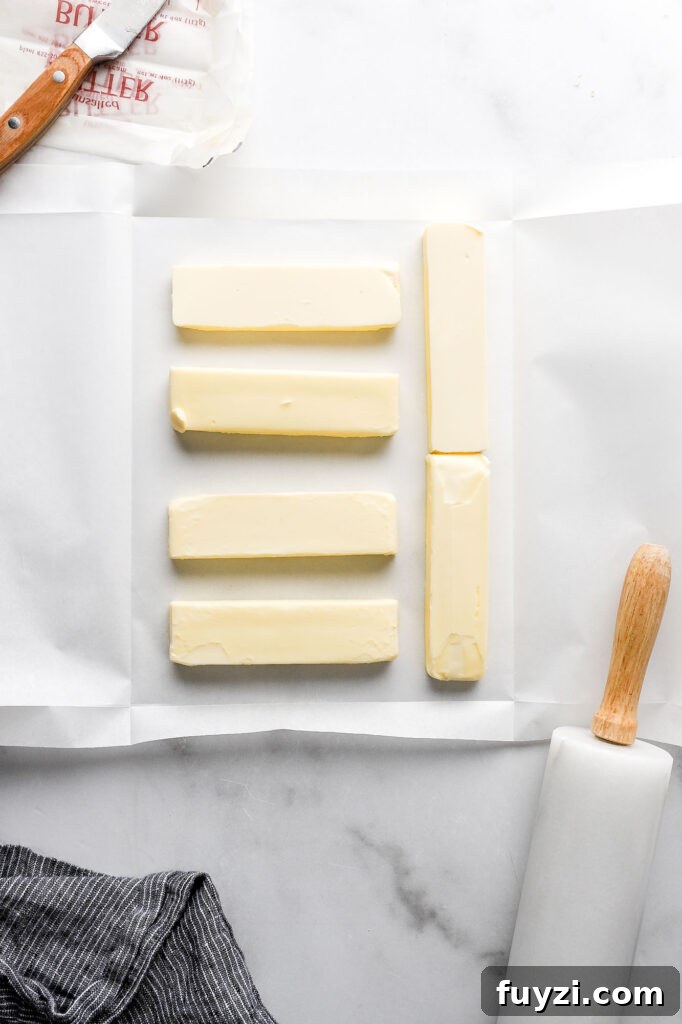
- Fold a sheet of parchment into the desired rectangle and place halved sticks of butter inside.
- Using a rolling pin, press and roll the butter until it fills the parchment rectangle evenly.
- Chill the butter briefly (10–20 minutes) until malleable but not greasy—able to bend without cracking.
Tip: If you prefer to soften butter and spread it into shape with a spatula, do so and then chill longer until it reaches the correct consistency.
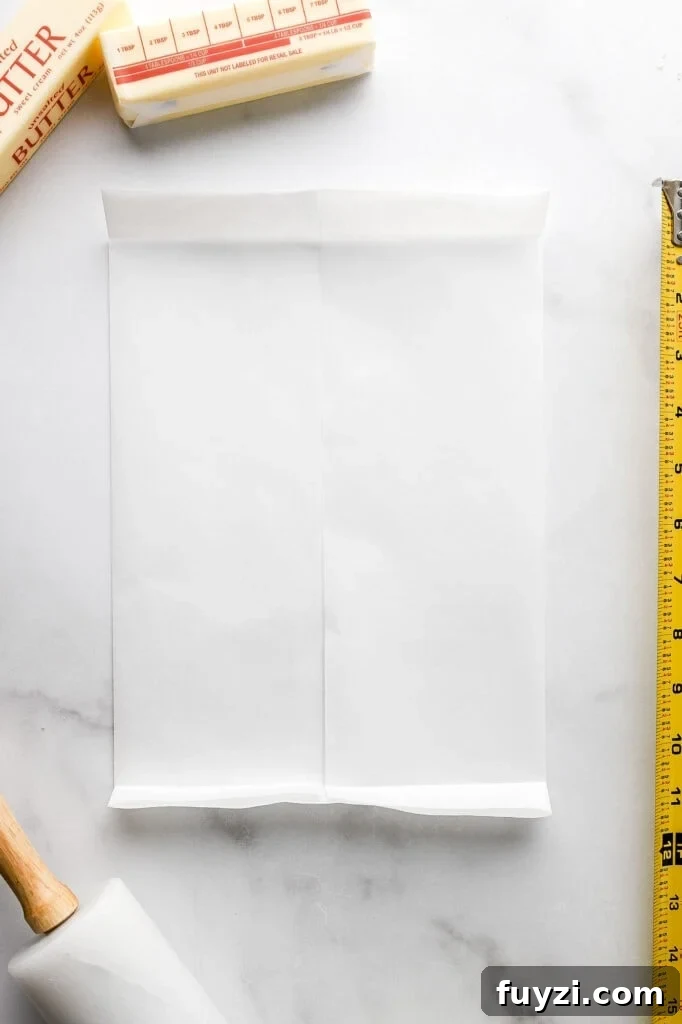
Laminate the dough with the butter
Temperature control is the most important part of lamination. The butter should be firm and pliable—bendy but not greasy or too hard.
- Roll the chilled dough to roughly 10×16″ on a lightly floured surface.
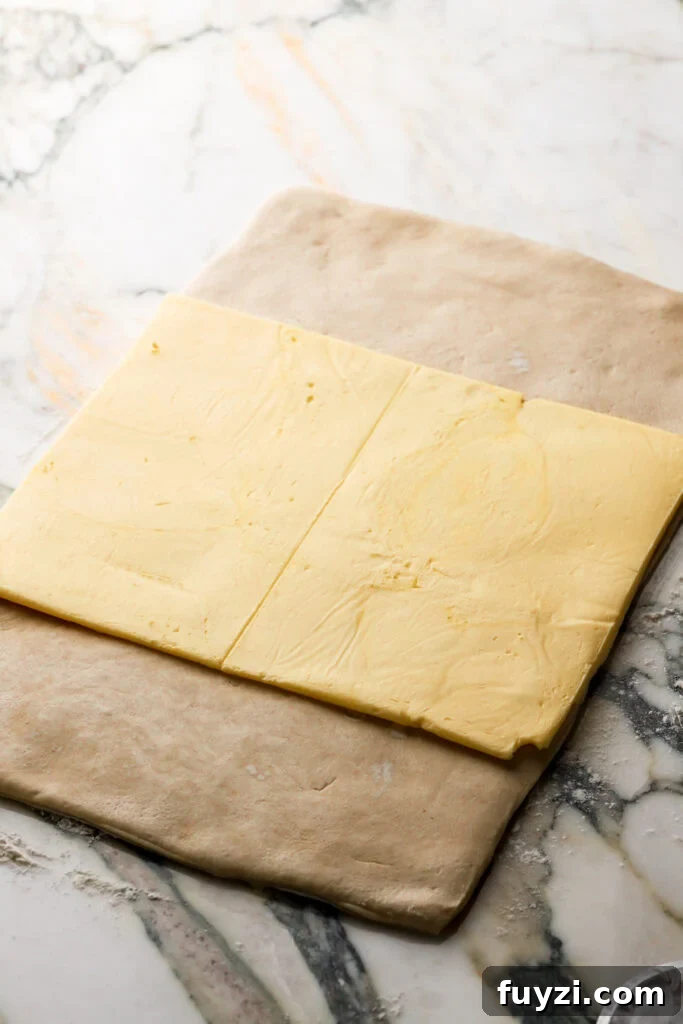
- Place the chilled butter block centered on the dough so the shorter sides align (10″ with 10″).
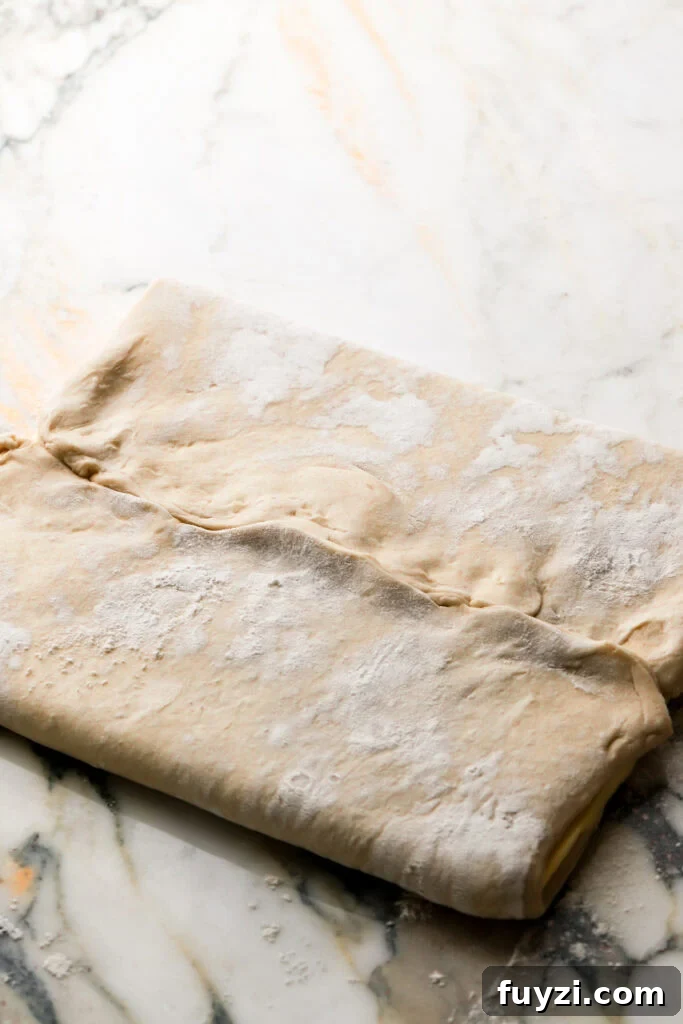
- Fold the top third and the bottom third of the dough over the butter so the edges meet in the middle; pinch to seal.
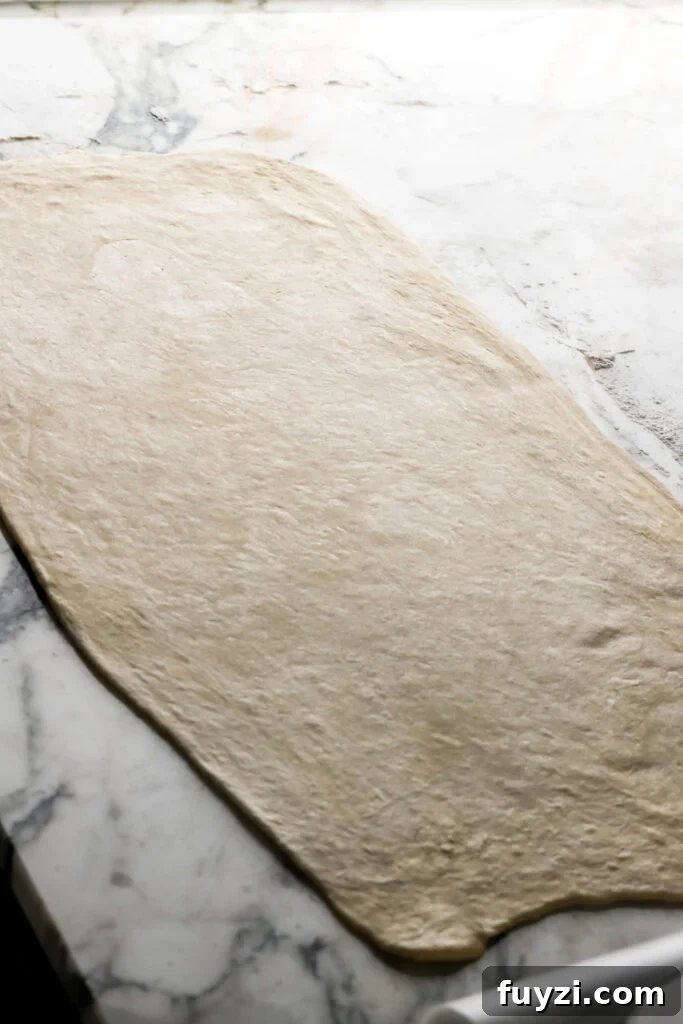
- Turn the dough 90°, then gently roll back to 10×16″. Fold into thirds (like a letter) and chill 10–20 minutes.
- Repeat the roll‑and‑fold two more times, chilling 10–20 minutes between folds. After the final fold refrigerate at least 2 hours (preferably longer) before shaping.
Shaping Croissants
- Remove the dough from the fridge and rest 10–15 minutes so it is easier to roll.
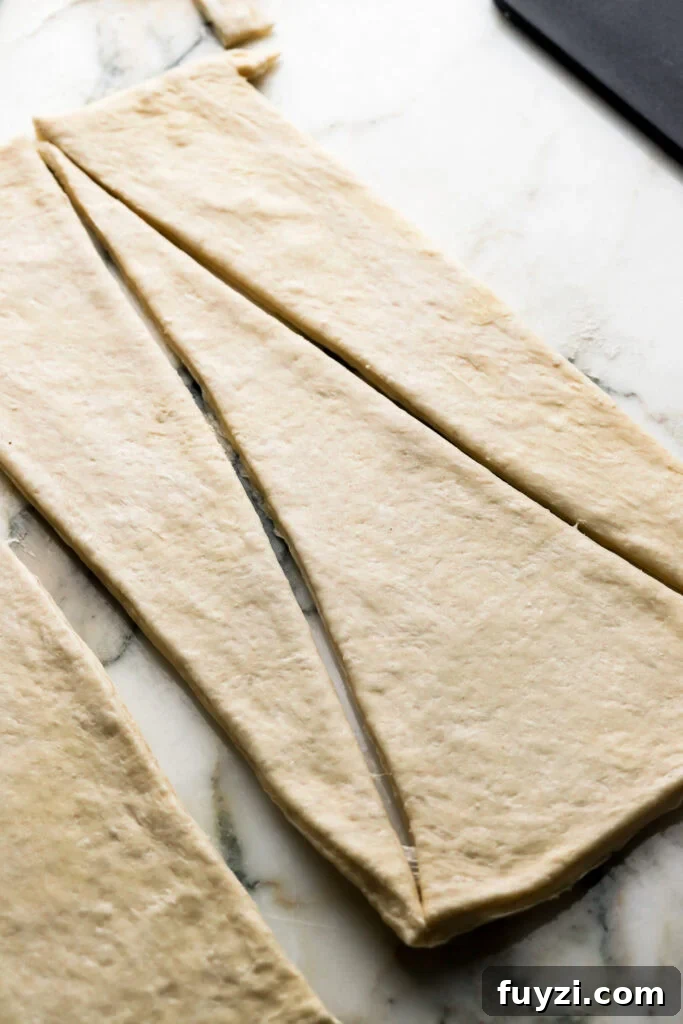
- Roll to about 12×24″ and trim the edges if you want a clean rectangle.
- Cut long, skinny triangles from the long edge to the long edge (pizza cutter or sharp knife).
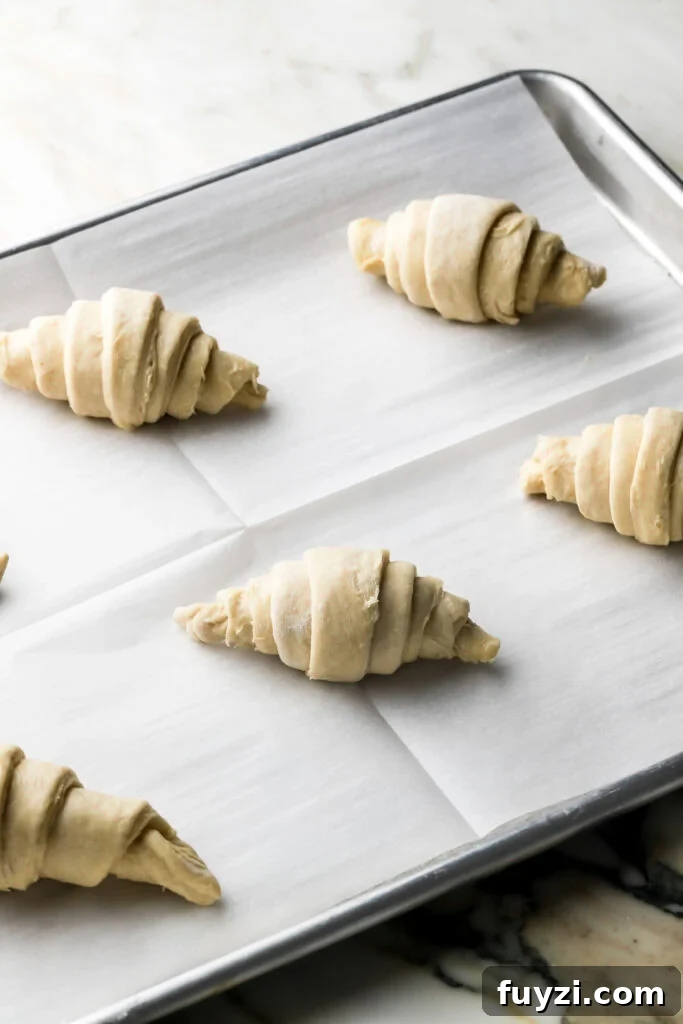
- Starting at the wide end, roll each triangle toward the tip and tuck the tip under slightly to seal.
- Place shaped croissants on baking sheets, cover loosely with plastic, and proof at room temperature for about 2 hours until slightly puffy and yielding to a gentle press.
Baking Croissants
- Preheat the oven (400°F / 204°C convection or 375°F / 190°C conventional).
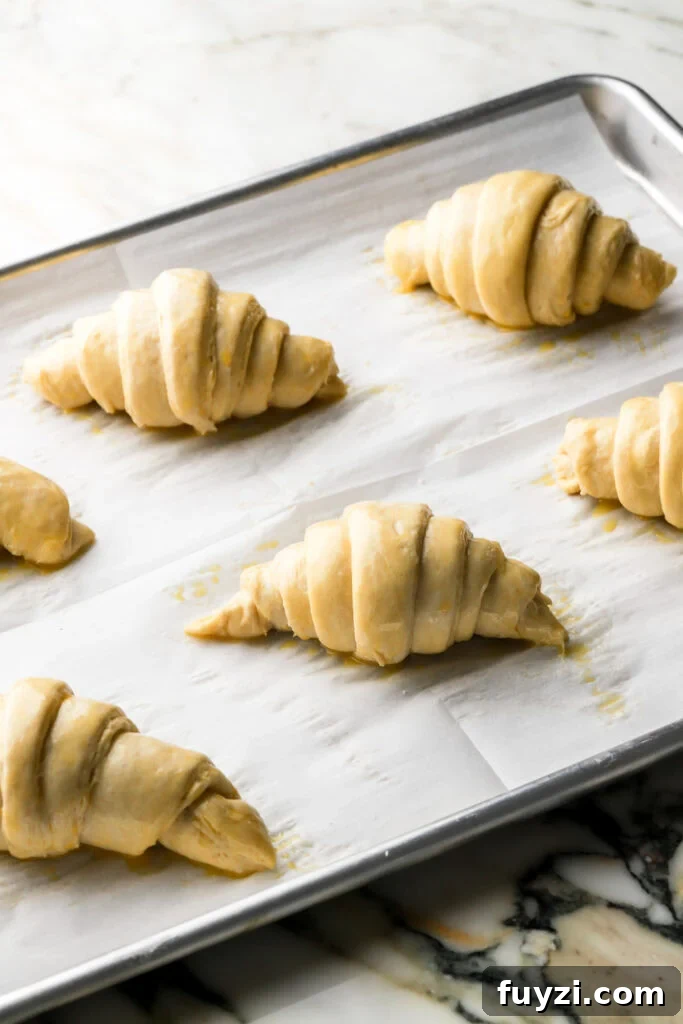
- Beat one egg for an egg wash and gently brush each croissant (two light coats gives a rich color).
- Bake for about 15–18 minutes, until just a shade darker than golden brown.
- Let cool briefly on the pan, then transfer to a rack. Serve at room temperature the same day for best texture.

Steps in Spark Notes
- Make dough: Mix, knead 5–7 minutes, shape, chill 4+ hours.
- Shape butter: Form an 8×10″ butter block and chill 10–20 minutes.
- Laminate: Place butter on dough, fold, roll to 10×16″, fold into thirds. Repeat two more times, chilling between folds. Rest 2+ hours after final fold.
- Shape: Rest dough 15 minutes, roll to 12×24″, cut triangles, roll into croissants.
- Proof: Proof at room temperature ~2 hours until the dough yields to a light touch and the pieces wobble slightly.
- Bake: Egg wash and bake until golden and flaky.
Why refrigerate and rest the dough?
Chilling is essential so the butter remains solid between layers and doesn’t melt into the dough. Resting also relaxes the gluten developed during mixing so the dough can be rolled out without springing back. You’ll notice the difference when shaping—well‑rested dough rolls smoothly to the desired dimensions.

Proofing croissants
Proof at a moderate room temperature (around 70°F / 21°C), not in a hot environment, so the butter layers remain intact. Fully proofed croissants should leave a slight indent when pressed and wobble gently when the tray is shaken. Cover them loosely so they do not dry out while leaving room to expand.
Frequently Asked Questions
Most often this happens from under‑proofing or proofing in a space that is too warm. Under‑proofed croissants may not build enough structure to contain the butter. Also check oven temperature—if the oven is not hot enough, the layers may not set quickly.
After the initial dough chill, you can refrigerate longer than 4 hours or overnight. During lamination, keep to the brief chill windows (about 10–20 minutes) so the butter remains pliable but not rock‑hard. After all folds, the dough can be refrigerated for longer if needed, but don’t over‑proof the shaped croissants before baking.
Use a high‑fat, good quality butter—European‑style butters are ideal. Salted butter adds flavor; if using unsalted, adjust the dough salt. Dairy‑free alternatives with high fat may work but results can vary.
Croissant Variations
Once you master the basic croissant, try fillings and toppings to elevate them. Fill after baking or before shaping for different results.
- Nutella or cookie butter: Pipe a small amount into the center after baking or add a light spread before rolling; finish with chopped hazelnuts or crushed cookies.
- Tiramisu style: Split the croissant, brush with espresso, fill with a mascarpone‑based cream and dust with cocoa powder.
- Pistachio: Fill with a pistachio‑chocolate blend and top with chopped pistachios or a white chocolate dip.
- Crème brûlée: Pipe pastry cream or diplomat cream into the croissant, then caramelize the top sugar with a torch for a crunchy finish.
Leftover or slightly stale croissants make excellent French toast or a bread pudding/casserole—repurposing keeps them delicious.
Serving & Storing
Serve croissants the same day they’re baked for the best texture: crisp outside and airy inside. Store at room temperature in an airtight container for 2–3 days, or refrigerate up to a week. To freeze, place cooled croissants in airtight bags and thaw overnight on the counter. Reheat briefly in a 350°F (175°C) oven until warmed through to restore some crispness.

Classic croissants traditionally take two days, but this method can be completed in about 12 hours if you work a long day. You may also spread the steps over two days for a more relaxed schedule. Enjoy the process and the delicious results—happy baking!
Love, B

Homemade Croissant Recipe
Equipment
- Stand mixer (optional)
- 2 cookie sheets
- Rolling pin
Ingredients
- 480 grams bread flour, plus extra for dusting
- 50 grams granulated sugar
- 7 grams instant yeast (1 package)
- 10 grams fine sea salt
- 300 mL cool water
- 284 grams salted butter, slightly chilled or room temperature*
- 1 large egg for egg wash, room temperature
Method
Dough
- Whisk flour, sugar, yeast and salt together. With the dough hook on low, stream in the water and mix until combined.
- Increase speed and knead 5–7 minutes until the dough pulls away from the bowl. Shape into a rectangle, wrap tightly, and refrigerate at least 4 hours or overnight.
Shaping the butter
- Fold parchment into an 8×10″ rectangle, place sliced butter inside and roll to shape. Chill 5–10 minutes until malleable but not greasy.
Laminating
- Roll dough to 16×10″. Place butter centered and fold the top and bottom thirds over it. Turn 90° and roll back to 16×10″.
- Fold into thirds like an envelope, chill 10–20 minutes. Repeat this rolling and folding two more times. After the final fold refrigerate at least 2 hours (preferably 4+).
Shaping
- Rest the dough 15 minutes at room temperature. Roll to 24×12″, trim edges, and cut long triangles.
- Roll each triangle from the wide end and tuck the tip under to seal. Place on lined baking sheets and cover loosely.
Proofing
- Proof at room temperature (around 70°F / 21°C) about 2 hours until slightly puffy and yielding to gentle pressure.
Baking
- Preheat oven to 400°F (204°C) convection or 375°F (190°C) conventional. Egg wash the croissants.
- Bake 15–18 minutes until golden brown and light. Cool 10–15 minutes on the pan, then transfer to a rack.
Notes
*If you soften butter and spread it into shape, chill it longer so it reaches a malleable but not greasy consistency before laminating.
**Trimmed edges can be rolled with cinnamon sugar and baked alongside the croissants.
Nutrition (per croissant)
Calories: 253 kcal | Carbohydrates: 25 g | Protein: 4 g | Fat: 15 g