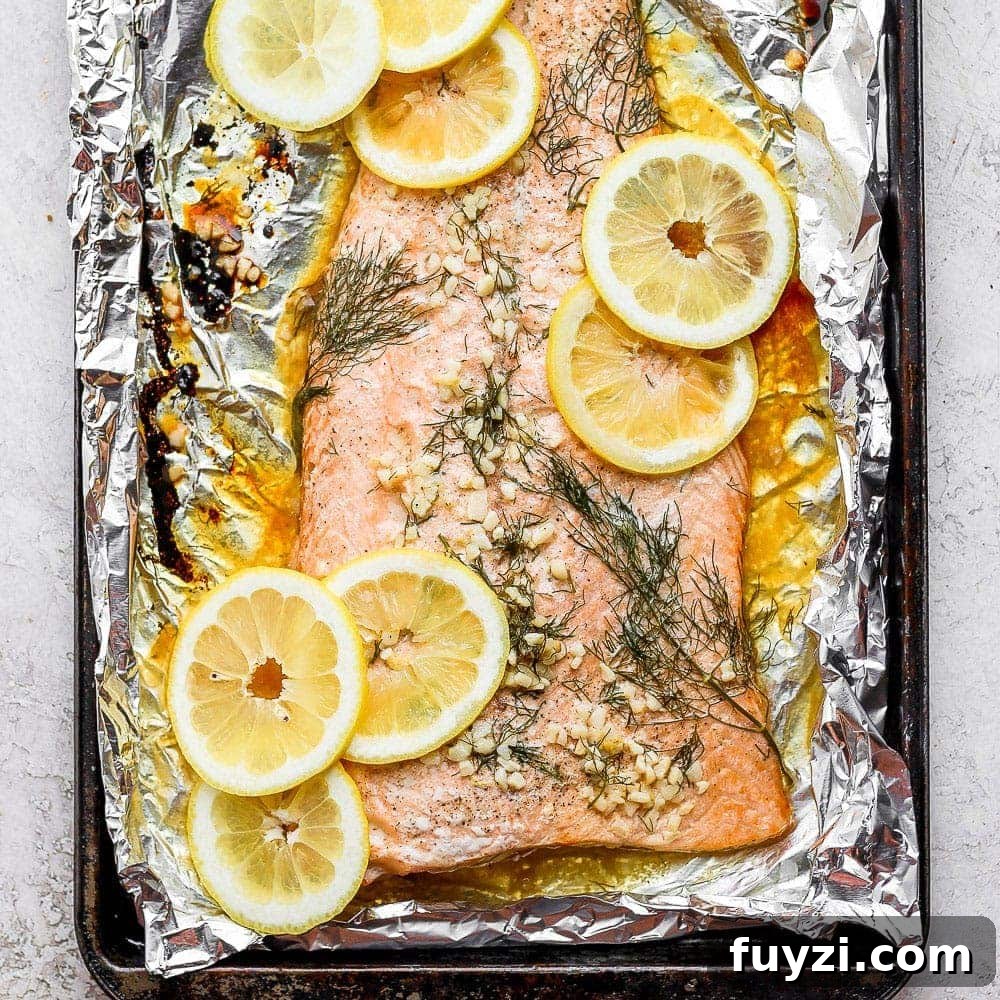
Bland, dry salmon is a thing of the past. Growing up, my parents always wrapped salmon in foil before baking — the foil traps heat and moisture, cooks the fish quickly, and lets the marinade fully infuse the fillet.
I typically buy a large filet for this method, though single-serve portions work just as well. Whatever you choose, don’t skip the marinade — it makes all the difference.
Recipe Highlights
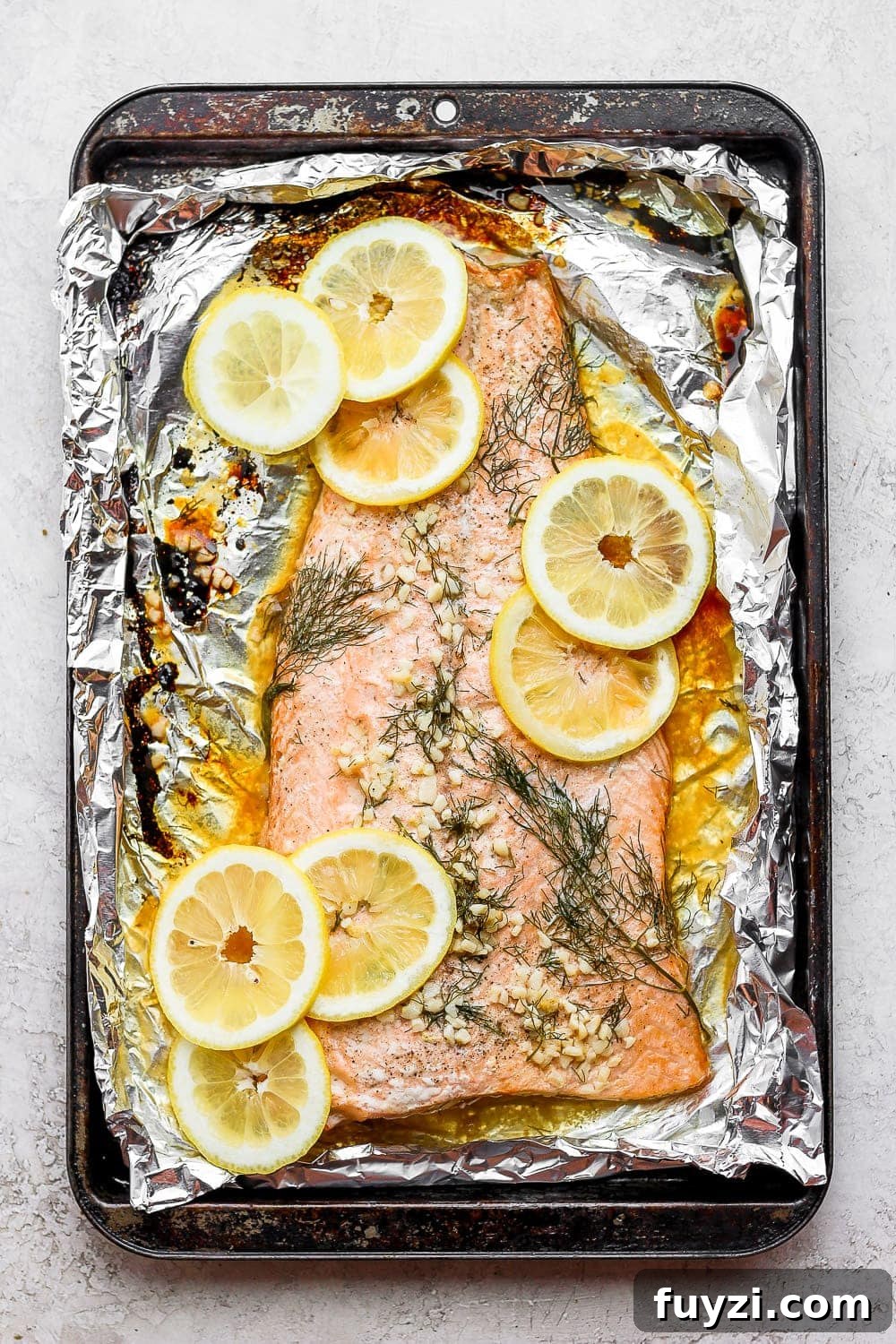
This foil-baked salmon delivers consistent results every time: quick to prepare, tender and flaky, and deeply flavored because the fish marinates and cooks in its own steam. I’ve tested this with fillets from 2 to 4 pounds and the method scales well — just adjust cooking time for thickness.
Featured Comment
“One of my husband’s favorite salmon recipes! We made this for our untraditional Thanksgiving main and it was a hit. The tartar sauce takes it to the next level!”
– Kendra N.
How to Choose Your Salmon
Salmon varies by species, cut, and fat content. For moist, rich results, choose a fattier salmon such as King, Atlantic, or Sockeye. This recipe uses a 2.5–3 lb. fillet, skin-on or skin-off — I prefer skin-on for extra flavor.
If you can’t find a whole large fillet, place individual portions next to each other on the foil so they cook evenly and you can use the same bake time. For fillets under 2.5 lb., reduce the bake time (start checking at 20 minutes).
Recommended Salmon
My favorite is wild Alaskan salmon caught off Bristol Bay. It’s bright, flaky, and flavorful. If you can buy from a trusted local supplier, that’s a great option.
How to Bake Salmon in Foil
1. Marinate
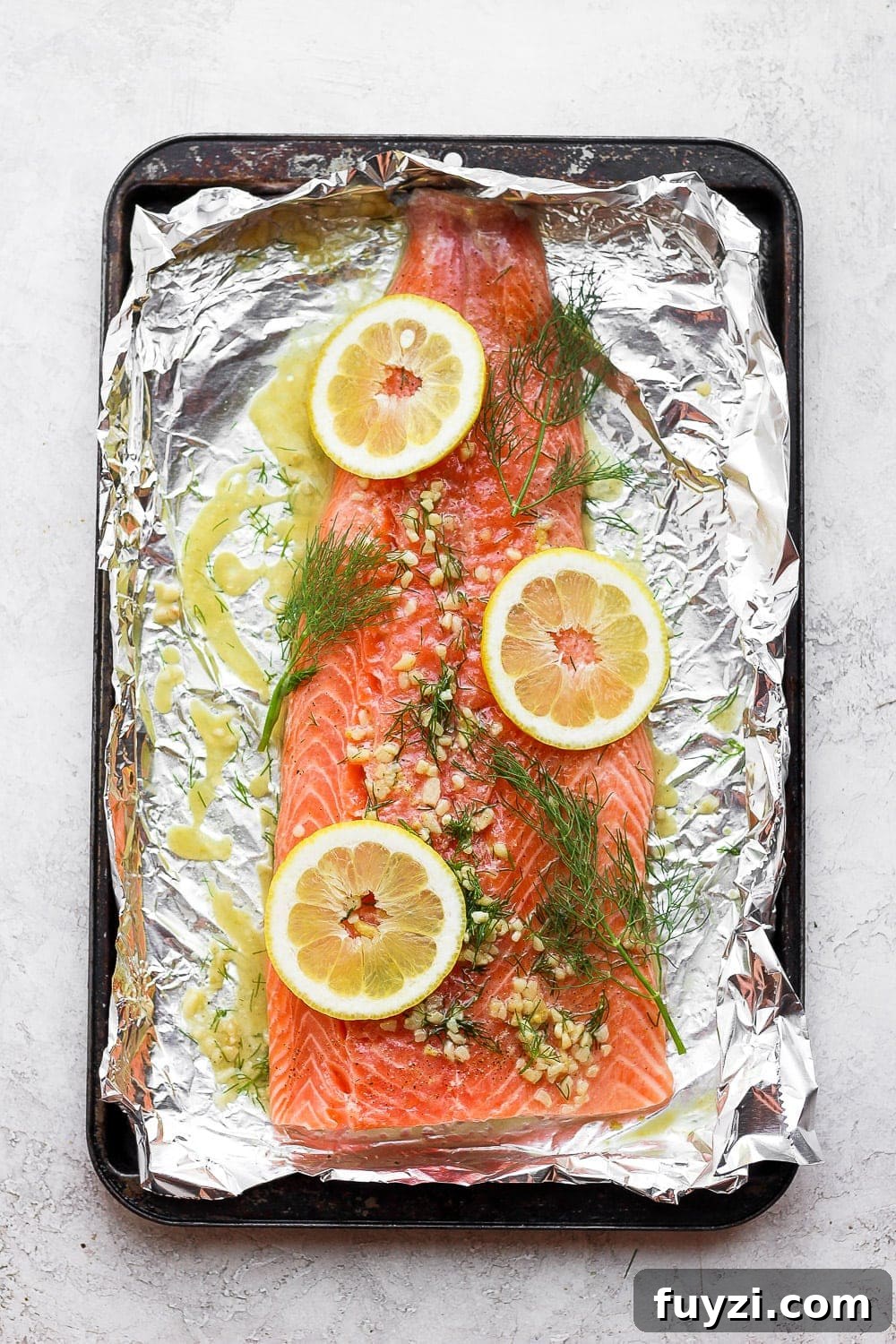
Start with a bright lemon-dill marinade to flavor the entire fillet. Marinate the salmon for 15–30 minutes — avoid marinating much longer because the lemon’s acid can begin to “cook” the fish.
Tip
Don’t marinate overnight; 15–30 minutes is enough for this recipe.
2. Create a Foil Pack
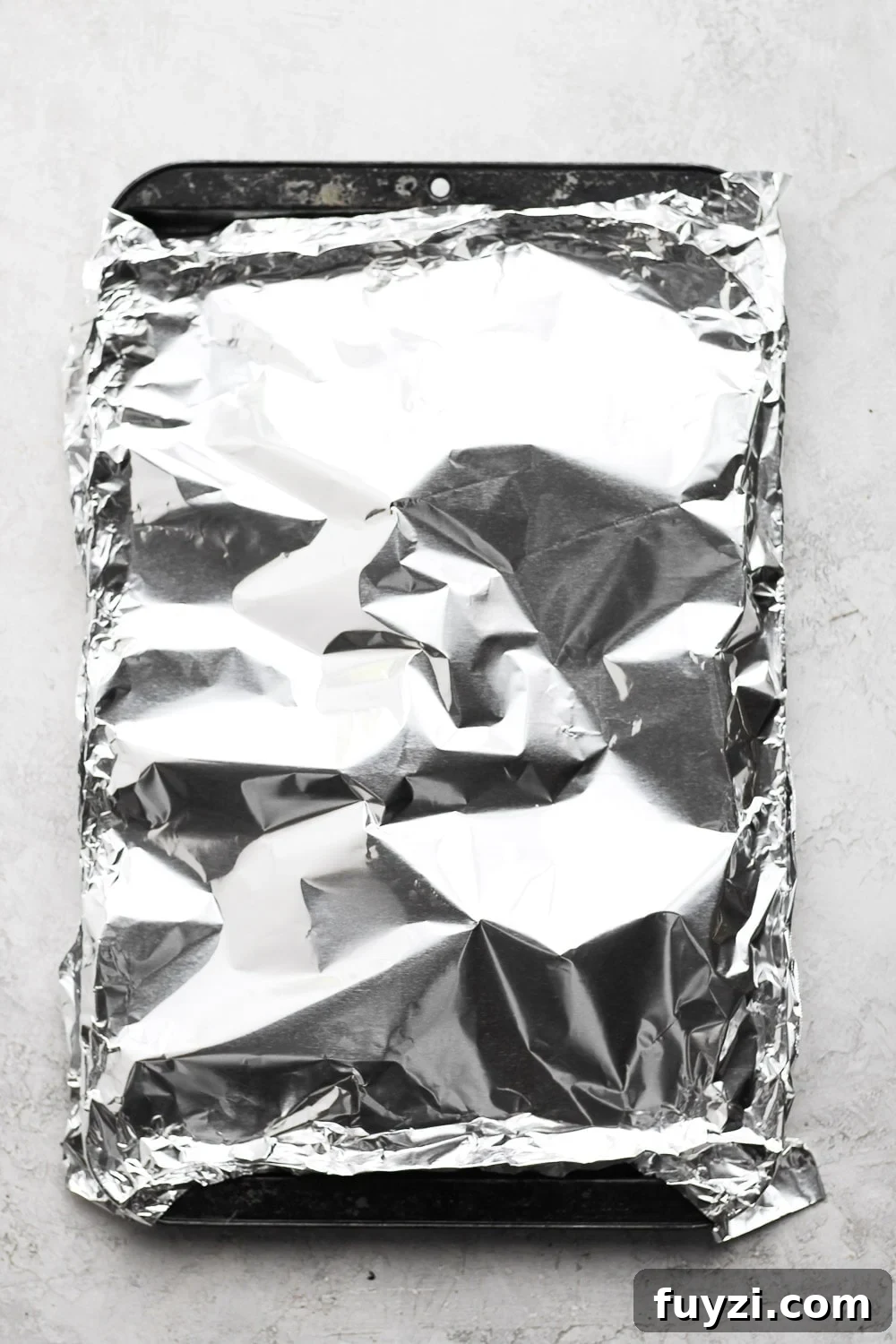
Place the fillet on a large sheet of tin foil (edges folded up) so marinade and juices stay contained. The foil pack traps steam and keeps the fish moist while it bakes.
3. Bake
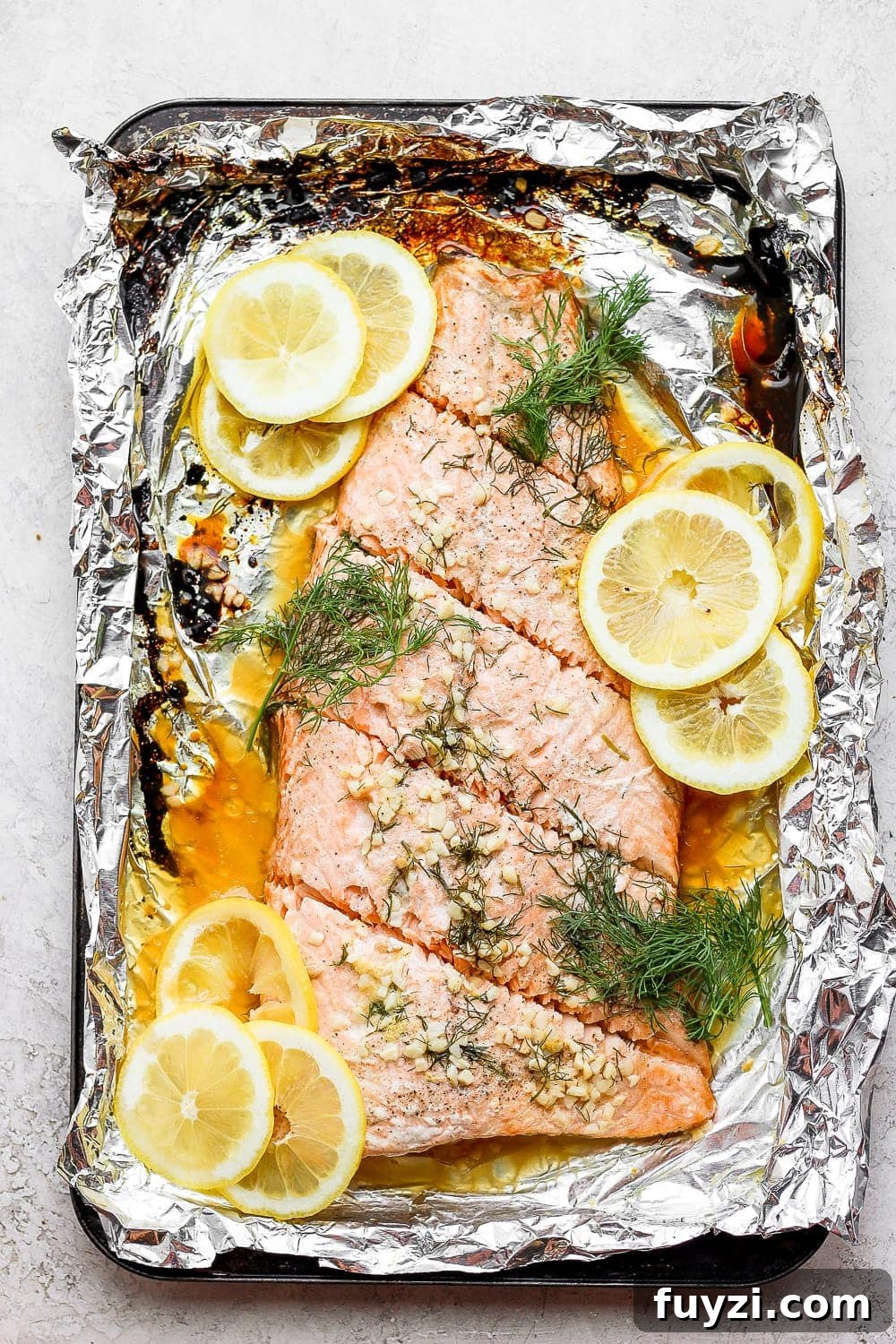
Bake at 375ºF. A 2-inch-thick fillet typically needs 25–35 minutes. Thicker fillets require more time. Salmon is done when it changes from translucent to opaque light pink, flakes easily with a fork, and registers around 145ºF if you use a thermometer.
4. Broil
After baking, open the foil, top the fillet with 2 tablespoons of cold butter, and broil for 2–5 minutes to caramelize the surface and melt the butter. Let the salmon rest for 5 minutes before serving.
Doneness and Cooking Times
The USDA recommends an internal temperature of 145ºF for cooked fish. I prefer my salmon fork-tender and flaky, which usually happens around that temperature. A useful guideline is about 4–5 minutes per 1/2 inch of fillet thickness.
Flavor Variations and Substitutions
Feel free to experiment with marinades: stir-fry sauces, spicy glazes, or an Italian dressing-style mix all work. If you don’t have lemon, use lime or orange. For dried dill in place of fresh, use about one-third the amount (e.g., 2 teaspoons dried for 2 tablespoons fresh).
Health Benefits of Salmon
Salmon is high in protein and omega-3 fatty acids. It’s naturally gluten-free, low in carbohydrates, and makes a nutritious choice for a balanced diet.
Serving and Pairing Ideas
- Oven-Roasted Asparagus with Parmesan
- Chili Crunch Brussels Sprouts
- Roasted Brussels Sprouts
- Crockpot Baked Potatoes
- Roasted Red Potatoes
- Quinoa
- Cilantro Lime Rice
- Wild Rice
How to Reheat Baked Salmon
The quickest method is the microwave: place salmon on a microwave-safe plate and heat 60–90 seconds on high. You can also reheat gently in the oven or on the stovetop. If reheating in the oven, cover loosely with foil to prevent drying.
FAQ
What seasonings work well for baked salmon?
Garlic, lemon, and dill are classic pairings. Pre-mixed blends like lemon pepper or seafood seasoning also work well.
Can I use olive oil spray to coat the salmon?
Yes — olive oil or a light spray helps the marinade cling and keeps the surface from drying.
Is it better to bake salmon in the oven or cook it on the stove (especially for beginners)?
Baking in the oven is more forgiving for beginners and gives consistently even results, especially when using the foil method.
Storage
Leftover salmon stores well. Keep it in an airtight container in the refrigerator for up to 3 days. Glass containers are convenient for reheating.
More Salmon Recipes
- Air Fryer Salmon Bites
- Maple Ginger Baked Salmon
- Salmon Meatballs
- Air Fryer Salmon
Foil-Pack Baked Salmon Recipe
Learn how to bake salmon in foil with this simple tutorial. It’s made with a lemon-dill marinade and ready in under an hour.
By: Lee Funke
Prep: 30 mins • Cook: 25 mins • Total: 55 mins • Servings: 8
Ingredients
Salmon
- 2 to 3 lbs. salmon fillet, skin on or off (about 2 inches thick)
- 1/8 tsp salt
- 1/8 tsp pepper
- 1 medium lemon, sliced
- 4 sprigs fresh dill
- 2 tbsp cold butter
Salmon Marinade
- 1/4 cup olive oil
- 2 tbsp lemon juice
- 1 tsp Dijon mustard
- 2 tsp honey
- 2 tbsp fresh chopped dill
- 1/8 tsp salt
- 5 cloves garlic, diced
Tartar Sauce
- 1/2 cup Greek yogurt
- 1/2 cup chopped dill pickles
- 1 tbsp olive oil
- 1/8 tsp garlic powder
- 1/8 tsp onion powder
- 1 tbsp pickle juice
- 1 tsp lemon juice
- 1 tbsp fresh chopped dill
Instructions
- Pat the salmon dry with paper towels, then season with salt and pepper.
- Whisk together olive oil, lemon juice, Dijon mustard, honey, dill, salt, and garlic to make the marinade.
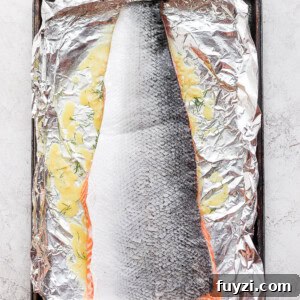
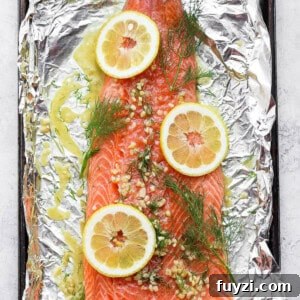
- Lay a large sheet of foil on a baking sheet with the edges folded up. Pour a little marinade onto the foil, then place the salmon fillet skin-side up in the marinade. Let sit 15–30 minutes.
- Preheat oven to 375ºF.
- Flip the fillet so the skin side is down. Arrange lemon slices and dill sprigs on top.
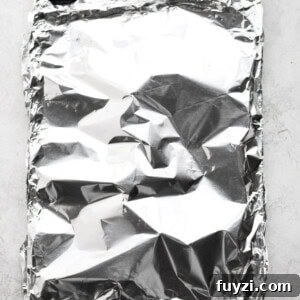
- Carefully wrap the salmon in foil, sealing the edges so steam stays inside. You can double-wrap if needed.
- Bake for 25–35 minutes, depending on thickness. A 2-inch-thick fillet may need the full 35 minutes.
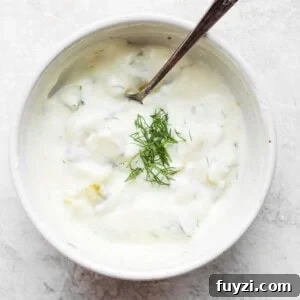
- While the salmon bakes, combine tartar sauce ingredients in a bowl and chill.
- When the salmon is done (pale pink and flakes easily), remove from the oven, discard the dill and lemon slices, and switch the oven to broil.
- Top the salmon with 2 tablespoons cold butter and broil uncovered for 2–5 minutes until the top is caramelized.
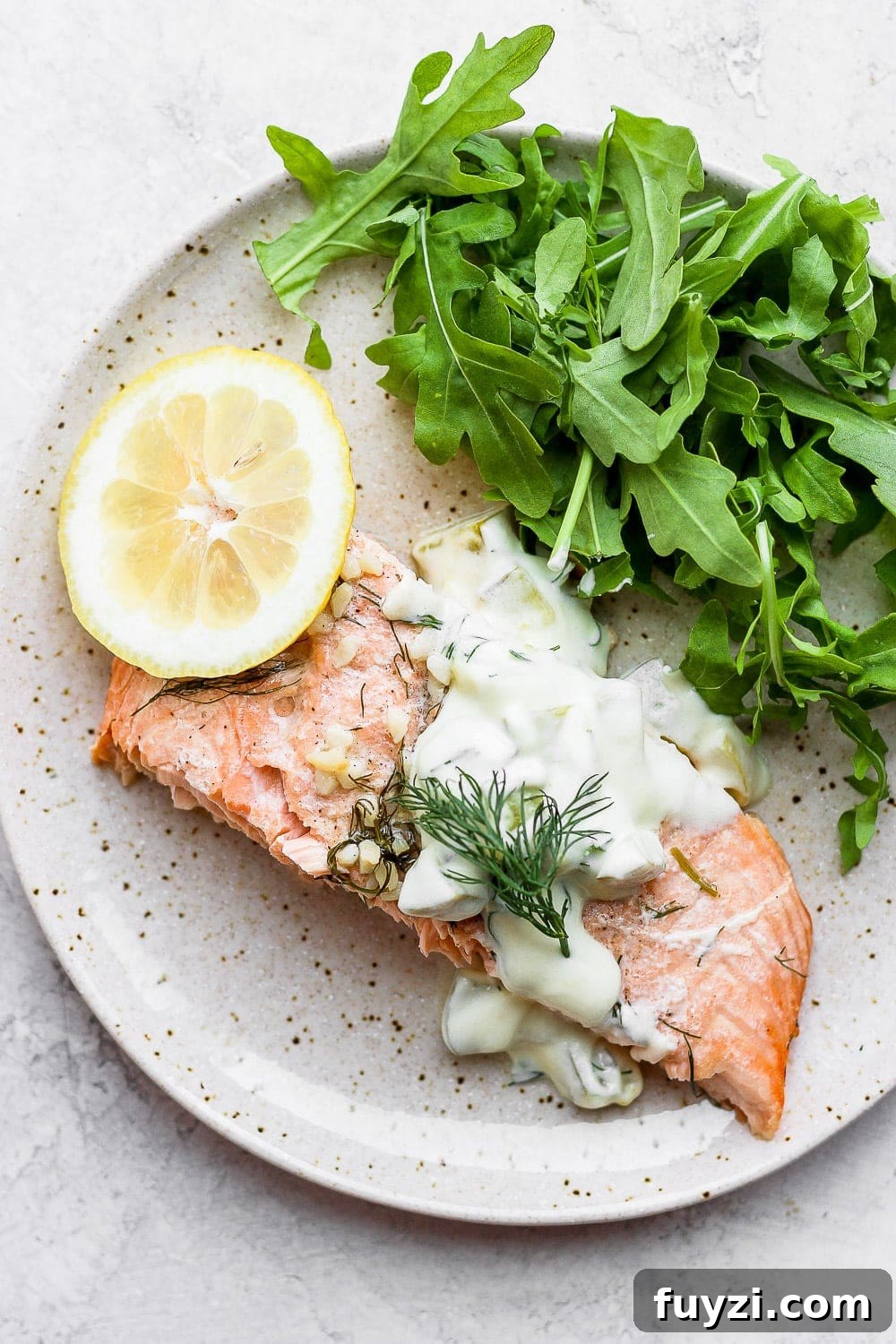
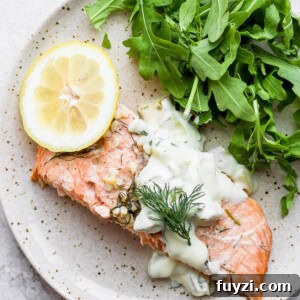
- Let rest 5 minutes, then serve with tartar sauce.
Tips & Notes
- Nutrition values below include only the salmon and marinade, calculated for a 2 lb. fillet.
- Storage: refrigerate leftovers in an airtight container for up to 3 days.
- Grilling option: marinate and wrap in foil, grill over direct medium-high heat (375–400ºF) for about 15 minutes, then move to indirect heat for another 10–15 minutes or until 145ºF internal temperature.
Nutrition
Calories: 269 kcal, Carbohydrates: 2 g, Protein: 30 g, Fat: 15 g, Fiber: 0 g, Sugar: 2 g
Nutrition information is an estimate and should be used as a guideline only.
More of our Favorite…
Healthy Baked Salmon Recipes
- Baked Lemon Pepper Salmon
- Mediterranean Salmon Meal Prep
- Sheet Pan Salmon Stir Fry
- Maple Ginger Baked Salmon
- Air Fryer Salmon
Photography by: The Wooden Skillet